
Nerd, IM physician, Eating afficionado. Tweets my own.
USA
Joined May 2019
- Tweets669
- Following330
- Followers580
- Likes2.8K




Pinned Tweet
Back for the 3rd and final part of this UK #tweetorial.
Prior urine electrolyte tweetorials:
-UK part 1: rb.gy/hlzgix
-UK part 2: rb.gy/z3zh88
-UNa: rb.gy/krd14w
-UCl: rb.gy/u7ylai
Austin Rezigh retweeted

The Surviving Sepsis Campaign has shaped sepsis care for decades. But do some of its core recommendations now lag behind the physiology and the evidence?
Rory Spiegel @TheEMNerd led this new dissenting opinion, which I was very pleased to contribute to.
We challenge:
• fixed 30 mL/kg fluid loading
• chasing lactate with fluid
• fluid responsiveness as a sufficient reason to give fluid
• pressure-centric resuscitation
• the omission of POCUS from modern haemodynamic assessment
• rigid bundle-driven care
The argument is not for less treatment. It is for more individualised, physiology-driven treatment of shock.
authors.elsevier.com/c/1npdk…
The 2026 Surviving Sepsis Campaign Guidelines: The dissenting opinion
Spiegel et al. AJEM, just published.

Austin Rezigh retweeted
Next up on The Dependent Variable: a two-part dive into acid–base physiology.
Not Stewart versus Henderson–Hasselbalch.
Both can be correct.
The more interesting question is:
Which variables are independent, which are dependent, and which equations are simply different descriptions of the same chemical state?
We’ll get into:
• why hyperchloraemia acidifies
• what SID actually represents
• why bicarbonate can raise pH even when the Na–Cl gap barely changes
• what is actually happening to H⁺
• and why this is not simply a story of water dissociating into H⁺ and OH⁻
The aim is to make difficult physiology simple without making it less true.
If that sounds like your kind of thing, subscribe here:
thedependentvariable.com
Part 1 coming soon.

Austin Rezigh retweeted

Ashley is one of the top hemodynamics educators of our era. He is taking concepts that less than 0.1% of MDs understand and making them accessible.
Check out his substack the dependent variable!!
Bonus, he's a fantastic bloke.

I’ve started a Substack: The Dependent Variable.
X is great for short-form discussion, but it’s not ideal for building a coherent archive.
This will be the home for longer-form writing on cardiovascular physiology, haemodynamics, fluids, shock, ultrasound and critical care reasoning. All in one place, easier to follow and return to.
First post: open.substack.com/pub/icmtea…

Austin Rezigh retweeted

Listeners, 5AM EST Aug 30th (TOMORROW) we are BACK! 🪩
A few updates on where we are at & what to expect from @ASanchez_PS & @ArcieriMichael ... 📢

Austin Rezigh retweeted

#MedTwitter, tell us how your subspecialty's test characteristics fail for common conditions & lead to misdiagnosis
e.g. "normal" echo in HFpEF -> "can't have HFpEF" ❌
Then, how do you teach cognitive workarounds to this problem? 🧠
Austin Rezigh retweeted

I trained in a residency program without fellows, and we consulted subspecialists when something was truly beyond the scope of general internal medicine. Our attendings expected us to build a strong foundation and make decisions grounded in that knowledge.
That foundation has served me throughout my career, and I sometimes find it surprising how often we now consult for problems that most internists should be comfortable managing. Atrial fibrillation in sepsis. Community-acquired meningitis. Many of these situations benefit more from thoughtful generalist care than an automatic specialty consult.
I remember one of my first ICU admissions as a fellow in Seattle. The diagnosis was classic Pneumocystis pneumonia in a patient with advanced HIV. We discussed why he needed TMP-SMX, when steroids were indicated, and what to expect clinically. The immediate question from the residents was, “When do we consult ID?” My response was, “For what?” If the consult is to help with ART planning and longitudinal HIV care, absolutely. If it’s because we’re uncomfortable treating a textbook presentation ourselves, that’s a different issue.
I worry we’ve gradually trained generations of physicians to seek subspecialty input before they’re comfortable applying their own knowledge. Some of that is appropriate because medicine is more complex than ever. Some is driven by fear, culture, or medicolegal concerns. But there is a cost.
The best subspecialists are built on a strong foundation in general internal medicine. If trainees never develop the confidence to manage common problems independently, we risk weakening the very foundation that makes excellent specialists possible.

I know everyone is very busy. But it is simply normal to do zero work up while waiting for the specialist? It can be a minute to get into see me. Use a fucking AI to help you and order some basic shit in the mean time. Fuck.
If I’m sending to cards for instance and I think it could be heart failure I make sure they have an echo to look at.
I don’t know what is being trained into anyone any longer. It all could be better.
Austin Rezigh retweeted

It is July, I’m staffing the PN clinic and once again, it is essential to emphasize to the new PN/NM fellows the critical role of the clinical phenotype in diagnosing peripheral neuropathies.
NCS/EMG are valuable, but the neurological exam is the most important (as it should be in neurology but many have forgotten).
This is the neuropathy clinical phenotype classification I find the most helpful:
1-Isolated small fiber neuropathy
2-Length-dependent peripheral neuropathy (or distal symmetric polyneuropathy)
3-Multiple mononeuropathies
4-Mononeuropathy
5-Asymmetric neuropathy
6-Polyradiculoneuropathy
7-Plexopathy (brachial or lumbosacral, many times a radiculoplexus neuropathy)
8-Sensory neuronopathy
9-Motor neuronopathy
I always tell my trainees they don’t have to memorize the causes of each phenotype. If you define the syndrome correctly, you can ask a Chatbot what are the most likely causes. If you add the time course (tempo), presence of autonomic dysfunction, presence of systemic features (weight loss, rashes, fever, night sweats, or anasarca), comordities and response to immunotherapy, the chatbot will provide you an expert level discussion and differential.
1- Isolated Small Fiber Neuropathy
-Pure small fiber neuropathy.
-Only temperature and pinprick dysfunction on exam.
-Ankle reflexes must be normal in patients < 60 yo.
-NCS must be normal for age.
2- Length-dependent peripheral neuropathy (or distal symmetric polyneuropathy)
-Sensory predominant neuropathy, can also have motor involvement, distal predominant, worsens in an ascending length-dependent fashion: foot->leg-> hands/knee->elbow/anterior abdomen.
3- Multiple Mononeuropathies
Involvement of two or more non-contiguous (separate) motor, sensory or sensorimotor peripheral nerves.
4- Mononeuropathy
Involvement of a single sensory, motor or sensorimotor peripheral nerve.
5-Asymmetric neuropathy
It’s the pattern of overlapping multiple mononeuropathies.
Length-dependent polyneuropathy (distal predominant) involving bilateral extremities in an asymmetric fashion demonstrated by at least one grade of motor power difference by the Medical Research Council strength scale, more than 50% difference in sensory testing and involved individual nerves could not be identified separately.
6-Polyradiculoneuropathy
Proximal and distal weakness and sensory loss in the four limbs.
Can be distal>proximal; distal=proximal or distal

Austin Rezigh retweeted

1/5
WHEN HIGH FERRITIN MEETS NORMAL TSAT
I saw a 60-year-old man yesterday with:
✅Ferritin around 3,000 ng/mL
✅Normal TSAT
✅Normal CRP
✅Negative HFE genetic testing negative
✅Diffuse iron deposition in hepatocytes and Kupffer cells on liver biopsy

Austin Rezigh retweeted
1/9
I posted a poll about a real clinic question:
Persistently low serum B12 (<150 pg/mL), normal MMA
No anemia, no macrocytosis, no clear neurologic symptoms.
Would you treat?
40% said no, 60% said yes. Fascinating!

Austin Rezigh retweeted

Watch- 'Ouch' #Medtwitter! A new SLS episode is out! 🩺
Listen to the legend, Austin @RezidentMD, present a case to the spaced-learning trio, Maryana, David & Zakariyya.
Listen here: clinicalproblemsolving.com/2…

Austin Rezigh retweeted

A fantastic evening at The Finch 🎉 welcoming our incoming PGY1 class alongside residents, faculty, and admin team 🏙️
Excited to have this all-star group join us ⭐ and can’t wait to see all they accomplish this year 🚀
#IMResidency #WelcomePGY1 #MedEd


Austin Rezigh retweeted
Fresh from our residency rooftop garden to our patients’ plates 🥬🌱
Today’s harvest: organic lettuce grown with care and community in mind 🌿💚
We’re turning food into medicine—one meal at a time 🍽️🏥
#FoodIsMedicine #HealthyFoodCenter #CommunityHealth
#PreventiveCare


Austin Rezigh retweeted
While we are on summer break, here are some of our favorite teaching pages from DxAtypia.com Seasons 1 & 2!
A 🧵 for @Dx_Atypia listeners ...


Listeners! We're taking our annual summer break 🏖️ to stock up on new episodes for Fall 2026!
In the meantime, do check out our collab with @rabihmgeha & Prof. Rez on the RLR podcast for an unforgettable journey/discussion! 👇

Austin Rezigh retweeted
I’ve started a Substack: The Dependent Variable.
X is great for short-form discussion, but it’s not ideal for building a coherent archive.
This will be the home for longer-form writing on cardiovascular physiology, haemodynamics, fluids, shock, ultrasound and critical care reasoning. All in one place, easier to follow and return to.
First post: open.substack.com/pub/icmtea…
Austin Rezigh retweeted
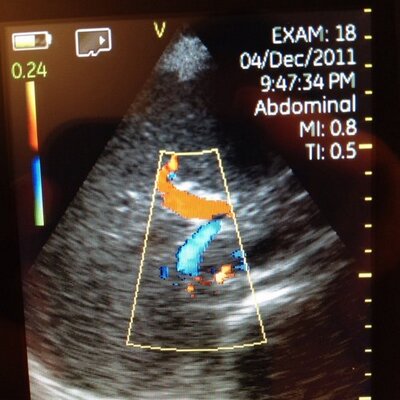
Valproic acid is great for refractory agitated delirium.
🏆 Especially useful in patients with explosive/aggressive behavior in the context of a personality disorder (often exacerbated by delirium).
Candidates for VPA:
✅ Not pregnant
✅ No severe liver dz or history of hyperammonemia
✅ No major drug-drug interactions with VPA
✅ Didn't respond to antipsychotics +/- alpha-2 agonists (dexmedetomidine). This isn't a hard requirement, but generally VPA isn't usually a front-line agent.
Advantages of VPA:
👍 Cardiovascular stability
👍 Low risk of airway compromise (only mildly sedating)
👍 Antiseizure activity (e.g., can be used for sz prophylaxis in an agitated patient)
👍 Can be given IV or PO (1:1 conversion with immediate-release formulations)
👍 EM/ICU folks should be knowledgable and comfortable within it already
Disadvantages of VPA:
👎 Dosing requires a little more thought than most agents. For patients on this for more than a few days you want to check a VPA trough and adjust it using the Fraser equation (to account for albumin).
👎 Can cause a lot of side-effects (but most of these are due to *chronic* VPA, rather than just a few days of therapy)
Dosing
🎯 My preference is to use the same dosing regimen as for status epilepticus (40 mg/kg load max 3 grams, then 15 mg/kg/day in divided doses). You can up-titrate as needed while following VPA troughs if ineffective (max dose of 45 mg/kg/day).
🎯 Many studies have reported starting lower and up-titrating, but this delays its efficacy for 2-3 days.
🎯 Using more frequent doses (e.g., q6hr rather than q8hr) may avoid toxic peak levels while maintaining adequate trough levels.
This isn't an option I use a ton, but it's a terrific tool to have in your toolbox for agitated delirium that isn't responding to usual front-line treatments.
⚠️ VPA should be weaned off prior to hospital discharge (unless the patient is seen by psychiatry and they are intentionally recommending VPA as chronic outpatient therapy for bipolar disorder etc - which would be uncommon).
(more discussion on VPA pharmacology in the IBCC chapter on status epilepticus)
Recent article on this in NeuroCritical care here:

Thomas et al: Valproic acid for the management of agitation in neurosurgical intensive care unit patients
Link: link.springer.com/article/10…
@neurocritical #neurocritcare

Austin Rezigh retweeted
🏥 Teaching Service Day #2 🏥
What types of conditions result in acute hypotension with relatively minimal volume loss (e.g. no history of massive vomiting, massive diarrhea)?
Large volume loss → hypovolemic hTN
Minimal volume loss + [substrate?] → mixed hTN
Austin Rezigh retweeted
1/4
CELIAC DISEASE AND IRON DEFICIENCY
Saw a patient today with celiac disease on a strict gluten-free diet who remained profoundly iron deficient despite 4 months of oral iron.
Easy to assume:
“No gluten exposure = absorption normalized.”
But not always.
Austin Rezigh retweeted

🚨 Now Accepting Applications | Inaugural Class July 2026 🚨
St. David’s Medical Center has officially received ACGME accreditation for its Internal Medicine Residency Program and is now recruiting its first class of residents.
Located in Austin, this new program offers a strong clinical environment within a nationally recognized healthcare system.
Program Leadership
• Led by Asm Manzur Islam, MD
• Strong focus on mentorship, clinical excellence, and resident development
✨ Why This Program Stands Out
• Comprehensive, high-acuity Internal Medicine training
• Magnet®-recognized institution
• Exposure to a full spectrum of inpatient and outpatient care
• Access to advanced specialty services
• Competitive salary and robust benefits
• Opportunity to help build a program from the ground up
• Training in one of the fastest-growing cities in the U.S.
📅 Start Date: July 1, 2026
📩 Status: Now accepting applications for inaugural class
📞 Program Contact
• Program Administrator: Fatima Ibrahim
• Email: [email protected]
• ACGME Program ID: 1404800011

Austin Rezigh retweeted
A great ECG ⊕ chest pain evaluation by @davserantes presented by @monse_reyeslo! ⚡️
youtube.com/watch?v=fvMhe6fu…
Austin Rezigh retweeted

Grateful for the opportunity from @atiya_dhala to give a talk today on #PEEPtitration in #ARDS at the #ISAC2026 @Methodistpccm
Here are the major take-home points:
We’ve been taught to fear #PEEP because of the RV.
But the real problem isn’t PEEP.
It’s the wrong PEEP.
🧵👇

