

@RevMattRichard
Account based inUnited States
About this account
- Account based in
- United States
- Connected via
- United States App Store
Account-level information from X, not a live location or the device used for a specific post.
Hubby | Dad | Sacramental Minion (i.e., Pastor) | Author | DMin | Black Belt | Philosophy Acolyte
Minot, ND
Joined December 2011
- Tweets3.7K
- Following136
- Followers2.1K
- Likes306






The 10 Commandments were never given to you as a tool for your shame games and your guilt-controlling. Sure, God’s Law exposes sin, but it does not expose sin so that you can take over from there. The Law belongs to God. It strips away excuses, silences self-justification, and leaves the sinner with nothing to plead. And precisely there, where the Law has done its killing work, the Gospel speaks what only God can give: forgiveness, life, and salvation in Jesus Christ
pastormattrichard.com/2026/1…
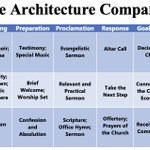
Listen up. It is time to set the record straight on contemporary worship services. We are not dealing merely with style. We are dealing with a fundamentally different theology of worship.
Take this chart as an example. At first glance, someone might assume that the difference between a Liturgical Divine Service and a Contemporary Evangelical Service is simply a matter of preference: guitars versus organs, praise bands versus hymns, screens versus hymnals. But the chart shows something much deeper. Now, pay attention: The architecture of the services differs because their goals differ.
The Contemporary Evangelical Service moves toward response, next steps, connection, and integration into the church’s ecosystem. The Liturgical Divine Service moves toward reception: Christ gives His gifts through His Word and Sacraments so Christians can return to their vocations. That is to say, these are not merely different styles accomplishing the same thing. They reflect different theological assumptions about what worship is, who is acting, and why the congregation is there.
That is why the so-called “worship wars” cannot be reduced to instrumentation or aesthetics. Indeed, the issue is much deeper than guitars versus organs. It is about theology embodied in the service's structure.
And this is precisely why the Confessional Lutheran Church must take the ordo seriously. You see, Lutherans should not be naive enough to think that the historic order is merely an empty shell waiting to be filled with whatever style happens to be popular. The ordo has a theological direction. Its architecture confesses something.
And here is the point: The shape of the service reveals its theology. Change the shape long enough, and you may eventually change the theology with it.

Over the last twenty-plus years, I have received plenty of pushback:
“Pastor Richard, why didn’t we have a Father’s Day sermon today – after all, it's Father’s Day?”
“Pastor Richard, it is Mother’s Day. Why wasn’t the sermon about mothers?”
“Pastor Richard, it is the Fourth of July. Why wasn’t the sermon about American Patriotism?”
“Pastor Richard, it is Valentine’s Day. Shouldn’t we hear a sermon about marriage and relationships?”
“Pastor Richard, it is Veterans Day. Why wasn’t the sermon about veterans?”
Dear friends, we do not refrain from preaching sermons about fathers, mothers, America, marriage, or veterans because we are against these things. Not at all. Rather, we preach:
Christ for fathers. Christ for mothers. Christ for husbands and wives. Christ for veterans. Christ for citizens. Christ for sinners.
We do this because the Gospel is of first importance in this church. The Gospel is of first importance in this church because the Gospel is the power of God for your salvation.
pastormattrichard.com/2026/0…

As you may or may not have heard, archaeologists, geologists, geophysicists, and soil scientists are working at the Durupınar formation near Mount Ararat in Turkey. They may have discovered Noah’s Ark.
Now, if the discovery is confirmed, does that validate the biblical account for Christendom? No, it does not. You see, Noah’s Ark has already been validated as a real global flood because the Scriptures say so—and because Jesus Himself speaks of Noah and the great Flood. Now, please listen carefully: Jesus does not merely allude vaguely to Noah as a myth or story. He refers to Noah as a real person who entered a real ark and was saved from a real Flood that came as God’s judgment on the world. In fact, Jesus points to the days of Noah when speaking about His own return and the coming judgment.
So, to the point, to deny Noah, the Ark, and the Flood is ultimately to contradict Jesus—to call Jesus a liar.
But wouldn’t the discovery of Noah’s Ark drastically change things for a skeptical world? No, it would not. Now, don’t get me wrong. If it were confirmed to be true, we Christians would be living in a remarkable and incredible time, able to follow such a significant archaeological discovery.
But what about the skeptical world?
It is often believed that if God would give just one more sign, one more miracle, one more piece of evidence, then faith would follow. However, the problem is not a lack of evidence. The problem is that fallen man refuses to hear the Word.
Remember the rich man and Lazarus? The rich man wanted Lazarus to rise from the dead and go to his brothers, believing that such a miraculous sign would surely convince them. But Abraham replied, “They have Moses and the Prophets; let them hear them.” And then: “If they do not hear Moses and the Prophets, neither will they be convinced if someone should rise from the dead.”
There it is: "Let them hear"
Listen up: faith does not come through archaeological discoveries. Faith is not produced by one more sign or one more piece of evidence. Instead, faith comes from hearing, and hearing through the Word of Christ. (Rm 10:17)
So, if the Ark is indeed discovered, let us marvel at it. Let us follow the research. Let the archaeologists, geologists, geophysicists, and soil scientists do their work. What a remarkable discovery it would be!
But let us not imagine that finding Noah’s Ark will somehow instantaneously convert the whole world and give Christians credibility. After all, if the world is not convinced when One rises from the dead, it will not be convinced by an archaeological discovery.
The problem has never been that God has not given enough evidence. The problem is that fallen man refuses to hear the Word. And so, we must always return to the Word. Christ is risen; Christ has spoken. Amen.

“You need to follow Jesus and love God and your neighbor as best you can” is not the Gospel. It is indeed biblical, but it certainly is not the Gospel. The Gospel is this: Christ pursued you; God so loved you and your neighbor that He sent His Son to the cross for your forgiveness.
Lutheran pulpits are for Lutheran ministers only, just as Baptist pulpits are for Baptist ministers only. Why? Because Lutherans are not Baptists, and Baptists are not Lutherans. We must avoid the error of unionism—the pretense that churches share doctrinal agreement when, in reality, they do not. This applies to Sunday services, weddings, and especially funerals.
Woe to those who naively play theological musical chairs, placing heterodox ministers into orthodox pulpits. A square peg does not fit into a round hole. You cannot shop at Sam’s Club with a Costco card, so why would we pretend it works differently in the Church?
Truth be told, the version of Christianity in America that you have grown up with is soft. We are used to convenience and comfort at very little cost. We expect church to fit our schedules and for the faith to stay out of the way of everything else we want to do. So, when Christianity becomes inconvenient, uncomfortable, or costly, we act as though something has gone terribly wrong. Frankly, you and I are spiritually spoiled.
For example, you may say, “Jesus is Lord,” but then you complain about getting up for church on Sunday morning. You may say, “Jesus is Lord,” but then you flippantly skip the Divine Service for a sporting event, camping, or needing to sleep in. You may say, “Jesus is Lord,” but you do not want to put too much in the offering plate, but several hours later drop $60 for fast food, a movie, crafting materials, or hunting supplies. You may say, “Jesus is Lord,” but then you get worked up if your Christian values make you look strange among your co-workers—or worse yet, if your church looks different from the other churches in town. You may say, “Jesus is Lord,” but then you spend the drive home criticizing the selection of an unfamiliar hymn, the chanting in the service, upset that a hymn had 10 verses, or that you didn’t get enough frosting on your donut.
Dear friends, that is why you and I need a wake-up call. We are quick to complain about the cost of serving Christ because we forget what kind of Lord we have. You see, when we say, “Jesus is Lord,” we are not merely saying that Jesus gives the orders and we had better obey. That is true, but it does not go far enough. The real question is this:
Do we realize what kind of Lord we have in Jesus?
pastormattrichard.com/2026/0…

The goal is no longer simply to get a person to believe in God over atheism, but to ask: Exactly who is this God you believe in? Furthermore, the danger is no longer merely that people will say, “There is no God.” The greater danger may be that they will say, “Of course I believe in God,” while this god they believe in requires no repentance, provides no atonement, justifies no sins, and denies the need and deity of Jesus Christ. That is not historic Christianity. It is something else entirely—something masquerading as Christianity and syncretizing itself with the Christian faith. It is Moralistic Therapeutic Deism. gottesdienst.org/gottesblog/…

Matthias, Emma, Family, and Friends, we should lament when we hear or think these things about marriage, babies, and family because what is essentially being implied is that marriage is bad, babies are burdens, and family is something to be avoided. And for that we should cry a thousand tears, saying, “Lord, have mercy.”
But some people will respond today, saying, “Isn’t marriage difficult? Isn’t marriage hard?” Of course, marriage is difficult and hard! The Lord God has never said that marriage is easy. You see, the crux of the problem is not that marriage is difficult. The problem is that in our culture we have come to equate hard and difficult things with evil and bad things. Indeed, in our culture, whatever is hard, whatever causes pain, and whatever demands sacrifice is often viewed as bad.
Full Sermon: pastormattrichard.com/2026/0…

As someone who did not follow the Lindsay Clancy trial closely, I was surprised by the 11–1 split. But when I realized the 11 jurors supported “not guilty by reason of insanity,” I was even more surprised.
Now, we need to boldly assert that sympathy should be given to the terrible realities of mental illness. A person’s mental state should absolutely be considered when determining an appropriate punishment. But it should not erase responsibility for the person's acts. In other words, we need to be aware of modern Gnostic tenets, which separate the mind from the body, as though the two can be treated as entirely independent.
In the case of Lindsay Clancy, whatever her mental state may have been, her hands and actions killed three children. If we separate the mind so completely from the body—using insanity to remove responsibility for the actions of her hands—we are left with an unsettling question: "Whose hands strangled those children with a resistance band?" Bluntly stated, does Lindsay Clancy have hands, and do those hands belong to her?
This is the tragedy of Gnostic America: the belief that we can separate the inner self from the embodied person, as though the mind can be detached from the body and from the body’s actions. Gnosticism is not just an ancient heresy; its assumptions and ethos remain very much alive in modern American thought, as seen in how this trial and public commentary dissociate mental state from bodily action/responsibility.

Being a Christian does give you assurance, certainty, and confidence. But that confidence is never grounded in your strength, heritage, denomination, congregation, or this country. It is found in Christ and in His sustaining work for you as a poor, miserable sinner.
And so, do not think that because you once believed, falling away is impossible. Do not put your fear, love, and trust in America, the Missouri Synod, this congregation, or yourself. They are not your God. There is only one Lord, and you shall fear, love, and trust in Him above all things.
Graphic: AI-generated
Sermon Link: pastormattrichard.com/2026/0…
🤖 Made with AI

We Christians die only once—we died in Baptism, and we will sleep in the grave until the resurrection. The Grave Is Only a Bed.
Full Sermon: pastormattrichard.com/2026/0…
🤖 Made with AI

Adiaphora does not concede to an antinomian spirit - it is not ruled by preference and power. Rather, adiaphora is governed by the Gospel, informed by sound doctrine, exercised with collegiality, respectful of the historic Church, and directed toward the edification of Christ’s Church. Adiaphora is not the end of a theological conversation (a trump card) but the beginning of a doctrinally rich and wise discussion.
pastormattrichard.com/2026/0…
The reason we do not like calling things what they are — the reason we dress up our excuses and sins with pious language — is because the sinful nature must always be right. Your old Adam cannot stand to be wrong. Your sinful nature cannot tolerate the feeling of guilt. And so, there is a part of you that must justify, explain, defend, and always be right. And to accomplish this, we rename our unbelief and give pious motives to our wicked motivations. We explain our sins away with reasonable explanations. We soften and cover sin – we do not call things what they are. We make evil sound good.
pastormattrichard.com/2026/0…
🤖 Made with AI

Let’s be honest about what creates true unity (i.e., Koinonia): It's not a survey. It is not the careful balancing of opinions. It is not bringing two different groups into a room and hoping that better conversation will somehow produce Christian unity. In other words, understanding one another may be useful, but it is far too weak a foundation for fellowship.
As Lutherans, our unity rests on something deeper - something more than just mere conversations - our fellowship rests on a common confession. That is why the goal cannot simply be for us to understand one another better. Instead, the goal must be for all of us to understand the Lutheran Confessions better. Indeed, the Book of Concord gives us our theological grammar, our shared convictions, our purpose, our goals, and the substance of our life together. The Book of Concord does not merely help us talk to one another. It tells us what we confess together. That is what concord means.
Simply stated, conversation should grow 'out of' a common confession. That is to say, when the Book of Concord stands between us and above us, we are not left trying to manufacture unity from our different opinions, but we begin from the same source. But without the Book of Concord at the center, we will keep surveying ourselves, comparing perspectives, and trying to manage our differences. But mark this: that is not koinonia; it is negotiation.
Alas, a wheel cannot hold together without a hub, and Lutheran fellowship cannot hold together without the Lutheran Confessions at the center.
So, here is my challenge to Red Letter Challenge: I will keep working to help the people within my sphere of influence better know, confess, and practice the theology of the Book of Concord through my preaching, teaching, singing, worship, and conversations. Please do the same. That is how real unity is recognized, confessed, and strengthened — not by endlessly studying one another, but by learning, confessing, and standing together in the same Lutheran faith.
We do not need to strive for unity; we already have it - it is called "The Book of Concord."
#RedLetterChallenge
#BookofConcordChallenge
#BookofConcordLutheran

"The State of the LCMS Survey" is an example of a great deal of effort spent measuring opinions—but not the opinions of the LCMS as a whole.
In my past doctoral research, I learned a considerable amount about survey methodology and conducted a fair amount of survey work. Since this new survey by Red Letter Living is not randomized, it cannot claim any statistically valid confidence level or margin of error for the LCMS as a whole. In other words, by distributing the survey through specific social-media channels and not randomizing the survey, the results will inevitably suffer from coverage bias, voluntary-response bias, and audience bias. Frankly stated, calling it “The State of the LCMS” gives the impression of representative denominational research that its collection method simply cannot support.
docs.google.com/forms/d/e/1F…
Mark this: once doctrinal discernment is pushed out of an adiaphora conversation, something else will take its place: personal preference, nostalgia, private agendas, pragmatism, or contemporary cultural assumptions (to name a few). Then without the wisdom of good doctrine, power steps in to enforce a preference, agenda, nostalgia, or a pragmatic and cultural assumption. Tragically, the question is no longer, “What best serves the Gospel?” Instead, the questions become: “Who has the most influence?” “Who complains the loudest?” or “Who is most determined to get his way?” and “Who has the votes?” In this way, preference supplies the content, and power supplies the enforcement.
Read More: pastormattrichard.com/2026/0…

There may indeed be times when we need to avoid certain threats. But we do not flee with fear. We flee with a sober mind of faith. And, there may indeed be times when we need to confront difficult problems. But we do so, not with pride. We do so sober-minded in faith. pastormattrichard.com/2026/0…
