

Lovers of imaging science. Developers of MR Elastography. Believers in patient-centered imaging. A @MayoClinic company #NAFLD #NASH #HCV
Rochester, MN
Joined June 2016
- Tweets2.6K
- Following1.5K
- Followers1.3K
- Likes2.8K





Resoundant retweeted

Incredible milestone for Resoundant and Mayo Clinic!
The FDA has accepted our LOI into the Biomarker Qualification Program for Liver Stiffness Measurement by MRE for development as a reasonably likely surrogate endpoint (RLSE) in MASH clinical trials.
We want to sincerely thank the FDA staff for their thoughtful engagement and guidance, as well as the researchers, clinicians, and study teams around the world whose work over many years has helped build the robust evidence base supporting MRE! Collectively, these efforts now span thousands of patients, enabling rigorous evaluation of fibrosis burden and its relationship to outcomes.
Fibrosis remains the key driver of adverse outcomes in MASH, and there is growing alignment across regulators, academia, and industry around the need for non-invasive, quantitative, and scalable tools that can support more efficient and patient-friendly trials.

Resoundant retweeted
🚨🚨
Did you catch it? Lilly hinted on their last earnings call that their Phase 3 MASLD trial for tirzepatide and retatrutide may be biopsy-free—using only non-invasive tests like MRE and MRI-PDFF.
This could be a watershed moment for metabolic liver disease trials: faster, cheaper, more accurate, and better for patients.
The shift from biopsy to NITs in pivotal trials might not be years away - it may already be here.

Resoundant retweeted
19%
Most imaging biomarkers try to prove they’re specific. MRE did the opposite early on - RSNA QIBA experts were working to standardize MRE for *clinical use* first - not just for clinical trials.
So the widely cited 19% repeatability coefficient (RC) for MRE wasn’t cherry-picked to look precise. It was designed by QIBA to reflect the worst-case clinical variation (e.g., patient moves to another state before follow-up, is scanned on a different scanner model, software, didn't fast, possibly with an untrained MRE reader). So the MRE repeatability studies that QIBA pulled from had:
- Different scanners, sequences, and software
- No fasting requirements
- Scan intervals up to 30 days
- Different operators and software
- Even untrained readers(!)
These studies together found a within-subject coefficient of variation (wCV) of 7.9% - which then plussed up according to the Repeatability Coefficient formula of RC = 1.96 x √2 x 7.9% = 19%. Voilà!
(side note: the RC formula was created to take into the longitudinal variability described above)
So even in the messiest environments, if MRE changes ≥19%, you can be 95% confident it's a true biological change.
But here’s what many miss: the 95% confidence interval for the 19% RC is roughly 15% to 24%. That means even QIBA’s “conservative” number has some flexibility built in - if the change in MRE is ≥15% (the lower bound of the 95% CI) you can still be 95% certain.
But let's switch to clinical trials. In high-profile Phase 2b or 3 studies, we’re not operating in worst-case clinical settings that QIBA took into account. Here we have very tightly controlled settings:
- patients usually receive baseline and f/u on the same scanner
- no software updates are allowed during the study
- expert readers (or our automated software at Mayo)
- strict fasting
Fortunately, there have been a few well-controlled studies of MRE in similar environments that yielded wCV of 3.8%. That yields an RC of:
RC (95%) = 1.96 x √2 x 3.8 = *10.5%* (CI: 8.5% to 14.5%)
So in tightly-controlled clinical trial environments, a ≥8.5% change in MRE represents a true biological change with 95% confidence.
But you don't have to be locked into the 95% confidence, which is the same as 5% false positives, or 95% specificity. There are virtually no tests that have 95% spec in any context. So what about 90% specificity, aka 90% confidence?
That would be RC (90%) = 1.44 x √2 x 3.8
RC at 90% confidence: 8.8% (CI: 7.2% to 11.2%)
That means if FDA allows 90% specificity with your monitoring biomarker, a change of MRE of just ≥7.2% would be significant with 90% confidence.
I'd love to see resmetirom data re-run with the proportion of patients who experienced a MRE change of ≥8kPa! I bet the data would be even more impressive! And if you're designing a trial, it's critical to understand that 19% change in MRE is probably too conservative given the efforts you've taken to reduce variability.

Resoundant retweeted
A new study in Nature caught my attention for its innovative approach to a long-standing challenge: noninvasively assessing liver inflammation in MASH.
lnkd.in/evmimxGB
The team (Vanderbilt Radiology; Xiaoyu Jiang, John Gore et al) introduces MR cytometry - an imaging technique that estimates cell size and density using MRI data. The rationale:
🟢 In healthy livers, large hepatocytes dominate.
🟠 In MASH, inflammatory processes bring in smaller immune cells (like lymphocytes and macrophages), increasing cell density and decreasing average cell size.
By setting thresholds (cell size <10 μm and density >30 x 10⁴/mm³) the authors quantify inflammation-related changes across the liver.
The key result (Fig. 7) is below - and I've never seen such clean stratification using any biomarker (serum, imaging, etc) in MASH.
MASH patients had a significantly higher percentage of liver voxels matching this inflammatory signature compared to healthy controls - measured noninvasively on practically any standard 1.5T or 3T MRI scanner, in under 12 minutes.
Because this is a direct method for assessing cellular characteristics of the liver, MRI cytometry would be a very welcome tool for clinical trials in terms of quantifying inflammatory reductions alone.
"This technique holds promise as a complementary tool to existing noninvasive methods, such as PDFF and MRE, contributing to the development of a comprehensive, noninvasive diagnostic approach for MASH."
It's still early work, but this is worth following closely.

Resoundant retweeted

Consensus panel recs: Diagnosis and Monitoring Pathways Using Non-Invasive Tests in Patients With A1AT-liver disease #livertwitter @my_ueg @AASLDtweets @EASLnews @AmerGastroAssn
pubmed.ncbi.nlm.nih.gov/4007…

Resoundant retweeted
Happy to be co-author on a great and highly practical study (lead author Yasaman Vali) from the LITMUS Consortium on the clinical factors that might require adjusted thresholds to noninvasive tests (NITs) for liver fibrosis assessment.
Some key takeaways:
🟢 NITs like FIB-4, ELF, and VCTE can have a high accuracy for ruling-in and ruling-out liver fibrosis in MASLD/MASH patients.
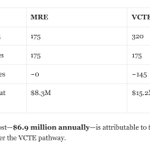
🟠 However, clinical factors such as BMI can have a major impact on the thresholds required to maintain this accuracy, particularly for VCTE. The kPa threshold to maintain 90% specificity (thus 10% false positives) needs to increase from 10kPa to 15kPa as BMI rises from ≤25 to ≥30 (purple circle). This is a 50% change in the threshold, compared to a modest change for ELF across the same patient cohort. Why is this important? The BMI in the pivotal MAESTRO-NASH trial was 35, meaning that for most MASLD/MASH patients, a threshold of 15kPa or greater will be needed rule in advanced fibrosis with only 10% false positives. Without adjustment (i.e., using a threshold of 8 kPa for a patient with a BMI of 32), you will greatly increase the number of false positives, resulting in healthy patients being told they have disease and undergoing unnecessary treatments.
🟠 The thresholds for accurately ruling-in (90% sensitivity) and ruling-out (90% specificity) at a BMI >30 are basically 8-15 kPa, which ironically is the same range used by a number of professional organizations for ruling-in for new resmetirom treatment. The problem? This is essentially an indeterminate zone for BMI ≥30, rather than a zone to confidently rule-in disease.
🧠 Key takeaway: more work is needed to better define the use of these tools across different clinical profiles. VCTE in particular seems highly sensitive to elevated BMI and may need custom/adjusted thresholds based on BMI. ELF doesn't appear to suffer as much from this confounding factor.
lnkd.in/e7r2D5Fv
#livertwitter #MASLD #MASH

Resoundant retweeted
Interesting paper here. Couple of quick thoughts:
- a bad test (low sensitivity) is the worst thing. Patients value most: "if I have the disease, I want the test to find it early"
- False Positives: the data here seem odd. As the FP% decreases from 40% to 20% and then 10%, the utility goes down? I think participants didn't quite understand the concept? Maybe the questions should have linked False Positives to their real-world consequences: anxiety, unnecessary treatments, unnecessary side effects, etc.
- Cost, time and type of test are all pretty marginal in comparison to a test's accuracy
- abbreviated MRI (aMRI) did extremely well due to its optimal sensitivity


Resoundant retweeted
Great to have @LuisAntonioDiaz on team @MASLDResearch @UCSD_GI - anyone interested in MetALD or ALD trial - check out inclusion criteria & use of Peth- AUD include MRI-PDFF/MRE in SLD trials as you build from phase 1 to 2b - @AASLDtweets @EASLedu @shivaramsingh #LiverTwitter

🧵 1/ New Clinical Trial on ALD 🚨
We explored safety & tolerability of the IL-23 monoclonal antibody #Guselkumab in ALD patients with @DrLoomba @MASLDResearch @UCSD_GI in AP&T. This study could help improving clinical trial design in ALD ⬇️ #LiverTwitter @AASLDtweets @EASLedu

Resoundant retweeted
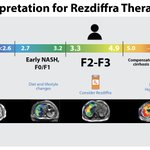
@pepin_kay delivered a great talk at #RSNA254 on the current state of MRI Biomarkers for novel MASLD/MASH therapy.
Here's a quick summary 👇
@scottisaacsmd @DrLoomba @NoureddinMD @AlinaAllenMD #livertwitter

Resoundant retweeted
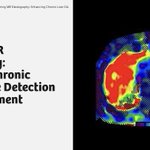
Looking forward to this session at #RSNA24 Mastering MR Elastography: Enhancing Chronic Liver Disease Detection and Management featuring @pepin_kay and @MRElastography
events.siemens-healthineers.…

Resoundant retweeted

Join @therealjonadill in the @RSNA Hands-On Lab: Liver Elastography session starting now! #RSNA24 #RSNA2024

Resoundant retweeted

Just started. Join us in Arie Crown Theater!
@EricTopol is giving the Plenary Session on #AI Transformation of #Medicine.
#RSNA24 #AIinMedicine @RSNA


Resoundant retweeted

Pros and cons of current NITs in MetALD. Inflammation, excess weight, alcohol use and low specificity are the main caveats of NITs. Fantastic talk from @MajaThiele at the @MetALDconf ! #LiverTwitter @DrLoomba @AleksanderKrag @EASLedu @EASLnews @MASLDResearch

Resoundant retweeted

PRACTICE GUIDANCE
Resmetirom therapy for metabolic dysfunction-associated steatotic liver disease: October 2024 updates to AASLD Practice Guidance
Chen et al.
#LiverX
tinyurl.com/3fp7n544

Resoundant retweeted

#GUTAbstract by @AlexHYangMD et al on the paper
"Prevalence of steatotic liver disease, advanced fibrosis and cirrhosis among community-dwelling overweight and obese individuals in the USA" via bit.ly/3AdP8Kd
Paper via: bit.ly/4fRh0Ub
@DrMaralmd @DrLoomba @MonicaTincopa @f_tavaglione @UCSD_GI @AjmeraVeeral #LiverDisease #SteatoticLiverDisease


Resoundant retweeted

Recently published open access at bit.ly/4gzP73q
"Metabolic dysfunction-associated steatotic liver disease and MetALD increases the risk of liver cancer and gastrointestinal cancer: A nationwide cohort study"
#livertwitter #MetALD #MASLD

ALT This study showed that MASLD and MetALD are associated with an increased risk of cancer, particularly liver and gastrointestinal cancers. The findings build new evidence for the clinical outcomes of MetALD while highlighting the importance of managing alcohol intake properly in MASLD and MetALD.
Resoundant retweeted
#GUTImage from the paper by @AlexHYangMD et al on
"Prevalence of steatotic liver disease, advanced fibrosis and cirrhosis among community-dwelling overweight and obese individuals in the USA" via
bit.ly/4fRh0Ub
@drmaralmd @DrLoomba @MonicaTincopa @DrHuangDQ @f_tavaglione @UCSD_GI


Resoundant retweeted
#GUTImage from the paper by @AlexHYangMD et al on
"Prevalence of steatotic liver disease, advanced fibrosis and cirrhosis among community-dwelling overweight and obese individuals in the USA" via
bit.ly/4fRh0Ub
@drmaralmd @DrLoomba @MonicaTincopa @DrHuangDQ @f_tavaglione @UCSD_GI

