

Exposing Russian propaganda and the harsh realities of occupation in Ukraine @ResistanceMove3
Kyiv, Ukraine
Joined April 2022
- Tweets2K
- Following4.7K
- Followers2.5K
- Likes701




Pinned Tweet
🔥 The Ukrainian Resistance Strikes Back!
Where the occupier reigns, there are those who resist. The Ukrainian underground continues its relentless fight behind enemy lines, sabotaging Russian forces and proving that our cities will never be conquered!
💥 Vehicle explosions
🔥 Arson attacks on enemy facilities
💪 Unyielding resistance
Every act of defiance brings us closer to liberation. The enemy must know: Ukraine does not forgive. Ukraine does not forget!
#UkrainianResistance #Sabotage #OccupiedUkraine #UkraineWillWin
🔵 Occupation Authorities in the Kherson Region Once Again Demonstrate Their Inability to Address Critical Infrastructure Problems
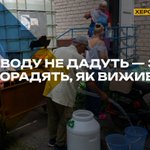
The occupation administration in the Kherson region has once again demonstrated its complete inability to address critical infrastructure problems. Instead of repairing pumping stations, restoring power grids, and ensuring a stable water supply, the occupiers are effectively forcing people to live without basic utilities.
Due to constant power outages, dozens of settlements remain without water. Rather than addressing the underlying causes of the failures, the occupation authorities are offering to deliver water by tanker trucks and instructing officials to determine who specifically needs it.
▶️ Pumping stations and power grids are not being restored.
▶️ A stable water supply is being replaced with water deliveries by tanker trucks.
▶️ Residents are being forced to inform officials of their basic needs.
▶️ No systemic solutions are being proposed to restore the region’s infrastructure.

🟣 Occupation Authorities Continue Using Sports Clubs in the Temporarily Occupied Territories as a Tool of Ideological Influence on Young People
The occupation administration continues to use sports clubs in the temporarily occupied territories as a means of ideological influence over young people. Schools and sports clubs are opening new classes in sambo, boxing, karate, and other martial arts, while participants in the so-called “Special Military Operation” (SMO) are increasingly being appointed as instructors and coaches.
Officially, these appointments are justified as part of “patriotic education” and the transfer of experience to the younger generation. In reality, however, sports are increasingly being used to promote service in Russian security structures and to create a positive image of Russian military personnel.
▶️ Veterans of the so-called “Special Military Operation” are being appointed as coaches.
▶️ New classes in sambo, boxing, karate, and other martial arts are being opened.
▶️ Children are being encouraged to view Russian military personnel as role models.
▶️ Sports training is being combined with ideological and “patriotic” education.

🟡 More and More Settlements in Occupied Kherson Region Are Left Without Mobile Service and Internet
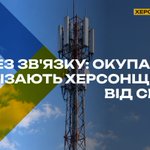
In the temporarily occupied Kherson region, an increasing number of settlements are being left without mobile service and internet access. According to local residents, a stable signal is available only in larger cities, and even there the network operates with frequent disruptions.
The situation is even worse in rural areas, where people can remain without the ability to make even a basic phone call for weeks. Despite this, the occupation administration has provided no explanation for the loss of communications and has not announced any timeframe for restoring network services.
▶️ People are unable to promptly call an ambulance in emergencies.
▶️ Families are losing the ability to stay in contact with one another.
▶️ Reporting emergencies and other urgent situations is becoming increasingly difficult.
▶️ Residents of remote villages and elderly people are affected most severely, leaving them effectively isolated.

🟢 While Residents of Occupied Kherson Region Go Months Without Reliable Electricity and Water, Occupation Authorities Plan Yacht Marinas
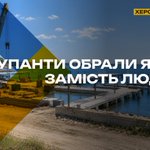
While residents of the temporarily occupied Kherson region continue to go months without stable electricity and water supplies, the occupation administration is already planning the construction of yacht marinas and maritime piers. Russian officials describe such projects as one of the priorities for the “development” of the occupied region.
Against the backdrop of disruptions to essential utilities, fuel shortages, large-scale fires, and deteriorating infrastructure, such initiatives appear completely detached from the actual needs of the local population.
▶️ Plans are underway to build yacht marinas and maritime piers.
▶️ The restoration of power grids and water pipelines is being postponed.
▶️ Problems related to fuel shortages and deteriorating infrastructure remain unresolved.
▶️ New expensive projects are being presented as part of the region’s “development.”

🔵 The Occupation Administration Has Begun Reshuffling the Clergy in Ukraine’s Temporarily Occupied Territories
The occupation administration has begun making personnel changes among the clergy in the temporarily occupied territories of Ukraine. Clergy members who agreed to cooperate with the occupation authorities after the start of the occupation and supported their policies are gradually being removed from leadership positions, transferred to remote regions of Russia, or suspended from ministry altogether.
At the same time, priests are arriving in the temporarily occupied territories directly from Russia. The Kremlin is increasingly entrusting them with the leadership of dioceses and parishes located in the occupied territories.
▶️ Local collaborating clergy are being removed from leadership positions.
▶️ They are being transferred to remote regions of Russia or suspended from ministry.
▶️ Priests brought in specifically from Russia are being appointed to key positions.
▶️ Church structures are being used to spread Russian propaganda and support the occupation authorities.

🔴 The Occupation Administration of the Zaporizhzhia Region Continues Preparing for the New School Year by Supplying Russian Propaganda Literature to Schools
The occupation administration of the Zaporizhzhia region continues preparing for the new academic year by delivering Russian propaganda literature to schools in the temporarily occupied territories. Presented as an effort to replenish school library collections, these books are intended to serve as yet another tool of ideological influence over Ukrainian children.
Once the academic year begins, schoolchildren are expected to be introduced to this literature both during lessons and through extracurricular activities. To facilitate this, the occupiers are establishing reading clubs and organizing themed events.
▶️ Russian propaganda literature is being delivered to school libraries.
▶️ Reading clubs are being established to discuss the imposed books.
▶️ Russian historical and political narratives are being promoted through the education system.
▶️ Ukrainian literature is gradually being removed from school libraries.

🟢 Occupation Authorities Continue Using Children’s Summer Camps in the Temporarily Occupied Territories of Ukraine as Platforms for Russian Propaganda
The occupation administration continues to use children’s summer camps in the temporarily occupied territories of Ukraine as platforms for spreading Russian propaganda. During themed activities devoted to the Christianization of Rus, children are being exposed to a distorted interpretation of history, including claims that modern Russia is supposedly the sole successor to Kyivan Rus.
It is precisely in these children’s camps, where schoolchildren spend their summer holidays, that the occupiers organize lectures, themed meetings, and “historical” discussions aimed at reshaping Ukrainian children’s worldview.
▶️ Propaganda activities are being held in children’s summer camps.
▶️ Children are being taught a Russian interpretation of the history of Kyivan Rus.
▶️ The role of Kyiv and Ukraine in the development of Ukrainian statehood is being deliberately distorted.
▶️ Historical myths are being used to justify Russia’s occupation of Ukrainian territories.

🔴 Occupation Authorities Tighten Control over Hunting Gun Owners in the Occupied Part of the Zaporizhzhia Region
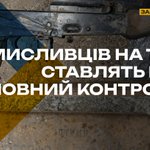
The occupation administration in the temporarily occupied part of the Zaporizhzhia region continues to tighten control over hunting gun owners. Under the guise of “digitalization,” residents are being required to re-register their firearms, enter them into Russian registries, and regularly report on the storage and use of ammunition.
Officially, these measures are justified on security grounds. In practice, however, they significantly expand the occupation administration’s ability to monitor the local population and increase administrative pressure.
▶️ Hunting firearms must be re-registered in accordance with Russian regulations.
▶️ Owners are required to enter their firearms into Russian electronic registries.
▶️ Ongoing reporting requirements are being introduced concerning the storage and use of ammunition.
▶️ Searches and criminal prosecution are being used as tools of pressure against those who refuse to comply or oppose the occupation authorities.

🟢 On the Temporarily Occupied Crimean Peninsula, Public Transport Drivers Increasingly Disable Payment Terminals and Accept Only Cash
On the temporarily occupied Crimean Peninsula, public transport drivers are increasingly disabling payment terminals and accepting fares only in cash. This is reportedly due to months-long delays in salary payments, forcing workers to seek any possible means of supporting their families.
According to local residents, drivers explain the terminal shutdowns as “technical malfunctions” and ask passengers to pay in cash instead. In this way, they are reportedly trying to obtain at least some of the money they are owed for their work.
▶️ Public transport workers have been facing salary delays for months.
▶️ Drivers are forced to disable payment terminals and accept cash only.
▶️ Workers are looking for any possible ways to obtain money to support their families.
▶️ Wage arrears are becoming a systemic problem across the occupied peninsula.

🟣 Occupation Administration Launches a “School for Foster Parents” in the Temporarily Occupied Kherson Region
The occupation administration in the temporarily occupied Kherson region has announced the launch of a so-called “School for Foster Parents.” Presented as a social initiative, the program offers Russian citizens specialized courses after which they can apply for guardianship or adoption of children residing in the temporarily occupied territories.
According to the Center of National Resistance (CNR), the program is another element of Russia’s policy toward Ukrainian children. After completing the courses, Russian citizens are prepared to establish foster families and subsequently facilitate the removal of children from the occupied territories to Russia.
▶️ A “School for Foster Parents” has been established for Russian citizens.
▶️ Prospective adoptive parents are being prepared through specialized training courses.
▶️ Mechanisms are being created to arrange guardianship over Ukrainian children.
▶️ The program facilitates the subsequent removal of children from the temporarily occupied territories to Russia.

🔵 Agricultural Workers in Ukraine’s Temporarily Occupied Territories Increasingly Left Without Wages
In the temporarily occupied territories of Ukraine, agricultural workers are increasingly being left without pay. Enterprises involved in growing and harvesting crops are going months without paying machine operators, combine harvester drivers, tractor operators, and truck drivers, citing difficulties in selling and transporting their produce.
At the same time, this situation is largely a consequence of Russia’s own actions. The use of civilian logistics for military purposes, fuel shortages, and growing difficulties in transporting harvested crops are making it increasingly difficult for the agricultural sector to operate in the occupied territories.
▶️ Russian forces are using civilian transport and grain trucks for military logistics.
▶️ The transportation of harvested crops is becoming increasingly difficult due to logistical problems.
▶️ Fuel shortages and rising fuel prices are increasing the operating costs of agricultural enterprises.
▶️ Financial losses are being passed on to workers, who are left without the wages they have earned for months.

🟣 In occupied Ukraine, Russia uses sports clubs to indoctrinate youth: martial arts sections are led by so-called "svo" veterans, pushing a positive image of Russian troops onto children. #Ukraine #Occupation

🟡 Occupation Authorities Begin Allocating Land Plots in the Occupied Part of the Zaporizhzhia Region to Participants in the So-Called “Special Military Operation”
The occupation administration has officially begun transferring land plots in the temporarily occupied part of the Zaporizhzhia region to participants in the so-called “Special Military Operation” (SMO). The mechanism has already been put into operation, with occupation authorities compiling lists of available plots and establishing waiting lists for their allocation.
Officially, the initiative is presented as a form of “social support for veterans.” In reality, however, it involves the unlawful distribution of Ukrainian land and the use of occupied territories as a resource to reward those participating in Russia’s war against Ukraine.
▶️ Land plots are being allocated to participants in the so-called “Special Military Operation.”
▶️ Occupation authorities are compiling lists and waiting queues for land allocation in the temporarily occupied territories.
▶️ The occupied territories are being used as a tool of material incentive for Russian military personnel.
▶️ The occupiers are attempting to entrench Russia’s presence by altering the demographic composition of the occupied territories.

🟣 While the Occupation Administration of the Zaporizhzhia Region Prepares for Russia’s State Duma Elections, Residents of Occupied Enerhodar Continue to Live Without Reliable Electricity and Water
While the occupation administration of the Zaporizhzhia region is preparing for the next elections to the Russian State Duma and reporting on the “successful integration” of the occupied territories, residents of temporarily occupied Enerhodar have been living for months without stable electricity and water supplies.
Even occupation officials acknowledge that they cannot provide a timeline for restoring the water supply. They attribute the situation to ongoing power outages and the unstable operation of pumping equipment, yet no practical solution to the problem has been proposed.
▶️ Preparations are underway for elections to the Russian State Duma.
▶️ Propaganda events and information campaigns continue to be organized.
▶️ The occupation authorities seek to create the illusion of “normal life” in the occupied territories.
▶️ Meanwhile, the long-standing problems with electricity and water supplies affecting local residents remain unaddressed.

🟣 In the Temporarily Occupied Kherson Region, Occupation Authorities Once Again Shift the Burden of Their Failures onto Local Residents
In Velyki Kopani, in the temporarily occupied Kherson region, the occupation authorities have once again shifted responsibility for their own failures onto local residents. Villagers collected more than 500,000 rubles from their own pockets to protect a local electrical substation, hoping to restore a stable electricity supply.
Despite the funds raised and the work that has begun, the village remains without electricity. At the same time, occupation-controlled utility services continue to send residents electricity bills calculated on the basis of average consumption.
▶️ Residents are being forced to finance the restoration of the electricity supply with their own money.
▶️ The occupation authorities have failed to complete the restoration of the local energy infrastructure.
▶️ Electricity charges continue to be imposed despite the absence of an actual power supply.
▶️ Residents are expected to pay for a service they are not receiving.

🔵 According to the Center of National Resistance (CNR), employees of the occupation administrations in the temporarily occupied Kherson region have begun receiving military-grade body armor. This type of protective equipment is used by Russian security forces and is intended for operations in combat environments.
Despite the occupiers’ claims of “protecting civilians,” the issuance of military equipment to civilian officials increasingly blurs the distinction between civilian and military structures in the temporarily occupied territories.
▶️ Representatives of the occupation administration are being issued military-grade body armor.
▶️ Civilian officials are being made to outwardly resemble military personnel.
▶️ Civilian vehicles and infrastructure continue to be used to support military operations.
▶️ The civilian sector is being increasingly integrated into the logistical support system of the Russian military.

🔴 Occupation Authorities Continue Using Children in the Temporarily Occupied Territories of Ukraine as a Target Audience for Russian Military Propaganda
The occupation administration continues to use children in the temporarily occupied territories of Ukraine as a primary target for Russian military propaganda. In children’s camps and during various educational and recreational events, meetings with servicemen of the Russian Armed Forces are regularly organized.
During these events, Russian soldiers are portrayed as “heroes” and “defenders,” fostering a positive image of the military of the aggressor state while concealing its role in the war against Ukraine.
▶️ Meetings are organized between schoolchildren, camp participants, and Russian military personnel.
▶️ Military equipment is displayed, and demonstration events are conducted.
▶️ Narratives promoting the “honor of military service” and the “defense of the homeland” are actively disseminated.
▶️ Children are encouraged to develop a positive perception of the Russian military and the occupation authorities.

🟣 Residents in the Temporarily Occupied Donetsk Region Continue to Receive Utility Bills for Services They Do Not Receive
In the temporarily occupied territories of the Donetsk region, local residents continue to receive utility bills for services that are effectively unavailable. Despite the absence of gas supply, running water, or sewage services, the occupation authorities continue to issue regular charges, forcing people to pay for utilities they do not receive.
At the same time, residents are repairing apartment entrances, courtyards, and damaged residential buildings at their own expense, as municipal services fail to carry out their responsibilities and infrastructure restoration has been postponed indefinitely.
▶️ Residents are billed for gas, water, and sewage services even when those services are unavailable.
▶️ The occupation authorities fail to repair and restore municipal infrastructure.
▶️ People are forced to maintain residential buildings and surrounding areas using their own financial resources.
▶️ The utility payment system continues to operate despite the lack of corresponding public services.
