

REIT income portfolio — what I buy, sell, and why | Weekly portfolio updates | Former money-market trader
Joined December 2022
- Tweets1.9K
- Following203
- Followers1.2K
- Likes4.8K


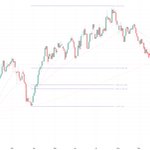
The Dow Jones Equity REIT index bounced off 2,817 as anticipated and is now consolidating in the low 2,900s. I expect it to grind higher toward the 3,050 area before a minor pullback. The long-term uptrend remains intact for now.
I still expect a much deeper correction sometime next year toward the low 2,600s, or potentially as low as the low 2,400s. That level would mark a long-term bottom for the sector, where I would look to go long in a major way. Until then, I would make only small tactical moves and/or trim non-core positions.


The REIT index (Dow Jones Equity All REIT Total Return) ended the day at 2,920, down 1.36%, and is testing the 200-day SMA (2,927). If it doesn’t bounce back meaningfully soon, a deeper pullback toward the 2,800 area (0.786 Fib) is possible.
This is the time for discipline. When yields are moving this fast, buying here risks catching a falling knife. I’d wait for stabilization rather than try to pick ‘bargains.’

$ADC delivered Q3 results yesterday: net income of $0.53/sh (+18.5%); Core FFO of $1.15/sh (+4.9%); and AFFO of $1.15/sh (+4.9%).
The company invested ~$358M in 94 retail net lease properties (acquisitions of ~$308.6M at a 7.3% weighted-average cap rate) and sold 11 properties for ~$26.9M.
The portfolio remains 99.8% leased, with ~$2.0B of liquidity and proforma net debt/recurring EBITDA of 3.9x. Full-year 2026 AFFO/sh guidance was raised slightly to $4.58–$4.59 (prior $4.57–$4.59).
A noteworthy change is the more conservative stance on investment volume. Investment guidance was tightened to ~$1.6B (from $1.6B–$1.8B), while disposition guidance was raised to $100–$150M (from $50–$100M). This may point to more disciplined capital allocation.
It was also a clean quarter operationally: credit and occupancy losses were minimal (0.06%), and there was no impairment charge.
I like the results — $ADC is the tenth largest position in my portfolio . Its net-lease retail peers, $EPRT and $NTST, report today after the market close. It’ll be interesting to see how they compare.
investors.agreerealty.com/pr…
Rising yields have decimated mREITs this year—mortgage real estate ETFs like $REM and $MORT are down ~19–20% (dividend-adjusted) YTD.
However, over longer time frames, their high dividend yields (often 15%+) often compensate for underperformance in stock price. On a dividend-adjusted basis, $AGNC (one of the few mREITs that I own) has lost 12% YTD (vs. $O +1.8%), but it actually outperformed $O over the 1Y (+0.7% vs. -0.2%) and 5Y (+6.1% vs. +4.6%) periods. On a 10Y annualized total return basis, the results are similar — $AGNC at 4.5% vs. $O at 4.1%.
To be fair, mREITs are highly volatile, and outsized drawdowns can happen over fairly short periods of time, but I find that quality mREITs like $AGNC and $NLY (and a few others) can be excellent income vehicles when entries are made opportunistically—buying near or below tangible book has historically been a good risk/reward setup.
Portfolio Weekly Summary - Oct 12, 2026 to Oct 16, 2026
Transactions
Initiated: $FRMI
Added: $ADC $AGNC $DLR $EPRT $EQIX $IRM $NHP $O $PLD
Exited: $CCI $DEA
Dividend received: ACRE, AFCG, APLE, ARE, COLD, EPR, EPRT, FBRT, GNL, HST, IIPR, INVH, MRP, NHP, O, ONL, REXR, XRN
Portfolio Performance
Weekly: -0.72%
Total return YTD: +3.52%
Total return since inception (Feb 2022): +8.13% (1.75% annualized)
Forward dividend yield: 5.70%
Number of Holdings: 46
Top 30 Holdings
1. O 10.2% 2. EQIX 7.8% 3. PLD 6.1%
4. ARE 6.1% 5. LTC 5.8% 6. IRM 4.8%
7. DLR 4.3% 8. AMT 4.0% 9. NHP 3.7%
10. MPT 3.3% 11. ADC 3.2% 12. SBAC 3.2%
13. REXR 3.1% 14. OHI 3.0% 15. SPG 2.5%
16. GOOD 2.3% 17. EPRT 2.2% 18. AGNC 2.1%
19. IIPR 2.1% 20. HST 2.0% 21. LINE 1.6%
22. TRNO 1.6% 23. OUT 1.5% 24. CHCT 1.3%
25. DOC 1.1% 26. HR 1.1% 27. COLD 1.0%
28. XRN 1.0% 29. BXDC 0.9% 30. STWD 0.8%

$PLD is down more than 2% amid a rising REIT sector. Earnings were solid: core FFO of $1.60 (beat, +7.4% YoY) and revenue of $2.39B (beat, +7.8% YoY). However, full-year GAAP net earnings guidance was cut from $4.40–$4.45 to $4.05–$4.15 per share, and occupancy guidance was tightened slightly lower at the upper end (to 95.25–95.50% from 95.25–95.75%). The company noted that the GAAP cut partly reflects assumptions around transaction gains and constant foreign-currency rates.
While fundamentals remain solid, supported by long-term secular demand in logistics and data centers, I would wait for the low $120s before adding more. If the REIT sector experiences another significant pullback, the $113 area might become possible.

$FRMI posted a TensorWave lease fact sheet.
Key terms of the binding 15-year phase-one lease at Project Matador: 222 MW total power and 156 MW critical IT; $6.5B of contracted phase-one revenue over the initial term; two 5-year renewal options; 2.5% annual escalators. Phased turnkey delivery starts in Q4 2027 and finishes in early 2028.
Fermi estimates project-level NOI margin at ~75%–80%, with gas and variable power passed through. Capex is $3–4M per MW of power plus $10–12M per MW of critical IT. AMD's credit support starts once construction is complete and rent begins, and ends early if TensorWave or its guarantor holds an investment-grade rating for 12 straight months.
The TensorWave deal hasn’t officially closed yet.
sec.gov/Archives/edgar/data/…
Yields are falling, but many REITs are still getting pounded—notably data centers like $EQIX, $DLR, and $IRM, as well as office REITs. It feels like the market is aggressively shaking out weak hands, and especially those who bought the earlier recovery this year are feeling the pressure.
$TLT is up 0.65% so far, with an intraday move of about 1.6%. A short-term bottom is probably in, and my first target to trim is $83. I still think a deeper bottom is likely sometime next year.
The yields have been volatile after the hot CPI print this morning, but overall the curve is bear-flattening. If CPI keeps grinding higher, we might see the belly-to-long-end inverted, which might be a relatively good scenario for $TLT.
As expected, REITs are getting hammered—the Dow Jones All Equity REIT Index was down more than 1% at one point but has recovered to -0.7%. Some names are holding up very well, in particular senior housing like $WELL and $VTR, and triple-net retail names like $O, $ADC, and $NNN. They are all positive at mid-morning.
I added outsized positions in $O, $ADC, and $TLT in the pre-market today.
Got back in $FRMI at $3.73. The TensorWave deal looks more credible now, and the stock price makes the upside appealing. It’s still a tiny position in my REIT portfolio—albeit double my previous one. Extremely speculative, but interesting to watch.

🔋 Fermi America and AMD Announce Major Texas Infrastructure Deal
$FRMI Fermi Inc. just announced a landmark credit support agreement and partnership with AMD for Phase 1 of Project Matador in Carson County, Texas.
⚡ The Phase 1 agreement supports a lease for 222 MW of gross power capacity, marking a critical step toward full project financing.
📈 The partnership establishes a robust framework for future phases two and three, opening the door for an expansion of up to 650 MW of gross power capacity.
🏗️ Project Matador is designed to tackle the ultimate bottleneck in AI infrastructure—access to massive, reliable behind-the-meter power on a rapid timeline via a private, dedicated grid.
🪫 The Texas Panhandle campus is slated to integrate a massive combined-cycle natural gas project, next-gen nuclear, solar, and battery storage, scaling toward approximately 17 GW to fuel the future of hyperscale AI.
feeds.issuerdirect.com/news-…
With rising yields, REITs have given back a chunk of their YTD gains. The Dow Jones Equity REIT Total Return Index is +8.9% YTD, down from a peak of +20.3% in late July.
But not all sectors have felt the same. Hotel REITs have been largely immune to the downside so far, and many names have actually continued to grind higher since early September, even as the broader sector has sold off. The sector has been supported by improving fundamentals (aided by event-driven demand in 2026) and rising asset values. As long as the economy holds and RevPAR growth remains positive, the setup looks constructive.
All YTD, dividend-adjusted:
$CLDT +106%
$PEB +66%
$RLJ +54%
$PK +49%
$DRH +42%
$APLE +42%
$HST +32%
$RHP +30%
$XHR +29%
$SHO +27%
Outside the hotel sector, a few notable $1B+ REITs have significantly outperformed the overall sector. Some names might surprise you.
$IRM (Data center) +41%
$CBL (Retail) +37%
$EQIX (Data center) +36%
$OUT (Advertising) +31%
litecoin:native (Healthcare) +28%
$CDP (Office) +25%
$MAC (Retail) +23%
$LAMR (Advertising) +22%
$WELL (Healthcare) +22%
$DOC (Healthcare) +22%
The outperformance of $OUT and $LAMR reflects strong demand for digitized outdoor advertising. $CBL and $MAC are more turnaround stories, while $DOC’s outperformance is most likely linked to its stake in $JAN.
In short, companies with pricing power/shorter pricing cycles and secular/cyclical tailwinds have decoupled from the more rate-sensitive, longer-duration REITs.
Portfolio Weekly Summary - Oct 5, 2026 to Oct 9, 2026
Transactions
Initiated: $ADC $OUT $PEB
Added: $APLE $EPRT $HST $O
Reduced: $AMT $CCI $DOC $SBAC
Dividend received: AGNC, AHRT, MPT, OLP, TRNO
Portfolio Performance
Weekly: +0.06%
Total return YTD: +3.77%
Total return since inception (Feb 2022): +8.87% (1.91% annualized)
Forward dividend yield: 5.84%
Number of Holdings: 47
Top 30 Holdings (by weight)
1. O 9.4% 2. ARE 7.0% 3. EQIX 7.0%
4. LTC 6.0% 5. PLD 5.8% 6. IRM 4.4%
7. AMT 4.2% 8. MPT 3.6% 9. NHP 3.6%
10. DLR 3.5% 11. REXR 3.3% 12. SBAC 3.3%
13. OHI 3.1% 14. SPG 2.6% 15. GOOD 2.5%
16. IIPR 2.2% 17. HST 2.0% 18. AGNC 1.9%
19. LINE 1.8% 20. TRNO 1.7% 21. EPRT 1.6%
22. OUT 1.5% 23. DEA 1.5% 24. CHCT 1.4%
25. DOC 1.2% 26. XRN 1.2% 27. HR 1.1%
28. COLD 1.1% 29. BXDC 1.1% 30. CCI 1.0%

The tables have turned this time. With SpaceX’s purchase of the 800 MHz band, telecoms are tanking and cell tower REITs are rising. SpaceX hasn’t said anything about leasing cell towers; its ambition has been to build its own ground infrastructure. The market is apparently assuming that leasing towers will be necessary to roll out the network at scale, at least early on and/or in high-demand areas. That would create a multi-year window in which tower REITs could see incremental leasing.
I still think upside remains for $AMT, $CCI, and $SBAC for several years, but beyond that horizon the outcome depends on many known/unknown factors. I trimmed $AMT and $SBAC slightly into the strength this morning.
Cell tower REITs — $AMT, $CCI, and $SBAC — are tanking today mainly due to the terrestrial buildout ambitions of $SPCX. It might be too early, but I think this is neutral (or at least not too bearish) for cell tower owners, because leasing existing infrastructure seems to be the path of least resistance to avoid the headaches of site acquisition, ongoing maintenance, and regulatory hurdles — not to mention physical limits. Funny enough, $T and $VZ are holding up better than the REITs.
I’m nibbling on some beaten-down retail REITs like $ADC. It’s been in oversold territory, down about 21% over the last two months. Historically, there were two occasions when it sold off like that: –21% from August to October 2022 and –23% from July to October 2023. Both were followed by a roughly 20% move higher.
Given the trajectory of the yield curve, there might be further downside, but I think these are good levels to dip a toe in.
$DLR: Its 50/50 JV with Mitsubishi has begun building KIX15, a 24 MW data center at the KIX Campus in Osaka, targeted to open in Q4 2028. This will bring the JV’s Japan portfolio to 10 data centers and about 220 MW.
While Japan as a whole is currently a low-single-digit contributor to revenue (Tokyo ~2.3% as of 2025), management treats it as a core market for its long-term APAC strategy and wants to roughly double capacity.
finance.yahoo.com/technology…

If real growth runs at 4–5%, inflation protection is not enough. The higher real discount rate still compresses the multiple unless income keeps up. This implies a divergence between growth-linked properties and inflation pass-through properties. I wouldn’t rule out a new normal in which real GDP grows at something like 4%+, driven by greater investment and productivity gains. In that world, yields can grind higher even if inflation stabilizes.
Is sportswear dead? Not really. There is a clear split: the stocks of large legacy athletic brands (except the Japanese brands) are down roughly 75% from 2021, while a handful of focused performance names are flat to sharply higher. Private specialists such as New Balance and Patagonia also appear to be doing well.
Demand (and capital) has shifted toward specialist performance and premium outdoor franchises.
5Y performance (dividend-adjusted):
$LULU (Lululemon) -76.5%
$PUM.XETR (Puma) -75.5%
$VFC (The North Face, Vans, Timberland) -75.2%
$NKE (Nike) -74.8%
$UA (Under Armour) -74.6%
$ADS.XETR (Adidas) -43.8%
$COLM (Columbia Sportswear) -36.2%
$ONON (On Holding) +1.2%
$DECK (Deckers Outdoor: Hoka, Teva, UGG) +29.9%
$AS (Amer Sports: Arc’teryx, Salomon, Wilson) +102.8% (since IPO in Feb 2024)
8022.TSE (Mizuno) +428.7%
7936.TSE (Asics) +614%
Portfolio Weekly Summary - Sep 28, 2026 to Oct 2, 2026
Transactions
Added: $AGNC $GOOD $IRM litecoin:native $NHP
Exited: $INVH $NTST
Dividend received: AMH, CCI, DLR, EXR, GOOD, IRM, LTC, PLD, SPG
Portfolio Performance
Weekly: -2.90%
Total return YTD: +3.53%
Total return since inception (Feb 2022): +8.65% (1.88% annualized)
Forward dividend yield: 5.91%
Number of Holdings: 44
Top 30 Holdings (by weight)
1. O 9.1% 2. ARE 7.3% 3. EQIX 7.0%
4. LTC 6.1% 5. PLD 5.8% 6. IRM 4.4%
7. AMT 4.2% 8. MPT 3.8% 9. DOC 3.8%
10. NHP 3.7% 11. DLR 3.5% 12. REXR 3.3%
13. SBAC 3.3% 14. OHI 3.2% 15. SPG 2.6%
16. GOOD 2.5% 17. IIPR 2.1% 18. AGNC 1.9%
19. LINE 1.8% 20. CCI 1.7% 21. TRNO 1.7%
22. DEA 1.5% 23. HST 1.5% 24. CHCT 1.4%
25. EPRT 1.3% 26. XRN 1.2% 27. HR 1.1%
28. BXDC 1.1% 29. COLD 1.1% 30. ABR 0.9%

REITs continue falling—the Dow Jones Equity Index is down another 1% at mid-morning after losing over 1% yesterday. The index has now lost more than 11% since its peak in late July. We haven’t seen this level of weakness since March–April 2025, when it fell 18% over a month. The yield curve keeps steepening today—the 10-year has crossed above 5.30% (20Y 5.70%, 30Y 5.66%) while the front end is down about 5 bps.
While the index has lost 11%, some hotel REITs have held up quite well over the same stretch: $PK +5.7%, $PEB -1.9%, $APLE -2.3%, $DRH -2.5%, $SHO -3.7%, $HST -7.7%. Hotels can be more resilient to a duration hit because their cash flows reprice faster—daily room rates versus the multi-year leases.
Not exactly a good day for REITs—the Dow Jones Equity REIT Index just finished Q3 with a bang to the downside, dropping 1.03% on the day.
Triple-net retail names have been noticeably weaker recently. With Q3 now in the books, here are their YTD total returns:
$NNN +8.3%
$NTST +2.9%
$O -1.4%
$ADC -4.4%
$EPRT -11.2%
Equity REIT Index +7.7%
$ADC and $EPRT have historically commanded premium multiples; when the cost of capital rises and acquisition spreads compress, those premiums shrink fast. On the flip side, this looks like a buying opportunity for $ADC and $EPRT for those interested, but the cheap often gets cheaper these days, so I’m staying sidelined for now.
While the overall REIT sector is getting shaken out by this and that, one REIT has been moving in a different dimension: $WELL
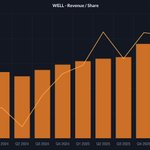
The stock hasn't touched its 200-day SMA since April 2023 — more than three years — while rising about 220%. Over that stretch, revenue roughly doubled and normalized FFO grew about 80%. The stock kept climbing without giving any clean reset.
In my view, its biggest advantage is its capital-markets flywheel: strong institutional backing and ATM issuance at high multiples have let the company grow rapidly while keeping leverage low.
I expect the stock to keep performing (I have no position), but at these multiples, I would rather just buy $AAPL or $GOOGL, for example.
