

Working on the hard stuff to make biology a tractable problem.
1.1.1.1
Joined September 2020
- Tweets945
- Following650
- Followers470
- Likes5.6K





I really appreciated the amazing feedback I got on talmud.dev, so I thought I would share another project of mine: tanach.dev
It's still a bit rough, but it has mikraot gedolot, rishonim per pasuk, midrash and a concordance. All open source and free to use. Please give me ideas on how to improve it!
@DBashIdeas @ZoharAtkins @Sefaria @josh_herzberg @GBinIsrael

built talmud.dev for myself to help me learn. overview of the daf, halacha takeaways, yerushalmi vs bavli differences, background on concepts you need to follow it. free and open source. @DBashIdeas @ZoharAtkins @Sefaria @josh_herzberg would love your advice on making it better
This is dangerous and stupid.

AI is rapidly getting smarter.
Now, humanity can too.
Today, @nucleusgenomics is announcing Vitruvian, our newest set of genetic optimization models.
Vitruvian’s intelligence model can optimize embryo DNA for 14 IQ points — nearly a standard deviation.
The models were trained on 1,000,000+ people, validated across 40,000+ siblings, and used more than 7 million genetic markers.
In Superintelligence, Nick Bostrom proposed genetic optimization as a key way for humanity to keep pace with rapidly advancing AI.
Bostrom’s vision is no longer theoretical.
Genetic optimization, like AI, has followed a scaling law: as datasets have grown, so have model capabilities. This trend will continue.
Parents across the world now have the choice to substantially increase their child’s intelligence.
And the next generation can choose to do the same.
AI is no longer the only intelligence that will compound.
Humanity can now direct its own evolution.
1
2
594
We all had the friend growing up who was smarter than us, that one we just couldn't beat.
AI is just going to make us all feel like that. The world will change as we adjust, but not much more than knowing that there is and will always be someone smarter than us...
1
1
272
Shaun Regenbaum retweeted
I've been playing around with @typesafeai and it is a fascinating model (Jev). It is far more powerful than I was expecting because it offers specific capabilities at prices that are 2x order of magnitude cheaper. I've been using it to disambiguate complex choices. Going to keep playing with it, but I believe it will unlock entirely new types of products.
Shaun Regenbaum retweeted
First findings with Jev (@typesafeai's System One model)
I put Jev through two real jobs from our pipeline, and found its strength's and weaknesses.
Just as background for some: Jev is a different kind of model. You hand it a piece of text and a question with a fixed set of answers. It hands back a probability for each answer. It does not write text like ChatGPT or Claude. That is why it is much faster (about 1.2 seconds a call) and cheaper ($0.042 per million input tokens, output free).
Test 1: reading SEC filings. Our production classifier reads a biotech's 8-K and answers three things: is this a trial readout, did it hit, and what kind of announcement is it. On our 120 hand-built adversarial test cases, Jev matched production exactly: 120/120 on readout, 115/120 on outcome, 120/120 on type, for under a cent.
Then we ran it on 30,582 real filings and had a third model settle every disagreement. Jev called a readout wrongly on 3.9% of filings. Production got 0.9%.
The failure is easy to describe: a quarterly results release or a "we will present a poster" notice is full of trial-result language, and Jev, reading in one pass, wrongfully calls it a result.
With some optimizations we managed to cut Jev's errors to 1.6%. But still behind production.
Cost was not the deciding factor. Jev came to $0.00016 per filing, production $0.00034. So it wasn't even that much cheaper.
Test 2: Checking extracted facts. Our criteria pipeline turns trial eligibility text into facts ("age 18 or over", "no prior EGFR therapy"). Against an answer key of 994 facts with 55 wrong, Jev caught 75% of the wrong ones. An internal classifier caught 71%. Jev cost $0.05 per 100 studies; an internal classifier cost $0.08. But only 19% of Jev's flags were real, against 77% for our internal classifer.
It go split by question: near-perfect on "is this line a requirement" (AUC 0.99) and "was a requirement missed" (0.95), mediocre on "was the limit or the AND/OR read right" (0.80).
What the two tests agree on. Jev is dependable on narrow yes-or-no questions about short text, and it gives you a calibrated probability you can threshold.
Sadly, it is not as dependable where the answer depends on what a whole document means. Used as a final classifier it loses to a cheap generating models. Used as a first-pass filter, or a second opinion that sends disagreements to a bigger model, it earns its place, and we kept it for exactly that in the criteria pipeline.
Practical notes for anyone trying it.
1. Write the question you mean, literally; it answers the one you wrote.
2. Split any rule with two steps into two questions and do the second step in code.
3. Keep the input short and on topic; a 14,000-character document is a distractor.
3. Cost can still add up, 50,000 requests can cost $10, if you are running at scale, costs are still meaningful
I think @typesafeai is making an interesting bet with the kind of model, sadly its intelligence is not yet up to par, it really does feel like its missing a "reasoning" capability as it gets caught in tricky decisions, I hope in the next version they can tackle that.
Shaun Regenbaum retweeted
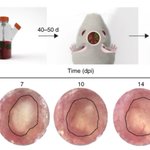
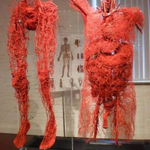
Theres only three ways to breakthrough with biology:
Humanized Animals
Organoids
Animalized Humans.
I really hope we don't go for the latter.
Theres only three ways to breakthrough with biology:
Humanized Animals
Organoids
Animalized Humans.
I really hope we don't go for the latter.
First findings with Jev (@typesafeai's System One model)
I put Jev through two real jobs from our pipeline, and found its strength's and weaknesses.
Just as background for some: Jev is a different kind of model. You hand it a piece of text and a question with a fixed set of answers. It hands back a probability for each answer. It does not write text like ChatGPT or Claude. That is why it is much faster (about 1.2 seconds a call) and cheaper ($0.042 per million input tokens, output free).
Test 1: reading SEC filings. Our production classifier reads a biotech's 8-K and answers three things: is this a trial readout, did it hit, and what kind of announcement is it. On our 120 hand-built adversarial test cases, Jev matched production exactly: 120/120 on readout, 115/120 on outcome, 120/120 on type, for under a cent.
Then we ran it on 30,582 real filings and had a third model settle every disagreement. Jev called a readout wrongly on 3.9% of filings. Production got 0.9%.
The failure is easy to describe: a quarterly results release or a "we will present a poster" notice is full of trial-result language, and Jev, reading in one pass, wrongfully calls it a result.
With some optimizations we managed to cut Jev's errors to 1.6%. But still behind production.
Cost was not the deciding factor. Jev came to $0.00016 per filing, production $0.00034. So it wasn't even that much cheaper.
Test 2: Checking extracted facts. Our criteria pipeline turns trial eligibility text into facts ("age 18 or over", "no prior EGFR therapy"). Against an answer key of 994 facts with 55 wrong, Jev caught 75% of the wrong ones. An internal classifier caught 71%. Jev cost $0.05 per 100 studies; an internal classifier cost $0.08. But only 19% of Jev's flags were real, against 77% for our internal classifer.
It go split by question: near-perfect on "is this line a requirement" (AUC 0.99) and "was a requirement missed" (0.95), mediocre on "was the limit or the AND/OR read right" (0.80).
What the two tests agree on. Jev is dependable on narrow yes-or-no questions about short text, and it gives you a calibrated probability you can threshold.
Sadly, it is not as dependable where the answer depends on what a whole document means. Used as a final classifier it loses to a cheap generating models. Used as a first-pass filter, or a second opinion that sends disagreements to a bigger model, it earns its place, and we kept it for exactly that in the criteria pipeline.
Practical notes for anyone trying it.
1. Write the question you mean, literally; it answers the one you wrote.
2. Split any rule with two steps into two questions and do the second step in code.
3. Keep the input short and on topic; a 14,000-character document is a distractor.
3. Cost can still add up, 50,000 requests can cost $10, if you are running at scale, costs are still meaningful
I think @typesafeai is making an interesting bet with the kind of model, sadly its intelligence is not yet up to par, it really does feel like its missing a "reasoning" capability as it gets caught in tricky decisions, I hope in the next version they can tackle that.
I've been playing around with @typesafeai and it is a fascinating model (Jev). It is far more powerful than I was expecting because it offers specific capabilities at prices that are 2x order of magnitude cheaper. I've been using it to disambiguate complex choices. Going to keep playing with it, but I believe it will unlock entirely new types of products.
People are making crazy claims about the obsolescence of humans, which I think is ridiculous.
Intelligence/AI will continue to scale alongside compute and energy. But none of these things are free and like every technology, we will reach a limit whether its data or a Dyson sphere.
The world is full of problems, and there will always be capital/intelligence allocation issues. When you have a trillion experiments to run, but can only run 1 billion what will you do? Will you (as a human) just sit around, not playing with the low probability problems? The moonshots? Or will you still continue to explore because curiosity drives us, even while machines grind away at the high-success rate problems?

🤷♀️ You understand that period of human history is over right? In roughly 5 years, no human in the US will be doing any cognitive labor. Not Elon, not Sam, not Jane Street, not McKinsey. Machines will be better at all of it.
2
334
Shaun Regenbaum retweeted

Muse is built to help deliver personal superintelligence to everyone over time, so we're making it free to use for up to 100M tokens per week. There are subscription plans for those use who use even more compute.
Shaun Regenbaum retweeted

Going into the new trading week, nice little find… $nktr states on the record that it is presently negotiating Rezpeg funding/development with “dozens” of companies, including “many of the world’s largest pharmaceutical companies,” under two way CDAs, with documents dated as recently as August.
$nktr in an ACTIVE process officially confirmed.

Shaun Regenbaum retweeted

So basically, all this time we’ve been misled by Anthropic. The $100 plan only gives you around 3.5x the weekly usage of the $20 plan, and the $200 plan only gives you around 6x, The whole x5 and x20 thing only applies to the 5 hour window, the same kind of window OpenAI already removed, Honestly, I expect nothing from Anthropic anymore and somehow they still manage to disappoint me. Tibo already clarified that ChatGPT plans actually respect the x10 and x20 exactly as advertised, without any 5 hour window
What a time to be alive. A few years ago, it would have been ridiculous to make a bee tracking simulator to figure out optimal parameters for a camera setup. Thanks for the fun video @jeremy_fielding!
youtu.be/SSkJCOriO8E?si=eqRJ…

2
146
Shaun Regenbaum retweeted

after hacking into the ducati’s cluster board via thousands of voltage glitches, the cluster no longer boots properly (stuck in a blinking light animation)
to diagnose this, I had claude analyze the blinking lights pattern and frequency to track down the exact location in my bike’s dumped firmware that produces these patterns and lcd display (the lcd contents were ambiguous and had two candidates)
we tracked it down to a region of code whose only entrypoint is a failed firmware code integrity checksum, presumably caused by the thousands of voltage glitches we injected causing some of the flash memory cells to lose charge, corrupting the firmware code itself
top-left: original video + cropped regions on the LEDs,
bottom-left: analyzed LED brightness across time
right: dumped firmware opcodes that produce this pattern
Shaun Regenbaum retweeted

Now, you can use opendde with “pip install opendde”
Next step is cofolding + design in one checkpoint
#opendde


Good morning ICML@🇰🇷,
Finally to announce our first small step towards a real drug discovery engine (aka OpenDDE), an open source all-atom foundation model for biomolecular co-folding. Meanwhile, we are in the process of training and extending other functional components towards a complete drug discovery engine, that is why it is a preview version.
GitHub: lnkd.in/gBgwvNMj
Project page: lnkd.in/g7t8WW55
Structure prediction is the core of AI driven drug discovery. Or to say, a well-trained trunk-encoder+diffusion-decoder is the foundation of a complete drug discovery engine. So prior to a complete engine, we first build a good co-folding module.
OpenDDE introduces atomic latent reasoning over biomolecular tokens, an extensible folding-centered foundation for drug discovery workflows, and scaling laws across data, model size, and test time compute.
Across antibody antigen benchmarks, OpenDDE achieves 70.0% success on FoldBench-AB, 51.0% on PXMeter-AB, and 66.4% on our new 2026ARK-AB benchmark for low-homology AbAg interfaces. We are not competing with other baselines. To us, drug discovery is for human good, more than just being competitive landscapes.
For Aureka, OpenDDE is part of a larger AI-native drug discovery infrastructure spanning foundation models, compute, molecular design, high throughput functional validation, closed loop optimization, and asset data room generation.
OpenDDE is not a complete drug discovery engine yet. It has flaws, but it forms a foundation layer. By connecting biomolecular modeling with physical wet lab validation, we hope to make therapeutic discovery more scalable, reproducible, and accessible.
Read more about Aureka and OpenDDE in lnkd.in/gF_NUWda
#AI #DrugDiscovery #OpenSource #ICML

Shaun Regenbaum retweeted

1/ Today, we’re excited to introduce Lucy 2.5.
Lucy represents a paradigm shift in world models, not just in how generated worlds look, but in how we interact with them.
A thread on what makes it a paradigm shift 👇

Great performance for a first release, I'm excited to see what they release next.

Today, we are introducing Inkling.
Inkling reasons efficiently across text, image, and audio modalities. We are making the full weights available.
thinkingmachines.ai/news/int…
Available today for fine-tuning on Tinker. Play with it in the Inkling Playground. 🧵

1
145