

Recalibrate is a Neuroscience and Health Management Ecosystem 🧠💜 Grab our free guide and explore here
Joined May 2025
- Tweets1.6K
- Following447
- Followers301
- Likes3.2K





Pinned Tweet
You cannot think your way out of a loop, because at full speed the thinking part of your brain is barely involved 🧠
Anything you have done enough times stops being run by the goal-directed part of your brain and gets handed over to the habit system. It is what lets you drive home with no memory of the drive.
And that handover is tempo dependent. At its usual speed, the automatic system has it. Slow the same action right down and it cannot run, because the automatic version only exists at one pace. Control and calm come back to you.
Which is why understanding your loop almost never breaks it. You can name it, trace exactly where it came from, explain it to someone else in detail. Then walk into the same room at the same speed and do the whole thing again, because the part of you that understood it was never the part running it.
There is a second mechanism, and it matters more if you are ill.
Your brain does not receive your body, it predicts it, and then checks that prediction against what actually arrives. Pain and fatigue are outputs of that process rather than readouts from tissue. And when the incoming signals are ambiguous, the system resolves them towards threat, because a false alarm is cheaper than a missed one.
Speed is what creates that ambiguity. Move fast and the signals arrive faster than they can be matched to a prediction, so unmatched signal gets weighted as danger. Move slowly and the prediction has time to be tested against what is really happening.
Same movement. Completely different verdict.
And here is the part almost nobody says. Chronic illness does not make people slow. It usually makes them fast.
When the good window might close by lunchtime, you cram. When months have gone already, you hurry. A sensitised nervous system is not sluggish, it is accelerated, bracing and rushing so that things are over sooner.
So the people who most need a third of the pace are often running at double it, and then the crash gets blamed on the activity when the real variable was tempo.
Eat at a third of the pace and you notice you were not hungry.
Work at a third of the pace and you notice you have been doing an unnecessary version of that task for years.
Move at a third of the pace and the same activity, for the same duration, stops overwhelming you.
And when the overwhelm starts building, do not stop. Slow down further. What you want is the pace just underneath it, and with chronic illness that is far slower than you would guess.
Nothing new is added in any of that. The information was always there. What changes is that something able to use it is finally present.
Doing something significantly slower, calmer and with more awareness is the answer to almost every loop we are trapped in mentally, physically and spiritually. Allow your mind and body to catch up to you.
So take one thing you did on autopilot this morning, and run it tomorrow at a third of the speed.
Recalibratepain.com 💜

Recalibrate retweeted
Inside Your Own Brain: What School Left Out 🧠💭
The lobes of your brain are usually taught as a boring list to memorise. The real story? Each section runs a highly specific operating system that dictates exactly how you experience reality.
Here is what each part is actually running 👇
🧠 Frontal Lobe | The ExecutiveHome to your personality, decision-making, and sense of self. The prefrontal cortex manages focus, working memory, and impulse control. When you feel "not like yourself," this region has likely gone quiet. It finishes maturing around age 25, which is why teenagers feel things far more intensely than they can regulate them.
📡 Parietal Lobe | The MapmakerYour spatial and sensory integration hub. It handles navigation and holds the somatosensory cortex—the brain's internal map of your body. In chronic pain conditions like CRPS or phantom limb, this neural map physically distorts. The brain literally redraws the body in response to persistent pain.
👁️ Occipital Lobe | The ArchitectAlmost entirely dedicated to vision. Your eyes merely capture light, but this lobe builds the physical world you see. Around 30% of your cortex is tied up in visual processing, meaning your reality is a construction project.
🎧 Temporal Lobe | The VaultProcesses hearing, language, and meaning. Because the hippocampus (memory) and amygdala (emotion) both live here, your past memories and emotional weight are permanently braided together.
🪶 Cerebellum | The Dark HorseLong dismissed as just a motor coordinator, we now know it shapes attention, language, and emotional regulation. It holds roughly half of all the neurons in your entire brain, packed into just 10% of its volume.
⚡ Brainstem | The Life SupportThe oldest, deepest structure. It automates breathing, heart rate, blood pressure, and consciousness itself. Everything keeping you alive while you sleep runs through this small column.
🧬 Spinal Cord | The GhostwriterNot just a cable. It processes reflexes and modulates pain, making physical decisions milliseconds before your actual brain even registers what happened.
The strangest part? You are sitting inside this system right now, reading this in complete silence. Three pounds of tissue running every thought, memory, and emotion on just 20 watts of power. The most complex object in the known universe, and it’s yours 💜
Graphic adapted from @Supporting_classes
#Neuroscience #BrainHealth #BrainAnatomy #Recalibrate #BrainScience #Biology

Recalibrate retweeted
Zero gravity should heal a bad back. It does the opposite 🧠💭
🧑🚀 Take an astronaut, remove the load of gravity, and within weeks the spine begins to break down. The muscles that stabilise it waste. The discs swell. Their risk of a herniated disc climbs for a year after they land, and over half are in pain before they even get home.
That one fact changes how you should read a picture like this.
The problems labelled here, bulging, degeneration, herniation, facet syndrome, are almost always blamed on age and wear. Space says otherwise 👇
🔬 The disc is fed by load.
The intervertebral disc has no blood supply. It is the largest structure in the body that has to feed itself by diffusion, and the pump that drives it is pressure. Each time you load and unload the spine, nutrients move in and waste moves out. Remove the load and the disc is not resting. It is starving.
🔬 The muscle disappears faster than you would believe.
In one NASA study, the deep stabiliser of the lower back, the multifidus, lost a large part of its lean muscle in a single mission. Its lean fraction fell from about 86 to 72 percent and did not fully recover on the ground. No load, no muscle.
🔬 The same rule runs your back down here.
Too much load in the wrong moment injures a disc. But too little load, month after month, degrades it just as surely, starving the tissue and wasting the muscle that protects it. Both ends of that scale produce the problems on this diagram.
This is why current guidelines for ordinary back pain say the opposite of what fear tells you. Not rest. Movement and graded load. A 2026 review of astronaut back pain reached the same verdict. The countermeasure was never rest. It was load.
Your spine is not wearing out from being used. It breaks down when the load it needs is wrong, and for most people, that means far too little of it.
🎁 Grab our free guide 👉 Recalibratepain.com
#BackPain #Spine #Neuroscience #Recalibrate

Recalibrate retweeted
Fear is not a measure of what you cannot do. It is a measure of what your brain cannot yet predict 🧠💭
"Fear comes from inexperience, not incapability." Neuroscience says that is almost exactly right. And the word that saves it is "almost."
Here is what fear actually is, and the one type the quote gets wrong 👇
🧠 Fear is a prediction, not a verdict. Your brain runs on prediction, forecasting what comes next and bracing your body for it. When you have never done a thing, it has no evidence it goes well, so the amygdala fills the gap with a worst case. That guess feels like truth. It is only missing information.
🔁 Action is what rewrites the forecast. Act, and when the disaster does not come, midbrain dopamine neurons fire a prediction error and the forecast updates. The prefrontal cortex builds a new, safer prediction that competes with the old fear. This is why the second attempt is never as heavy as the first. You did not get braver. Your brain got better data. And motivation followed the action. It did not lead it.
🚪 Now the exception. Some fear is memory, not inexperience. Get hurt badly once and the brain learns it in a single trial. The amygdala and hippocampus tag the whole situation as dangerous. That fear is not inexperience. It is experience, a nervous system protecting you from something that already happened. Fear of success runs on the same wiring, the medial prefrontal cortex reading a bigger life as a threat to the self it kept safe.
🔥 This is where chronic illness lives. In a sensitised nervous system that protective prediction gets stuck on. The brain forecasts danger from movement that is completely safe, and pain is the output it generates to make you stop. The problem is no longer the tissue. It is the prediction.
🌀 Avoidance is the trap that deepens it. Avoiding the feared movement lowers the fear today, so the brain files it as a win and does it again. But avoidance removes the one thing that proves you are safe. The body deconditions, movement turns guarded and less coordinated, vagal tone drops, and the system reads all of it as more threat. The fear does not shrink. It compounds.
💜 The way out is not force. It is data. You do not overpower a stuck prediction. You outvote it. Small, safe, paced, repeated exposure feeds the nervous system proof that it can settle, and with education and tools around the biological systems connected the prefrontal cortex slowly rewrites the forecast. This is graded exposure, one of the most evidence backed tools in pain science. Your nervous system is far more changeable than anyone told you.
You were never incapable. Your brain was protecting you with old information. Recovery is the work of giving it something new 💜
🎁 We built Recalibrate to help you do exactly that, to read your own nervous system and feed it new data. Grab the free guide and explore the ecosystem
👉 Recalibratepain.com
#Neuroscience #ChronicPain #NervousSystem #PainScience #BrainHealth #Recalibrate

Recalibrate retweeted
Aspirin came from tree bark. Morphine came from a flower 🧠💭
Most "natural" painkillers aren't folk remedies. They're pharmacology nobody got around to branding.
🦷 Cloves contain eugenol, a real local anaesthetic
🌿 Willow bark contains salicin, the molecule aspirin was built from
🌳 Frankincense has 7 trials behind it for knee arthritis
🟡 Turmeric works, but only with black pepper
There's no separate category called natural medicine. Only chemistry we've tested, and chemistry we haven't 💜
recalibratepain.com


Recalibrate retweeted
💜💭
Aspirin came from tree bark. Morphine came from a flower 🧠💭
Most "natural" painkillers aren't folk remedies. They're pharmacology nobody got around to branding.
🦷 Cloves contain eugenol, a real local anaesthetic
🌿 Willow bark contains salicin, the molecule aspirin was built from
🌳 Frankincense has 7 trials behind it for knee arthritis
🟡 Turmeric works, but only with black pepper
There's no separate category called natural medicine. Only chemistry we've tested, and chemistry we haven't 💜
recalibratepain.com
Recalibrate retweeted
💜💭
𝗛𝗼𝘄 𝗱𝗼 𝘆𝗼𝘂 𝗯𝗿𝗶𝗱𝗴𝗲 𝘁𝗵𝗲 𝗴𝗮𝗽 𝗯𝗲𝘁𝘄𝗲𝗲𝗻 𝘄𝗵𝗮𝘁 𝗮 𝗰𝗵𝗿𝗼𝗻𝗶𝗰 𝗶𝗹𝗹𝗻𝗲𝘀𝘀 𝗽𝗮𝘁𝗶𝗲𝗻𝘁 𝗲𝘅𝗽𝗲𝗿𝗶𝗲𝗻𝗰𝗲𝘀 𝗱𝗮𝗶𝗹𝘆 𝗮𝗻𝗱 𝘄𝗵𝗮𝘁 𝗮 𝗰𝗹𝗶𝗻𝗶𝗰𝗶𝗮𝗻 𝗮𝗰𝘁𝘂𝗮𝗹𝗹𝘆 𝘀𝗲𝗲𝘀?🧠💭
When you live with complex conditions, the hardest part isn't just the physical symptoms. It is the sheer exhaustion of trying to explain what is happening to your body when every standard test comes back normal.
I spent six years living inside this reality. Severe Fibromyalgia and central sensitisation from a bad injury, hyper-mobility, AuDHD.
I couldn't find a single digital system that bridged the gap between what the experience entailed every day and what the clinician actually needs to see in clinic.
That gap is exactly why Recalibrate was created.
Over 16,400 of you are following this work on Linkedin, and we already have real users inside the ecosystem actively learning and stabilising their baselines. It is a comprehensive health ecosystem built to give patients their agency back while providing care teams with objective, multi-system data.
Here is some of what is inside:
📈 𝗦𝗺𝗮𝗿𝘁 𝗧𝗿𝗮𝗰𝗸𝗶𝗻𝗴 & 𝗦𝘁𝗮𝗯𝗶𝗹𝗶𝘁𝘆 𝗦𝗰𝗼𝗿𝗲: Gives a multi-system daily picture across your health, autonomic activity, pain processing, sleep, movement and more.
📚 𝗧𝗵𝗲 𝗔𝗰𝗮𝗱𝗲𝗺𝘆: 200+ structured modules covering neuroscience, pain science, multi-systems biology, psychology, and lifestyle, built with a progression system like Duolingo.
🥼 𝗖𝗹𝗶𝗻𝗶𝗰𝗮𝗹 𝗜𝗻𝘁𝗲𝗴𝗿𝗮𝘁𝗶𝗼𝗻: Patients can chat with their own health data, generate 28-page PDF longitudinal monthly reports to hand directly to their care team and connect to their clinicians in a multi-patient customised clinical dashboard.
🔍 𝗢𝗽𝗲𝗻-𝗔𝗰𝗰𝗲𝘀𝘀 𝗖𝗼𝗻𝗱𝗶𝘁𝗶𝗼𝗻 𝗣𝗼𝗿𝘁𝗮𝗹𝘀: Dedicated digital hubs featuring live PubMed feeds, recruiting clinical trials, and evidence-graded treatment tables and more.
We are officially opening up for strategic partnerships. Here is who I want to connect with:
𝗥𝗲𝗵𝗮𝗯 𝗖𝗲𝗻𝘁𝗿𝗲𝘀, 𝗣𝗵𝘆𝘀𝗶𝗼𝘀 & 𝗣𝗮𝗶𝗻 𝗖𝗹𝗶𝗻𝗶𝗰𝘀 Zero cost, zero admin, and no referral commissions. Your patients simply arrive at your sessions better prepared, bringing comprehensive exported data reports or connected to live 24/7 in our clinician dashboard, you decide.
𝗖𝗵𝗮𝗿𝗶𝘁𝗶𝗲𝘀 & 𝗣𝗮𝘁𝗶𝗲𝗻𝘁 𝗢𝗿𝗴𝗮𝗻𝗶𝘀𝗮𝘁𝗶𝗼𝗻𝘀 Our digital research portals are built for your members. Link directly to the live clinical trials and evidence tables for conditions like POTS, ME/CFS, or EDS.
𝗖𝗼𝗮𝗰𝗵𝗲𝘀 & 𝗥𝗲𝗰𝗼𝘃𝗲𝗿𝘆 𝗣𝗿𝗮𝗰𝘁𝗶𝘁𝗶𝗼𝗻𝗲𝗿𝘀 Structured affiliate terms for those leading active recovery communities.
𝗥𝗲𝘀𝗲𝗮𝗿𝗰𝗵𝗲𝗿𝘀 & 𝗠𝗲𝗱𝗶𝗮 Always open to discussing mechanisms, evidence, and outcomes over product pitches.
If you represent a clinic, rehab centre, or patient group and want to get this in front of the right eyes, drop a comment or send me a DM. I will reply to every message personally 💜
Links to explore the ecosystem & condition portals are in the first comment👇

💜💭
You cannot think your way out of a loop, because at full speed the thinking part of your brain is barely involved 🧠
Anything you have done enough times stops being run by the goal-directed part of your brain and gets handed over to the habit system. It is what lets you drive home with no memory of the drive.
And that handover is tempo dependent. At its usual speed, the automatic system has it. Slow the same action right down and it cannot run, because the automatic version only exists at one pace. Control and calm come back to you.
Which is why understanding your loop almost never breaks it. You can name it, trace exactly where it came from, explain it to someone else in detail. Then walk into the same room at the same speed and do the whole thing again, because the part of you that understood it was never the part running it.
There is a second mechanism, and it matters more if you are ill.
Your brain does not receive your body, it predicts it, and then checks that prediction against what actually arrives. Pain and fatigue are outputs of that process rather than readouts from tissue. And when the incoming signals are ambiguous, the system resolves them towards threat, because a false alarm is cheaper than a missed one.
Speed is what creates that ambiguity. Move fast and the signals arrive faster than they can be matched to a prediction, so unmatched signal gets weighted as danger. Move slowly and the prediction has time to be tested against what is really happening.
Same movement. Completely different verdict.
And here is the part almost nobody says. Chronic illness does not make people slow. It usually makes them fast.
When the good window might close by lunchtime, you cram. When months have gone already, you hurry. A sensitised nervous system is not sluggish, it is accelerated, bracing and rushing so that things are over sooner.
So the people who most need a third of the pace are often running at double it, and then the crash gets blamed on the activity when the real variable was tempo.
Eat at a third of the pace and you notice you were not hungry.
Work at a third of the pace and you notice you have been doing an unnecessary version of that task for years.
Move at a third of the pace and the same activity, for the same duration, stops overwhelming you.
And when the overwhelm starts building, do not stop. Slow down further. What you want is the pace just underneath it, and with chronic illness that is far slower than you would guess.
Nothing new is added in any of that. The information was always there. What changes is that something able to use it is finally present.
Doing something significantly slower, calmer and with more awareness is the answer to almost every loop we are trapped in mentally, physically and spiritually. Allow your mind and body to catch up to you.
So take one thing you did on autopilot this morning, and run it tomorrow at a third of the speed.
Recalibratepain.com 💜
Grab our Free Guide at Recalibratepain.com 💜💭
You cannot think your way out of a loop, because at full speed the thinking part of your brain is barely involved 🧠
Anything you have done enough times stops being run by the goal-directed part of your brain and gets handed over to the habit system. It is what lets you drive home with no memory of the drive.
And that handover is tempo dependent. At its usual speed, the automatic system has it. Slow the same action right down and it cannot run, because the automatic version only exists at one pace. Control and calm come back to you.
Which is why understanding your loop almost never breaks it. You can name it, trace exactly where it came from, explain it to someone else in detail. Then walk into the same room at the same speed and do the whole thing again, because the part of you that understood it was never the part running it.
There is a second mechanism, and it matters more if you are ill.
Your brain does not receive your body, it predicts it, and then checks that prediction against what actually arrives. Pain and fatigue are outputs of that process rather than readouts from tissue. And when the incoming signals are ambiguous, the system resolves them towards threat, because a false alarm is cheaper than a missed one.
Speed is what creates that ambiguity. Move fast and the signals arrive faster than they can be matched to a prediction, so unmatched signal gets weighted as danger. Move slowly and the prediction has time to be tested against what is really happening.
Same movement. Completely different verdict.
And here is the part almost nobody says. Chronic illness does not make people slow. It usually makes them fast.
When the good window might close by lunchtime, you cram. When months have gone already, you hurry. A sensitised nervous system is not sluggish, it is accelerated, bracing and rushing so that things are over sooner.
So the people who most need a third of the pace are often running at double it, and then the crash gets blamed on the activity when the real variable was tempo.
Eat at a third of the pace and you notice you were not hungry.
Work at a third of the pace and you notice you have been doing an unnecessary version of that task for years.
Move at a third of the pace and the same activity, for the same duration, stops overwhelming you.
And when the overwhelm starts building, do not stop. Slow down further. What you want is the pace just underneath it, and with chronic illness that is far slower than you would guess.
Nothing new is added in any of that. The information was always there. What changes is that something able to use it is finally present.
Doing something significantly slower, calmer and with more awareness is the answer to almost every loop we are trapped in mentally, physically and spiritually. Allow your mind and body to catch up to you.
So take one thing you did on autopilot this morning, and run it tomorrow at a third of the speed.
Recalibratepain.com 💜
💜💭
Aspirin came from tree bark. Morphine came from a flower 🧠💭
Most "natural" painkillers aren't folk remedies. They're pharmacology nobody got around to branding.
🦷 Cloves contain eugenol, a real local anaesthetic
🌿 Willow bark contains salicin, the molecule aspirin was built from
🌳 Frankincense has 7 trials behind it for knee arthritis
🟡 Turmeric works, but only with black pepper
There's no separate category called natural medicine. Only chemistry we've tested, and chemistry we haven't 💜
recalibratepain.com
💜💭
𝗛𝗼𝘄 𝗱𝗼 𝘆𝗼𝘂 𝗯𝗿𝗶𝗱𝗴𝗲 𝘁𝗵𝗲 𝗴𝗮𝗽 𝗯𝗲𝘁𝘄𝗲𝗲𝗻 𝘄𝗵𝗮𝘁 𝗮 𝗰𝗵𝗿𝗼𝗻𝗶𝗰 𝗶𝗹𝗹𝗻𝗲𝘀𝘀 𝗽𝗮𝘁𝗶𝗲𝗻𝘁 𝗲𝘅𝗽𝗲𝗿𝗶𝗲𝗻𝗰𝗲𝘀 𝗱𝗮𝗶𝗹𝘆 𝗮𝗻𝗱 𝘄𝗵𝗮𝘁 𝗮 𝗰𝗹𝗶𝗻𝗶𝗰𝗶𝗮𝗻 𝗮𝗰𝘁𝘂𝗮𝗹𝗹𝘆 𝘀𝗲𝗲𝘀?🧠💭
When you live with complex conditions, the hardest part isn't just the physical symptoms. It is the sheer exhaustion of trying to explain what is happening to your body when every standard test comes back normal.
I spent six years living inside this reality. Severe Fibromyalgia and central sensitisation from a bad injury, hyper-mobility, AuDHD.
I couldn't find a single digital system that bridged the gap between what the experience entailed every day and what the clinician actually needs to see in clinic.
That gap is exactly why Recalibrate was created.
Over 16,400 of you are following this work on Linkedin, and we already have real users inside the ecosystem actively learning and stabilising their baselines. It is a comprehensive health ecosystem built to give patients their agency back while providing care teams with objective, multi-system data.
Here is some of what is inside:
📈 𝗦𝗺𝗮𝗿𝘁 𝗧𝗿𝗮𝗰𝗸𝗶𝗻𝗴 & 𝗦𝘁𝗮𝗯𝗶𝗹𝗶𝘁𝘆 𝗦𝗰𝗼𝗿𝗲: Gives a multi-system daily picture across your health, autonomic activity, pain processing, sleep, movement and more.
📚 𝗧𝗵𝗲 𝗔𝗰𝗮𝗱𝗲𝗺𝘆: 200+ structured modules covering neuroscience, pain science, multi-systems biology, psychology, and lifestyle, built with a progression system like Duolingo.
🥼 𝗖𝗹𝗶𝗻𝗶𝗰𝗮𝗹 𝗜𝗻𝘁𝗲𝗴𝗿𝗮𝘁𝗶𝗼𝗻: Patients can chat with their own health data, generate 28-page PDF longitudinal monthly reports to hand directly to their care team and connect to their clinicians in a multi-patient customised clinical dashboard.
🔍 𝗢𝗽𝗲𝗻-𝗔𝗰𝗰𝗲𝘀𝘀 𝗖𝗼𝗻𝗱𝗶𝘁𝗶𝗼𝗻 𝗣𝗼𝗿𝘁𝗮𝗹𝘀: Dedicated digital hubs featuring live PubMed feeds, recruiting clinical trials, and evidence-graded treatment tables and more.
We are officially opening up for strategic partnerships. Here is who I want to connect with:
𝗥𝗲𝗵𝗮𝗯 𝗖𝗲𝗻𝘁𝗿𝗲𝘀, 𝗣𝗵𝘆𝘀𝗶𝗼𝘀 & 𝗣𝗮𝗶𝗻 𝗖𝗹𝗶𝗻𝗶𝗰𝘀 Zero cost, zero admin, and no referral commissions. Your patients simply arrive at your sessions better prepared, bringing comprehensive exported data reports or connected to live 24/7 in our clinician dashboard, you decide.
𝗖𝗵𝗮𝗿𝗶𝘁𝗶𝗲𝘀 & 𝗣𝗮𝘁𝗶𝗲𝗻𝘁 𝗢𝗿𝗴𝗮𝗻𝗶𝘀𝗮𝘁𝗶𝗼𝗻𝘀 Our digital research portals are built for your members. Link directly to the live clinical trials and evidence tables for conditions like POTS, ME/CFS, or EDS.
𝗖𝗼𝗮𝗰𝗵𝗲𝘀 & 𝗥𝗲𝗰𝗼𝘃𝗲𝗿𝘆 𝗣𝗿𝗮𝗰𝘁𝗶𝘁𝗶𝗼𝗻𝗲𝗿𝘀 Structured affiliate terms for those leading active recovery communities.
𝗥𝗲𝘀𝗲𝗮𝗿𝗰𝗵𝗲𝗿𝘀 & 𝗠𝗲𝗱𝗶𝗮 Always open to discussing mechanisms, evidence, and outcomes over product pitches.
If you represent a clinic, rehab centre, or patient group and want to get this in front of the right eyes, drop a comment or send me a DM. I will reply to every message personally 💜
Links to explore the ecosystem & condition portals are in the first comment👇
🧠💭
Fear is not a measure of what you cannot do. It is a measure of what your brain cannot yet predict 🧠💭
"Fear comes from inexperience, not incapability." Neuroscience says that is almost exactly right. And the word that saves it is "almost."
Here is what fear actually is, and the one type the quote gets wrong 👇
🧠 Fear is a prediction, not a verdict. Your brain runs on prediction, forecasting what comes next and bracing your body for it. When you have never done a thing, it has no evidence it goes well, so the amygdala fills the gap with a worst case. That guess feels like truth. It is only missing information.
🔁 Action is what rewrites the forecast. Act, and when the disaster does not come, midbrain dopamine neurons fire a prediction error and the forecast updates. The prefrontal cortex builds a new, safer prediction that competes with the old fear. This is why the second attempt is never as heavy as the first. You did not get braver. Your brain got better data. And motivation followed the action. It did not lead it.
🚪 Now the exception. Some fear is memory, not inexperience. Get hurt badly once and the brain learns it in a single trial. The amygdala and hippocampus tag the whole situation as dangerous. That fear is not inexperience. It is experience, a nervous system protecting you from something that already happened. Fear of success runs on the same wiring, the medial prefrontal cortex reading a bigger life as a threat to the self it kept safe.
🔥 This is where chronic illness lives. In a sensitised nervous system that protective prediction gets stuck on. The brain forecasts danger from movement that is completely safe, and pain is the output it generates to make you stop. The problem is no longer the tissue. It is the prediction.
🌀 Avoidance is the trap that deepens it. Avoiding the feared movement lowers the fear today, so the brain files it as a win and does it again. But avoidance removes the one thing that proves you are safe. The body deconditions, movement turns guarded and less coordinated, vagal tone drops, and the system reads all of it as more threat. The fear does not shrink. It compounds.
💜 The way out is not force. It is data. You do not overpower a stuck prediction. You outvote it. Small, safe, paced, repeated exposure feeds the nervous system proof that it can settle, and with education and tools around the biological systems connected the prefrontal cortex slowly rewrites the forecast. This is graded exposure, one of the most evidence backed tools in pain science. Your nervous system is far more changeable than anyone told you.
You were never incapable. Your brain was protecting you with old information. Recovery is the work of giving it something new 💜
🎁 We built Recalibrate to help you do exactly that, to read your own nervous system and feed it new data. Grab the free guide and explore the ecosystem
👉 Recalibratepain.com
#Neuroscience #ChronicPain #NervousSystem #PainScience #BrainHealth #Recalibrate
𝗛𝗼𝘄 𝗱𝗼 𝘆𝗼𝘂 𝗯𝗿𝗶𝗱𝗴𝗲 𝘁𝗵𝗲 𝗴𝗮𝗽 𝗯𝗲𝘁𝘄𝗲𝗲𝗻 𝘄𝗵𝗮𝘁 𝗮 𝗰𝗵𝗿𝗼𝗻𝗶𝗰 𝗶𝗹𝗹𝗻𝗲𝘀𝘀 𝗽𝗮𝘁𝗶𝗲𝗻𝘁 𝗲𝘅𝗽𝗲𝗿𝗶𝗲𝗻𝗰𝗲𝘀 𝗱𝗮𝗶𝗹𝘆 𝗮𝗻𝗱 𝘄𝗵𝗮𝘁 𝗮 𝗰𝗹𝗶𝗻𝗶𝗰𝗶𝗮𝗻 𝗮𝗰𝘁𝘂𝗮𝗹𝗹𝘆 𝘀𝗲𝗲𝘀?🧠💭
When you live with complex conditions, the hardest part isn't just the physical symptoms. It is the sheer exhaustion of trying to explain what is happening to your body when every standard test comes back normal.
I spent six years living inside this reality. Severe Fibromyalgia and central sensitisation from a bad injury, hyper-mobility, AuDHD.
I couldn't find a single digital system that bridged the gap between what the experience entailed every day and what the clinician actually needs to see in clinic.
That gap is exactly why Recalibrate was created.
Over 16,400 of you are following this work on Linkedin, and we already have real users inside the ecosystem actively learning and stabilising their baselines. It is a comprehensive health ecosystem built to give patients their agency back while providing care teams with objective, multi-system data.
Here is some of what is inside:
📈 𝗦𝗺𝗮𝗿𝘁 𝗧𝗿𝗮𝗰𝗸𝗶𝗻𝗴 & 𝗦𝘁𝗮𝗯𝗶𝗹𝗶𝘁𝘆 𝗦𝗰𝗼𝗿𝗲: Gives a multi-system daily picture across your health, autonomic activity, pain processing, sleep, movement and more.
📚 𝗧𝗵𝗲 𝗔𝗰𝗮𝗱𝗲𝗺𝘆: 200+ structured modules covering neuroscience, pain science, multi-systems biology, psychology, and lifestyle, built with a progression system like Duolingo.
🥼 𝗖𝗹𝗶𝗻𝗶𝗰𝗮𝗹 𝗜𝗻𝘁𝗲𝗴𝗿𝗮𝘁𝗶𝗼𝗻: Patients can chat with their own health data, generate 28-page PDF longitudinal monthly reports to hand directly to their care team and connect to their clinicians in a multi-patient customised clinical dashboard.
🔍 𝗢𝗽𝗲𝗻-𝗔𝗰𝗰𝗲𝘀𝘀 𝗖𝗼𝗻𝗱𝗶𝘁𝗶𝗼𝗻 𝗣𝗼𝗿𝘁𝗮𝗹𝘀: Dedicated digital hubs featuring live PubMed feeds, recruiting clinical trials, and evidence-graded treatment tables and more.
We are officially opening up for strategic partnerships. Here is who I want to connect with:
𝗥𝗲𝗵𝗮𝗯 𝗖𝗲𝗻𝘁𝗿𝗲𝘀, 𝗣𝗵𝘆𝘀𝗶𝗼𝘀 & 𝗣𝗮𝗶𝗻 𝗖𝗹𝗶𝗻𝗶𝗰𝘀 Zero cost, zero admin, and no referral commissions. Your patients simply arrive at your sessions better prepared, bringing comprehensive exported data reports or connected to live 24/7 in our clinician dashboard, you decide.
𝗖𝗵𝗮𝗿𝗶𝘁𝗶𝗲𝘀 & 𝗣𝗮𝘁𝗶𝗲𝗻𝘁 𝗢𝗿𝗴𝗮𝗻𝗶𝘀𝗮𝘁𝗶𝗼𝗻𝘀 Our digital research portals are built for your members. Link directly to the live clinical trials and evidence tables for conditions like POTS, ME/CFS, or EDS.
𝗖𝗼𝗮𝗰𝗵𝗲𝘀 & 𝗥𝗲𝗰𝗼𝘃𝗲𝗿𝘆 𝗣𝗿𝗮𝗰𝘁𝗶𝘁𝗶𝗼𝗻𝗲𝗿𝘀 Structured affiliate terms for those leading active recovery communities.
𝗥𝗲𝘀𝗲𝗮𝗿𝗰𝗵𝗲𝗿𝘀 & 𝗠𝗲𝗱𝗶𝗮 Always open to discussing mechanisms, evidence, and outcomes over product pitches.
If you represent a clinic, rehab centre, or patient group and want to get this in front of the right eyes, drop a comment or send me a DM. I will reply to every message personally 💜
Links to explore the ecosystem & condition portals are in the first comment👇
Aspirin came from tree bark. Morphine came from a flower 🧠💭
Most "natural" painkillers aren't folk remedies. They're pharmacology nobody got around to branding.
🦷 Cloves contain eugenol, a real local anaesthetic
🌿 Willow bark contains salicin, the molecule aspirin was built from
🌳 Frankincense has 7 trials behind it for knee arthritis
🟡 Turmeric works, but only with black pepper
There's no separate category called natural medicine. Only chemistry we've tested, and chemistry we haven't 💜
recalibratepain.com
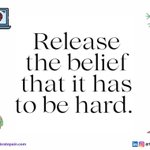
Release the belief that it has to be hard 🧠💭
Hard is not only a property of the task. Part of it is a prediction your brain makes before you begin, and that prediction changes the physiology of doing it.
Here is what happens the moment you decide something will be hard👇
🧠 Your brain prices the effort before you move.
Before any action, the brain runs a cost benefit calculation. The anterior cingulate cortex and the dopamine system estimate how much effort a task will take and whether it is worth it. Call it hard and you raise the price before you have started. Now the task has to overcome a cost you invented.
⚡ Belief changes what your body actually feels.
Perceived effort is not a clean readout of the work. It is built from real signals plus expectation. Endurance research shows that when people expect a task to be harder, they rate the same workload as more exhausting and quit sooner. The belief sets the dial on how heavy the moment feels.
🔒 Trying hard is often a full body clench.
Deciding something is hard flips on a threat posture. Shallow breath, braced muscles, tight jaw, a sympathetic nervous system on alert. That bracing burns energy and adds strain the task never asked for. You end up doing the work and fighting your own body at once.
🌀 The belief proves itself.
Your brain is a prediction machine. Predict hard and it recruits the physiology of hard, which produces the strain that confirms the prediction. The loop closes. Not because the task was heavy, but because you met it already braced.
💜 In health this matters most.
The belief that recovery has to be a grind keeps the nervous system locked in effort and threat. That is the opposite of the safe, settled state a body actually heals and calms in. Gritting harder can be the very thing holding the door shut.
Easy does not mean no effort. It means dropping the tax. The dread, the bracing, the race, the war with yourself to the point that the belief stacks on top of the real work.
You release it the way the brain updates anything. With evidence. Take one thing you assumed would be hard and meet it softly. Unclench the jaw, lengthen the exhale, lower the stakes, and let it be lighter than the story. Give your brain proof the story was wrong.
You were never too weak for it. You were bracing for a difficulty you predicted. Release the belief and you get back the energy it was quietly costing you 💜
🎁 Learning to read and settle your own nervous system is the whole point of Recalibrate. Grab the free guide 👉 recalibratepain.com
Where in your life have you been making something harder than it has to be?
♻️ Repost if someone you know needs to hear this
🔔 Follow for the neuroscience behind how you feel every day.
#Neuroscience #NervousSystem #ChronicIllness #BrainHealth #Mindset #Recalibrate

I have spent 1000s of hours building Recalibrate. It is designed to help people 🧠💭
Here is what never made sense to me. Someone managing stress, burnout, chronic illness, chronic pain, fatigue, or a sensitised nervous system gets handed seven disconnected apps. One tracks symptoms. One holds the courses. One does the breathing. Another spits out reports. And the care team never sees a single one of them.
For someone like me with AuDHD, fibromyalgia, hypermobility and central sensitisation this wasn't good enough. You get treated as scattered fragments, when the thing actually driving your pain, your energy and your mood is multiple systems that no one is looking at as a whole.
That is why I built Recalibrate. A health and neuroscience ecosystem that brings it all together for everyone involved.
Here is what that actually looks like inside and how it can help you 💭
You learn the real neuroscience. The Academy holds 200+ lessons across neuroscience, pain science and systems biology, so you finally understand what is happening in your body instead of guessing.
You track what matters. Log the daily physical, mental, lifestyle and biological variables that drive your symptoms, and start seeing the patterns you could never catch on your own. 18 health trackers across 8 biological systems.
You get a plan that thinks. The AI reads your data, chats to you, builds a personalised plan, and rebuilds it every month with a full reassessment as your body changes driven by your own smart data, clinician inputs and personal progress.
You get the tools. The full therapeutic toolkit, breathing, graded exposure, CBT, grounding, mindfulness and journalling, brain training and focus games.
You bring in your people. Clinical grade PDF reports you can hand to your clinician, and a care team space that links a clinician and a carer from their own dashboards so they always know your progress.
I am opening 200 Founder spots, the first few have already gone this week.
A Founder gets Recalibrate Pro for life. Not a subscription you rent and lose. Yours, once, forever. Every future feature we ship is included, every tool, every lesson. A permanent Founder number, 1 of 200. A direct line to me in my new Inner Circle community, where you vote on what gets built next and get it first and an app customised to you.
If you are unconvinced, humour me and take a moment to explore the in-app videos and explanations showing the ecosystem in the link below 👇
lnkd.in/dSbsWFTR
Thank you for everyone's support and positive feedback from those already enjoying the ecosystem in its full glory 💜😊
#Neuroscience #ChronicPain #NervousSystem #Recalibrate
