

Unique and cutting-edge mobile assistive technology solutions for people with disabilities.
Washington, DC
Joined September 2016
- Tweets994
- Following358
- Followers232
- Likes207






For many seniors, charging a phone falls apart right at the first step: finding the port, or getting the cable in the right way.
The RAZ EasyCharge Wireless Charging Set removes that step entirely. Your senior simply places the RAZ Memory Cell Phone in the cradle, and charging begins on its own. The cradle and magnet guide the phone into the right position every time, making it virtually mistake-proof.
The set includes three brightly colored cradles that catch your senior’s eye and serve as a visual reminder to charge.
You can rotate the colors to keep the charger noticeable.
Get yours today: tinyurl.com/3yhtpc7b


Sexuality is a normal part of life at any age. A person with dementia may still have sexual urges but may lose the judgment and impulse control that help them understand what is appropriate.
Possible changes include undressing, making inappropriate comments, flirting, touching themselves or others, or making unwanted advances. These actions can occur in people of any gender.
What could happen:
➡️ Inappropriate comments.
➡️ Touching themselves or others.
➡️ Fondling themselves or others.
➡️ Public undressing.
➡️ Making sexual advances.
➡️ Public self-stimulation.
Undressing in public, making sexual advances, or self-stimulation in public are less common and usually occur as dementia progresses. Undressing in public may happen when someone is too warm, has uncomfortable or itchy clothing, needs the bathroom, is experiencing a delusion, is bored, or is sexually aroused. When undressing happens in public, stay calm and cover them quickly. Say, “Let’s get more comfortable somewhere private,” and guide them to a bathroom or private area. A shawl works as a quick cover.
Reduce undressing triggers by choosing soft, seamless, comfortable clothing that is easy to manage. If undressing persists, consider adaptive dementia-friendly clothing with back closures. Avoid clothing that makes toileting harder.
Public self-stimulation is rare but can happen. Respond calmly and without shaming. Guide the person to a bedroom or bathroom, and offer a simple activity, food, or drink. Check for possible causes such as a urinary tract infection, itching, or discomfort, and contact a physician if needed.
A person with dementia may mistake a family member for a spouse or partner from an earlier time. If something inappropriate happens, gently redirect the person, step away if needed, and take a moment to recover.
If it escalates: Stay calm, use a firm, gentle voice. Say “Stop that right now,” or “No, I don’t like that.” Match your body language to your words.
Redirect to a positive activity, snack, walk, or quiet location away from the trigger.
If help is needed, use a firm voice, say “No,” guide their hands away, and call for help.
@tracycramperkin — author of Dementia Home Care, How to Prepare Before, During and After.

A complicated phone doesn't cause one big problem. It causes a dozen small ones, every day.
For Emily's mother, the RAZ Memory Cell Phone put those to rest: making calls became simple, charging became easy, the volume is always at max. And when her mom needs a hand, a video call lets her daughter be her eyes. The support, she adds, is some of the best she's ever experienced.
Learn more about the RAZ Memory Cell Phone here: tinyurl.com/mpsmryrm
#AgingWithRAZ #DementiaCare #SeniorCare #FamilyCaregiver #MemorySupport #ElderCare #CaregivingJourney #CaringForSeniors #CaregiverSupport #CompassionateCare #SeniorLiving #AgingWithDignity #SeniorHealth #FamilySupport #CaregiverLife #DementiaAwareness #LoveAndCare #EmpoweringCaregivers #SeniorWellness

Caring for a loved one with dementia means helping them keep a routine, and that often falls on you to remember for them.
With the RAZ Memory Cell Phone, you can set reminders that repeat on a schedule, so medication, meals, and appointments show up on your senior's screen exactly when they should. Once you set them in the RAZ Care app, the daily rhythm takes care of itself, giving your loved one something steady to count on and taking a little off your plate.
Make caregiving easier with the RAZ Memory Cell Phone: tinyurl.com/3s2n3jzn
#AgingWithRAZ #DementiaCare #SeniorCare #FamilyCaregiver #MemorySupport #ElderCare #CaregivingJourney #CaringForSeniors #CaregiverSupport #CompassionateCare #SeniorLiving #AgingWithDignity #SeniorHealth #FamilySupport #CaregiverLife #DementiaAwareness #LoveAndCare #EmpoweringCaregivers #SeniorWellness


For a senior who sometimes taps the screen by accident, it's easy to start a call they never meant to make.
The RAZ Memory Cell Phone has an optional confirmation screen for exactly that. After your loved one taps a contact, the phone asks them to confirm before the call goes through, so an accidental tap doesn't become an accidental call. Like every feature, you decide whether to turn it on, through the RAZ Care app.
Learn more: tinyurl.com/5n7nadp9
#AgingWithRAZ #DementiaCare #SeniorCare #FamilyCaregiver #MemorySupport #ElderCare #CaregivingJourney #CaringForSeniors #CaregiverSupport #CompassionateCare #SeniorLiving #AgingWithDignity #SeniorHealth #FamilySupport #CaregiverLife #DementiaAwareness #LoveAndCare #EmpoweringCaregivers #SeniorWellness

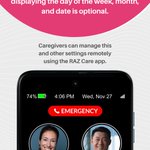
Keeping track of time and day of the week can be hard for a senior with dementia, and a clear reminder right on their phone can help ground them.
With the RAZ Memory Cell Phone, you can show the day of the week, the month and date, or both, right on the home screen. Display what helps your loved one stay oriented, and leave off anything that would only add clutter. You set it in the RAZ Care app, because every senior is different.
Learn more about the RAZ Memory Cell Phone: tinyurl.com/22zsdkxc
#AgingWithRAZ #DementiaCare #SeniorCare #FamilyCaregiver #MemorySupport #ElderCare #CaregivingJourney #CaringForSeniors #CaregiverSupport #CompassionateCare #SeniorLiving #AgingWithDignity #SeniorHealth #FamilySupport #CaregiverLife #DementiaAwareness #LoveAndCare #EmpoweringCaregivers #SeniorWellness

Shadowing is when your loved one follows you around the house, copies what you are doing, or becomes upset when you need time to yourself.
Why does this occur: You represent safety. They may rely on you to prevent embarrassment or frustration and to help fill in memory gaps. This can look like frequent interruptions, repeated phrases, or doing the same activity repeatedly.
Shadowing often happens in the late afternoon or early evening. It is different from sundowning, which involves confusion, agitation, and restlessness later in the day.
When it happens:
➡️ What emotions appear before they begin shadowing?
➡️ Do they panic when left alone?
➡️ Does it happen at the same time each day?
➡️ What is happening in the house when it starts?
Experiment with these:
➡️ Notice what breaks the cycle, such as giving them a familiar task they enjoy.
➡️ If the house is noisy later in the day, try music, audiobooks, or TV in a quieter area.
➡️ If space is limited, ask whether headphones would help block background noise while they listen to something they like.
➡️ Use positive phrases that work for them, such as “I love you,” “Thank you for setting the table,” or “That outfit looks great on you.”
➡️ Ask, “May I give you a hug?.”
If they panic when you leave the room, consider a baby monitor so they can hear your voice while you do chores and respond if needed.
If you are showering, place a timer nearby and explain that you will return when it rings. Add a simple cue beside it saying where you went and when you’ll be back. When you return, remind them that you kept your word.
Shadowing is often a search for safety, comfort, and connection. Watching for patterns can help you respond with more confidence and calm. Each calm moment helps them feel safer. Keep trying one simple strategy at a time, your steady presence matters.
And use the timer to give yourself a well-deserved time-out.
@tracycramperkin — author of Dementia Home Care, How to Prepare Before, During and After.

The genius of the RAZ Memory Cell Phone isn't only in what it includes. It's in everything it leaves out.
That's what struck Mike, whose 99-year-old mom can now call and receive calls from family with ease. No confusing clutter, nothing to get in the way. Just a phone that was clearly designed with someone like her in mind.
See more reviews: tinyurl.com/ms7dhae2
#AgingWithRAZ #DementiaCare #SeniorCare #FamilyCaregiver #MemorySupport #ElderCare #CaregivingJourney #CaringForSeniors #CaregiverSupport #CompassionateCare #SeniorLiving #AgingWithDignity #SeniorHealth #FamilySupport #CaregiverLife #DementiaAwareness #LoveAndCare #EmpoweringCaregivers #SeniorWellness

📢 New in our shop: the Wireless Charging Set - Stand with Cradle. The easiest way to charge the RAZ Memory Cell Phone.
No cable to insert, no port to find, no positioning hassle. Your senior simply places the phone in the cradle, and charging starts on its own. The intuitive cradle and magnet hold the phone in the correct position every time, making it easy to use for any senior.
And because the phone rests upright on the stand, the screen stays in full view while it charges.
The set includes the stand, a protective case, a wireless charging adapter and three cradles in different colors (orange, blue, and lime green). The stand can be used with a cradle, or on its own.
Get yours today: tinyurl.com/ypvet4dv


When a loved one with dementia is prone to wandering or getting disoriented, not knowing where they are can be one of the most frightening parts of caregiving.
You can check your senior's RAZ Memory Cell Phone's location at any time through the RAZ Care app. No extra device to carry, no complicated setup. This feature is also extremely helpful to find the phone in case it's lost.
Learn more: tinyurl.com/yta76yvn
#AgingWithRAZ #DementiaCare #SeniorCare #FamilyCaregiver #MemorySupport #ElderCare #CaregivingJourney #CaringForSeniors #CaregiverSupport #CompassionateCare #SeniorLiving #AgingWithDignity #SeniorHealth #FamilySupport #CaregiverLife #DementiaAwareness #LoveAndCare #EmpoweringCaregivers #SeniorWellness

When natural disasters strike, people often rush to help strangers without being asked. Care partners supporting someone living with dementia need that same support, but too often they become isolated when support is most needed.
People disappear from their lives because of fear or lack of understanding. If you want to help, don’t ask them to come up with ways you can help. They are overwhelmed, and one more decision may feel like a flash flood.
Instead of asking, "How can I help?" offer something specific, manageable, and easy for the care partner to accept.
Start by learning about the disease, about the stages of dementia and how communication changes over time so you don’t place extra demands on the care partner to explain the disease.
Ways to offer a helping hand:
➡️ Provide respite: spend time with the person living with dementia so the care partner can leave the house, run errands, or simply rest.
➡️ Offer to handle specific chores: mow the lawn, do laundry, or drop off pre-cooked meals.
➡️ Run errands: pick up groceries, collect prescriptions, or drive them to a medical appointment.
➡️ Stay consistently connected: call, text, or send a card to remind the care partner they are not alone and help them stay connected to the outside world.
➡️ Include the person living with dementia in conversations: use simple sentences, speak slowly, practice patience, and smile so the care partner does not have to manage the conversation.
➡️ Be patient and flexible: routines shift, plans get canceled at the last minute and offers of help may be turned down at first because the care partner is overwhelmed. Keep gently offering. No may simply mean not now.
Try these:
Offer a low-stress outing for the care partner and the person living with dementia, such as taking a walk or visiting a calm, soothing place together.
Offer to listen and let the care partner vent, cry, or talk through frustration without offering unsolicited advice.
Sometimes the most helpful thing to say is simply, "Do you want to be hugged, heard, or helped?"
@tracycramperkin — author of Dementia Home Care, How to Prepare Before, During and After.

"Getting locked out of their own phone, with no idea how to get back in, is a frustrating dead end for many seniors. That was happening to Stephanie's sister, until she switched to the RAZ Memory Cell Phone.
Now there's no lock screen, no predatory calls getting through, and the setup was effortless. Her word for the RAZ Memory Cell Phone: a lifesaver.
See more stories like hers: tinyurl.com/4pnh539v
#AgingWithRAZ #DementiaCare #SeniorCare #FamilyCaregiver #MemorySupport #ElderCare #CaregivingJourney #CaringForSeniors #CaregiverSupport #CompassionateCare #SeniorLiving #AgingWithDignity #SeniorHealth #FamilySupport #CaregiverLife #DementiaAwareness #LoveAndCare #EmpoweringCaregivers #SeniorWellness"

Picture dialing makes calling loved ones simple. But what if your senior needs to reach a number that isn't one of their contacts?
With the RAZ Memory Cell Phone, you can make the keypad available so they can dial numbers manually. Their contact photos stay right there on the home screen, but now they also have the option to call any number they need.
You decide whether to enable it, based on what your loved one can handle.
Learn more: tinyurl.com/6rs49yt2
#AgingWithRAZ #DementiaCare #SeniorCare #FamilyCaregiver #MemorySupport #ElderCare #CaregivingJourney #CaringForSeniors #CaregiverSupport #CompassionateCare #SeniorLiving #AgingWithDignity #SeniorHealth #FamilySupport #CaregiverLife #DementiaAwareness #LoveAndCare #EmpoweringCaregivers #SeniorWellness

Natural disasters require planning when caring for someone with dementia. A confused mind may not recognize the danger. They may panic and be combative during an emergency and refuse to budge.
➡️ Create an Evacuation Plan:
Many local emergency operations centers offer a course called Map Your Neighborhood. It focuses on one street at a time. The course covers the steps to take following a disaster when emergency services are not available for the first few hours, days or even weeks. It teaches how to organize your neighbors and know who has what skills and supplies that may be useful in a disaster.
Choose meeting places in your neighborhood and at least one out of town location. Include updates via your favorite social media or the Red Cross App. Choose an out-of-state contact in case the local lines are down during the emergency. The long-distance lines may be available for calls. Text messages may get through when phone calls don’t. Include in the plan contact information for doctors, schools, workplaces, or any service providers like daycare providers or in-home medical assistants.
Each family member always carries the plan with them. Store it on your phone. Access to the Cloud will be cut off until power and communication lines are restored. Carry a back-up paper copy in a sealed baggy.
➡️ Practice the Plan
Arrange family meetings where you review and practice your plan. Include your loved one and pets. If you rush someone with a confused mind, they will become agitated. Practice the plan at different times of day, so you know what challenges to expect, especially if an emergency occurs at night. Practice techniques that help calm your loved one with dementia if they melt down.
Adapt your plan based on your practice drills’ successes and failures. Make it fun, laugh, celebrate the successes and the failures.
Practice streamlines your ability to evacuate safely. The more you practice, the calmer everyone will be in the event of an emergency, including pets. It’s easier for everyone to rely on a familiar routine. Routine reduces mistakes.
Plan. Practice. Breathe easier.
@tracycramperkin — author of Dementia Home Care, How to Prepare Before, During and After

The best phone for someone with dementia is the one they can actually use, and the one you can easily set up and manage.
Johnnie found both in the RAZ Memory Cell Phone, and happily recommends it.
Learn more and see more reviews: tinyurl.com/3ssdp5b3
#AgingWithRAZ #DementiaCare #SeniorCare #FamilyCaregiver #MemorySupport #ElderCare #CaregivingJourney #CaringForSeniors #CaregiverSupport #CompassionateCare #SeniorLiving #AgingWithDignity #SeniorHealth #FamilySupport #CaregiverLife #DementiaAwareness #LoveAndCare #EmpoweringCaregivers #SeniorWellness

When a senior has low vision or hand tremors, a standard phone can be almost impossible to use.
That's why the RAZ Memory Cell Phone has a Low Vision & Hand Tremor mode. When it's enabled, the screen shows super-large, high-contrast buttons, with color schemes you can adjust for easier reading. You can customize contact icons and add a status tile that shows time and battery at a glance, all from your own smartphone, with the RAZ Care app.
The Low Vision & Hand Tremor mode is ideal for those living with Parkinson's, recovering from a stroke, or facing age-related eye conditions.
Learn more: tinyurl.com/vs93yvka
#AgingWithRAZ #DementiaCare #SeniorCare #FamilyCaregiver #MemorySupport #ElderCare #CaregivingJourney #CaringForSeniors #CaregiverSupport #CompassionateCare #SeniorLiving #AgingWithDignity #SeniorHealth #FamilySupport #CaregiverLife #DementiaAwareness #LoveAndCare #EmpoweringCaregivers #SeniorWellness


When a senior has dementia, emergencies aren't always what they seem. Sometimes the danger is real. Sometimes it only feels real.
And when it is real, they may not be able to explain what's happening, or even where they are.
The RAZ Emergency Service is built for both. Instead of dialing 911 directly, emergency calls go to a trained dispatch agent who assesses the situation and notifies caregivers by text:
🟡 For imagined emergencies and accidental calls, the agent can resolve the situation without involving 911.
🔴 In a real emergency, the agent already has your loved one's medical conditions, location and other important information on hand, and can pass them straight to 911, even if your senior can't.
Learn more about the RAZ Emergency Service: tinyurl.com/3uat8uac
#AgingWithRAZ #DementiaCare #SeniorCare #FamilyCaregiver #MemorySupport #ElderCare #CaregivingJourney #CaringForSeniors #CaregiverSupport #CompassionateCare #SeniorLiving #AgingWithDignity #SeniorHealth #FamilySupport #CaregiverLife #DementiaAwareness #LoveAndCare #EmpoweringCaregivers #SeniorWellness

Our CEO, Robert Felgar, sat down with occupational therapist Carol Chiang on the Innovative Aging podcast to talk about something many families struggle with: how to keep a loved one with cognitive impairment connected, without the confusion a regular smartphone brings.
Drawing on his years developing mobile solutions for people with dementia, low vision, and tremors, Robert breaks down why modern smartphones overwhelm many seniors, what to look for when choosing a device, and how caregivers can manage everything remotely, from blocking scams to setting up reminders and emergency calling.
It's a thoughtful conversation for anyone caring for an older adult, or the professionals who support them.
📹 Watch the full episode here: youtu.be/cXN0k0dvFAE
🎧 Or listen on Spotify: tinyurl.com/mrx2sk5y
#AgingWithRAZ #DementiaCare #SeniorCare #FamilyCaregiver #MemorySupport #ElderCare #CaregivingJourney #CaringForSeniors #CaregiverSupport #CompassionateCare #SeniorLiving #AgingWithDignity #SeniorHealth #FamilySupport #CaregiverLife #DementiaAwareness #LoveAndCare #EmpoweringCaregivers #SeniorWellness

Dementia caregivers are the most likely of all caregiving groups to put off self-care. Plagued by persistent exhaustion that sleep does not fix, making us irritable which may cause us to withdraw from society, which creates more stress.
Did you know that as a dementia caregiver you may be holding your breath and causing your cortisol levels to rise?
Cortisol is great if you are outrunning an angry mob with clubs and pitchforks, but not so great when you are banking it every day in your body for retirement. When we are stressed, we hold our breath—only using the top third of our lungs. It increases blood pressure, chances of heart attack or stroke, likelihood of diabetes, and chances of early death.
What if there was a simple, portable solution we could use every day?
Simple Breathing Exercise
Follow these simple steps to reduce your daily stress:
1. Take a step back from whatever you are doing.
2. Take a deep breath in through your nose, fill your lungs until you feel it in your diaphragm (belly).
3. Gently purse your lips together and breathe out of your mouth for 8 seconds.
Repeat two more times.
Quick tips:
➡️ Set the alarm on your cell phone so you don’t forget to take time to breathe.
➡️ If you use this simple breathing technique five times a day for five minute. Over the course of six months your cortisol levels will return to normal.
➡️ If you are taking blood pressure medication, alert your medical practitioner so they may adjust your dosage to prevent you from passing out from low blood pressure.
➡️ If you do this exercise for ten minutes or longer you may experience a tingling, euphoric feeling. That is the increased oxygen in your blood stream alerting you it is time to stop.
The next time caregiving makes you feel like you’re running from the mob with pitchforks, pause and breathe. This small habit will not fold the laundry, answer the same question for the tenth time, or magically make the day easier, but it will help. Caring for yourself is not one more thing on the list—it helps you keep going. Give yourself the grace to enjoy the moment. You need to do something just for you.
@tracycramperkin — author of Dementia Home Care, How to Prepare Before, During and After.

A lot of families spend months searching before they land on the right phone.
The RAZ Memory Cell Phone was exactly what Cathy's mom needed, and it solved the problems the family had been living with for a long time.
See more stories like this: tinyurl.com/3whnucbc?
#AgingWithRAZ #DementiaCare #SeniorCare #FamilyCaregiver #MemorySupport #ElderCare #CaregivingJourney #CaringForSeniors #CaregiverSupport #CompassionateCare #SeniorLiving #AgingWithDignity #SeniorHealth #FamilySupport #CaregiverLife #DementiaAwareness #LoveAndCare #EmpoweringCaregivers #SeniorWellness
