

Robert Trent Jones II, Golf Course Architects. #RTJ2GolfDesign #RobertTrentJonesII
Palo Alto, CA
Joined January 2015
- Tweets3.4K
- Following1.4K
- Followers2.8K
- Likes1.3K





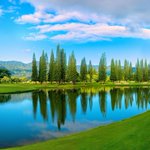
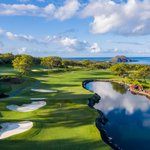



Sometimes the best design move is knowing what the landscape is telling you.
When the RTJ II team first explored the 290-acre site for PGA Riviera Maya, the jungle was so dense that they had to navigate it on foot to understand where the course should go. The process was aptly described as a “landscape tango with rhythm.”
That philosophy remains visible today, from a natural cenote incorporated into the challenge of the 6th hole to Yucatán limestone becoming a defining feature of the 14th.
The result is championship golf that feels inseparable from the jungle around it.

How do you modernize a classic without losing its character?
The West Course at Dorado Beach recently reopened following a renovation by RTJ II, which restored and modernized the Robert Trent Jones Sr. original while adapting the course for how the game is played today.
Green complexes were repositioned to improve sunlight and air movement, while the overall design became wider and more strategic, offering players more options from the tee.
It’s a reminder that thoughtful renovation isn’t simply about preserving the past. It’s about making good architecture work for the next generation of golfers.
What happens when you let the landscape do most of the designing?
RTJ II is transforming Iceland’s Oddur Golf Club into a 27-hole facility, adding 11 new holes while working carefully with the site’s extraordinary lava formations.
Rather than moving large amounts of earth, the design follows the natural topography, incorporating lava canyons, ridges and ledges into the routing. The project also includes a new nine-hole short course.
When the expanded club, located just outside downtown Reykjavík, is ready for play in 2027, it will be golf that feels discovered rather than constructed — a philosophy that reflects RTJ II’s belief that the best courses respond to the character of their surroundings.

Golf doesn’t always have to mean 18 holes.
At RTJ II-designed Costa Palmas on Mexico’s East Cape, golfers can take on the championship course with stunning coastal finishing holes or opt for a family-friendly six-hole experience.
A 30,000-square-foot social putting green creates another way for golfers of different ages and abilities to enjoy the game together along this secluded stretch of the Sea of Cortez.
It’s part of a broader idea behind RTJ II’s approach to golf: create experiences that are strategic and memorable, but also flexible, welcoming and engaging.
Because sometimes growing the game starts by giving people more ways to play.
Photo credit to @Evan_Schiller

A different way to play golf in the tropics.
RTJ II recently unveiled plans for a new 18-hole members’ course and practice facility at Thai Country Club, with construction beginning this year.
The club selected RTJ II for its “long-standing design legacy and global reputation for creating courses that stand the test of time,” according to Chairman Prasong Phataraprasit.
Rather than relying heavily on bunkers and artificial hazards, the design emphasizes wide, strategic fairways, natural contours and the ground game, encouraging golfers to think creatively and use the terrain to their advantage.
It’s a forward-looking approach rooted in some of the game’s oldest principles: strategy, variety and imagination.

Sometimes great golf gets a second act.
Originally designed by RTJ II, Osprey Meadows at Tamarack Resort was recently named by Golfweek as Idaho’s Best Public Course You Can Play and one of America’s Top 100 Resort Courses.
RTJ II returned to reimagine the course before its 2024 reopening, enhancing playability while preserving its dramatic mountain, meadow and wetland backdrop. The “Gambler’s Hole,” a fun par-3 19th, also was added that introduces one final strategic challenge over water.
It’s a fitting new chapter for a course that shows how golf can evolve for today’s player while respecting its original design.
travelagewest.com/Travel/USA…

Across continents and cultures, RTJ II makes its mark on golf’s international landscape.
Madinaty Golf Club in Egypt will host the 2026 World Golf Awards, marking the first time the event has been held in the country. The celebration includes the World Golf Awards Classic on its Robert Trent Jones Jr.-designed Championship Course, which previously hosted the 2022 Asian Tour International Series.
Madinaty is part of a diverse RTJ II portfolio that reflects a global perspective and informs the firm’s approach to golf course architecture.
thegolfwire.com/madinaty-gol…

Three nines. Three distinct experiences. One spectacular backdrop.
Forbes recently spotlighted Portugal’s Palmares Golf Resort, where Robert Trent Jones Jr. designed 27 holes across dramatically varied terrain overlooking the Atlantic.
Its three nine-hole loops allow for different 18-hole combinations, creating variety for returning golfers while responding to the character of the land.
It’s an approach that reflects something RTJ II explores in its work around the world: golf architecture that is strategic, flexible and tailored to how the game is played and enjoyed.
forbes.com/sites/break80/202…

Great golf architecture stands the test of time.
LINKS Magazine recently named Princeville Makai Golf Club one of the “Top 12 Scenic Public Courses in America.” The recognition places Makai in elite company among some of the country’s most celebrated public golf destinations.
Designed by Robert Trent Jones Jr. on Kauai’s spectacular North Shore, Makai demonstrates a principle that guides our design philosophy: let the land lead.
Decades after its debut, the course remains a compelling example of how strategic golf and a remarkable natural setting can come together to create an experience golfers remember.
linksmagazine.com/top-12-sce…

Veranda Magazine lists the 23 Most Beautiful Golf Courses in the United States, which includes our designs at Wailea Golf Club, Po‘ipū Bay Golf Course and Arrowhead Golf Club (CO).


Golf Course Architecture recently cited RTJ II among “contemporary leading design firms,” known for its low-input ecological design as the new industry standard. “Driven by water resource management regulations and policies integrating urban green spaces, global design teams have collectively shifted towards a low-input, community-oriented renovation approach.”
The magazine wrote, “As a benchmark team for international championship eco-sports fields, RTJ II’s business covers various climate zones around the world.”
Our designs adhere to minimal earthwork construction, protection of the original terrain, use of native drought-resistant grass species, and rainwater recycling irrigation systems. Representative works include Chambers Bay in the USA and Raffles Country Club in Singapore.
(Mike Seidl Photo)

The social green for our client in Quito, Ecuador, is still a work in progress, with refinements still to be made. Being in the field this month has inspired us to make some tweaks and changes.

Years before Robert Trent Jones Jr. was exploring the site on the north shore of Kauai, tasked with building 27 holes for the Princeville resort, he and his wife were gallivanting across Hawaii’s westernmost primary island on their honeymoon in 1962.
“We flew to Lihue (Kauai) in a little tiny plane,” he recalls, “rented a pink and white jeep, set out on the last paved road in America, and fell in love with Hanalei Bay. It was absolute paradise.” Six years later, Jones Jr. was riding the site on horseback with his engineer, scouting the land for the best hole locations. “We walked to the edge of the headlands, saw the ocean and shaped our bunkers to resemble the crashing waves,” he says. Princeville Makai was the first solo course designed by Robert Trent Jones Jr.

Alcanada Golf opened in 2003 and quickly established itself as one of Spain’s finest golf destinations. Renowned for its environmentally sensitive approach to golf course architecture, RTJ II has seamlessly integrated the natural landscape into the design. The result is an 18-hole, par-72 championship course that rewards strategic thinking, precise shot-making, and an appreciation for spectacular scenery.

Designed by the father-son duo of Robert Trent Jones Sr. and Robert Trent Jones Jr., Sedona, Arizona’s Oakcreek Country Club features beautiful bunkering, three lakes, classic doglegs and absolutely stunning views of the chiseled, fire-red mountains that frame the property. As Jones Sr. said, "Every hole must be a hard par and an easy bogey."

Golfpass has nominated five noteworthy public golf courses in each state to create the ultimate tour and celebrate America’s 250th birthday. The list includes six RTJ II designs: Arrowhead Golf Club (CO), Sunday River (ME), Crumpin-Fox Club (MA), Seneca Hickory Stick (NY), Chambers Bay (WA) and Jackson Hole Golf & Tennis Club (WY).


Congratulations to the winner of the PGTI J&K Open, Khalin Joshi, which took place at Royal Springs Golf Club, a course we designed and opened in 2001. Located in the summer capital of the state of Jammu and Kashmir, the area is famous for its alpine beauty and lakes. The undulating fairways and the challenging greens make it a treat for golfers. The most talked about hole on the course is the famous par-3 fifth, which offers a panoramic view of the Dal Lake from an elevated tee.

History, lava, ocean views, and the Jones family architectural legacy. Recently recognized among Historic Hotels of America’s 2026 Top 25 Most Historic Golf Courses, Mauna Kea Golf Course enters a new era after its renovation — honoring the past while inspiring the next generation of players.

A milestone moment….Hoiana Shores Golf Club has become the first golf course in the world to simultaneously hold both GEO Certified® Development and GEO Certified® Facility awards from the GEO Foundation for Sustainable Golf. The dual recognition affirms the club’s pioneering position in the sustainable development of golf in Vietnam. Our 18-hole golf design is located on the coast of central Vietnam. It was built on an area previously affected by abandoned shrimp farms, invasive plants, and waste. From the very beginning, sustainability was incorporated into the development process, helping to restore the native dune landscape and create a unique links course in Vietnam – a course rich in strategic elements and offering an exhilarating experience for golfers.

