

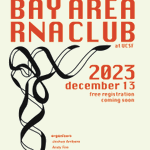
The Bay Area RNA Club BARC2023 on December 13th 2023 Submit an abstract by Nov 15th 2023 More details at https://xitter.cf/t.co/fDpkP5WWp4
Joined August 2020
- Tweets1.1K
- Following957
- Followers660
- Likes1.2K





Pinned Tweet
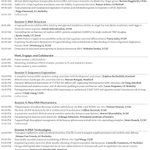
Excited for the #RNAscience presented today at the #BayAraRNAClubMeeting2023!
See you there!
#RNA #conference #BARC2023 #BARC2023program


BARC retweeted

In the latest issue! RNA structure programs endogenous ADAR for precise and efficient editing dlvr.it/TTV8vx
BARC retweeted

Adaptive 2.5D Base-Pairing Subgraph Search Detects RNA Small-Molecule Binding Sites
1 Ribo-LENS is a geometric deep-learning framework that predicts RNA small-molecule binding sites by reasoning directly over the RNA “2.5D” base-pairing graph (Leontis–Westhof base-pair types + backbone), rather than relying on full all-atom geometry.
2 The key methodological shift is subgraph-level pocket construction: instead of scoring nucleotides independently and clustering later, Ribo-LENS uses a learned edge-contraction (adaptive pooling) process to iteratively merge high-scoring interactions into connected “supernodes,” yielding coherent pocket subgraphs and naturally allowing multiple sites per RNA.
3 Architecture summary: an RGCN embeds nucleotides on a typed relational graph (20 directed edge types), produces node embeddings + binding scores, then an edge-scoring MLP ranks interactions; greedy contraction merges the highest-scoring edges above a threshold (P=0.5), expanding a pocket outward from a high-confidence interaction core until signal is exhausted.
4 Despite using coarse-grained inputs, Ribo-LENS is competitive with or better than multiple baselines on the GerNA-Bind benchmark (22 test RNAs), including specialized predictors (GerNA-Bind, RNAsite) and all-atom co-folding models (AlphaFold3, Chai-1). Reported mean MCC: 0.380 for Ribo-LENS-3 vs 0.321 for GerNA-Bind.
5 The contraction module improves practical pocket predictions by trading an RGCN’s high-recall/low-precision residue scoring for more balanced, connected pockets (e.g., at 3 pooling steps: precision ~0.390, recall ~0.474), boosting MCC and producing site-shaped outputs rather than scattered residues.
6 Generalization is less tied to training-set homology than a fine-tuned sequence/LM approach: per-structure MCC increases more weakly with max sequence identity to training for Ribo-LENS (β=0.78, R2=0.21) than for GerNA-Bind (β=1.08, R2=0.39), which matters for transcriptome-scale deployment where homology is often low.
7 Robustness to apo→holo rearrangement is explained in graph space: on curated apo/holo pairs (RMSD up to 10.72 Å), early high-confidence cores transfer well from holo to apo, and the holo–apo performance gap correlates strongly with binding-site graph edit distance (Spearman ρ=0.82) but not with backbone RMSD (ρ=-0.15), suggesting sensitivity to base-pair rewiring rather than generic 3D displacement.
8 End-to-end virtual screening: using only sequence as the starting point (RhoFold+ structure prediction → Ribo-LENS site localization → rDock within a 10 Å sphere around predicted pocket), screening on the ROBIN assay (~25k compounds) achieves enrichment statistically indistinguishable from blind docking cavity search, while restricting docking to a small size-independent region and avoiding the steep size-scaling cost of blind cavity mapping.
9 Practical screening observations: pocket confidence scores correlate with overall ranking quality (ROC AUC; Spearman ρ=0.57) but not specifically with top-1% enrichment; and Ribo-LENS-guided docking surfaces largely complementary chemotypes to blind docking (only 13 of 57 Bemis–Murcko scaffolds shared among top-1% actives across targets).
10 Prospective relevance: on two low-homology SARS-CoV-2 RNA elements (frameshift pseudoknot 6XRZ and SL1 9EOW), predicted sites align with experimentally reported NMR chemical-shift perturbations, supporting use as a rapid pocket nomination step before more expensive 3D modeling and docking.
📜Paper:
biorxiv.org/content/10.64898…
#RNA #DrugDiscovery #GeometricDeepLearning #GraphNeuralNetworks #VirtualScreening #ComputationalBiology #StructuralBiology #Bioinformatics

BARC retweeted

Review @NatImmunol @CBLopezLab
Implications of RNA virus persistence for post-acute sequelae and chronic inflammatory syndromes
nature.com/articles/s41590-0…

BARC retweeted

Scientists at #UTSW have discovered how NSUN2, a key enzyme linked to cancer and neurological disorders, targets which RNA molecules to modify. See how grasping this process could help researchers uncover new ways to diagnose and treat disease.bit.ly/4gNyYtH #research

BARC retweeted

Coordinated RNA- and protein-templated synthesis of double-stranded DNA by a dual reverse transcriptase immune system
biorxiv.org/content/10.64898…


BARC retweeted

How do we teach science to elementary students? I use #TactileLearning!
As part of my #ScienceOutreach this year, I ran a #ChemistryClub where kids built clay atom models. It helped them focus and made the lesson fun!
Watch the video guide: youtu.be/O5jTZH5BORo

BARC retweeted

For anyone interested in RNA and cancer (basic and translational research), please consider submitting an abstract for this exciting meeting! We will be choosing lots of talks from abstracts. Should be a great event! #aacrRNA24

Submit an abstract by August 26 for the AACR Conference on RNAs as Drivers, Targets, and Therapeutics in Cancer (November 14-17, Bellevue, WA) chaired by @HowardYChang, Joshua T. Mendell, Anastasia Khvorova, and V. Narry Kim.
bit.ly/460QEdY
#aacrRNA24 @Mendell_lab

BARC retweeted

promoted to Professor😀Many thanks to the current and previous lab members🙏I am super grateful for having great collaborators through the years🙏And many thanks to all the friends who have been supporting me and my lab in the past 10 years! Thank you all🙏❤️❤️❤️
BARC retweeted

Excellent and comprehensive review on co-transcriptional gene regulation both in eukaryotes and prokaryotes!
By @NeugebauerKarla and Herzel lab @lh8314
nature.com/articles/s41580-0…

BARC retweeted

I've been told I need to 'tweet'? X? So... a countdown of highlights for you: 6 PhD students, 4 postdocs, 4 undergrads, 3 NOAs, 3 manuscripts under review, 1 paper accepted, and a summer program for high school students. Not bad for a year and three months of PI life :D

BARC retweeted

First symposium for the #Krahnlab!🥳Proud of my graduate students @AntaviusCain and Joshua Weiss for presenting their work and future plans at the #SERCAT symposium @universityofga


BARC retweeted

New paper from the Cingöz Lab, hot off the press! We show that retroviral RNA genomes can be used directly as an mRNA for viral protein production, even in the absence of reverse transcription. nature.com/articles/s41467-0…
BARC retweeted

What does the RNA binding surface of PRC2 actually do?
We show that part of the RNA binding surface is required for PRC2 function through interactions with nucleosomes, but we find no evidence that RNA is in play.
nature.com/articles/s41588-0…

BARC retweeted

We are incredibly excited to have our first LncRNA screening paper published today in @pnas . This project has been a labor of love for over 8years!! LncRNAs are tricky to tease apart mechanistically! Here we provide a resource of LncRNAs involved in macrophage differentiation


BARC retweeted

Now officially published @Nature . Led by the one and only @FinkelYaara.
By engineering HCMV to express sgRNA libraries directly from the viral genome, we developed VECOS (Virus Encoded CRISPR-based direct readOut System).
BARC retweeted
In our new review paper, @ywan_wan and I focused on the functional importance of RNA structure in gene regulation. Many thanks to Yue and Xinang! I really enjoy the writing process. nature.com/articles/s41580-0…

BARC retweeted

Thrilled to finally have our paper examining Neisseria gonorrhoeae-neutrophil transcriptional responses by dual RNAseq out today with @PLOSPathogens!
A brief 🧵:
journals.plos.org/plospathog…

BARC retweeted

New paper!
We provide a scRNA-seq pipeline for simultaneous gene expression and 3′UTR length analysis.
We quantified 3′UTRs in 474 cell types and found that 3′UTR length provides information that is independent of gene expression.
nature.com/articles/s41467-0…
