

Intensive Care || Critical Care || IntensivelyCaring || ESICM NIC Section-Social Media and Digital Content Committee Representative. Views & opinions are my own
United Kingdom
Joined March 2019
- Tweets767
- Following361
- Followers264
- Likes1.4K





Richard Cashmore retweeted

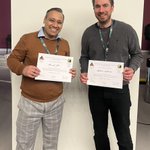
Happy to share that we have successfully conducted India's first World Organisation of Neurosonology (WON) endorsed workshop on Neurosonology in Acute Care at Symbiosis University Hospital & Research Centre, Pune, India.
This is just the beginning. Soon, every intensivist will be empowered with the skills of bedside Neurosonology.
A privilege to work with Dr Vivek sir, Dr Suchitra mam, Dr Amol Kothekar sir, Dr Pradeep D Costa sir, Dr Avinash Jha, Dr Richard Cashmore and Dr Sreevatsa for this workshop. 🤝 Honoured to meet Dr Deepak Govil sir at the Workshop 🙏
I thank the organising team of at Symbiosis University Hospital & Research Centre for organising the workshop very well.
Looking forward to the Neurosonology workshop at ISACON National 2026 conference in November ✌️
@drvivekkumarmd
@RMJCashmore
@Dr_AvinashJha
@Srivatsa34


Richard Cashmore retweeted
Thank you so much @aartisarwal and @Yasaman_Neuro for sharing the proceedings of Neuroultrasound Stroke Care Symposium.
Check it here 👇
youtube.com/playlist?list=PL…

This is very concerning trend.
Maternity care needs to be improved, and should have due attention in the U.K.

252 women died in the UK during pregnancy or up to six weeks after the end of pregnancy in 2022-2024 from causes related to or exacerbated by pregnancy among 1,969,321 women giving birth, a maternal mortality rate of 12.80 per 100,000 buff.ly/0AwK13f

Richard Cashmore retweeted
Not getting a good transtemporal window?
Or are you stuck with only the transtemporal window? 🧠🔍
Looking for an opportunity to explore other insonation windows, techniques, and their clinical applications?
We are excited to bring you an immersive Neurosonology Workshop, led by experts in the field!
Go beyond routine Transcranial Doppler and broaden your Neurosonology skill set with integrated discussions and hands-on learning covering:
🔹 Transcranial Doppler (TCD) – multiple insonation windows & their applications
🔹 Carotid & Vertebral Doppler – extracranial cerebrovascular assessment
🔹 Optic Nerve Sheath Diameter (ONSD) – integrating Neuro-POCUS into bedside assessment
Look beyond the transtemporal window. Explore the full spectrum of Neurosonology.
⚠️ Registrations are limited.
For registration and further details, connect with Dr Suchitra Mohite at [email protected].
@Srivatsa34
@Dr_AvinashJha
@rmjcashmore
Richard Cashmore retweeted

Lots of interest in Rapid Sequence Induction
2x Coroner’s Prevention of Future Deaths report to RCoA recently, more to come.
Controversies vs evidence…..
Statement from Association, RCoA & DAS
rcoa.ac.uk/rapid-sequence-in…

Richard Cashmore retweeted

1/ Hello #medtwitter #medsky #neurotwitter #neurosky #neurocritcare #FOAMEd #MEdEd, today we will be breaking down another article from @neurocritcarej about the effects of milrinone on 🧠 perfusion!
link.springer.com/article/10…

Richard Cashmore retweeted
Midline Shift Assessment by Transcranial Color-Coded Duplex Sonography (TCCD)
Midline shift (MLS) is an important bedside marker of mass effect and raised intracranial pressure in patients with acute brain injury. Transcranial Color-Coded Duplex Sonography (TCCD) offers a rapid, non-invasive method to estimate MLS by visualising the third ventricle through the transtemporal acoustic window.
The technique involves measuring the distance from the outer table of the skull to the centre of the third ventricle from both temporal windows. Midline shift is calculated using the formula:
MLS = (A − B) / 2
where A and B represent the right- and left-sided skull-to-third ventricle distances, respectively.
In the illustrated case, TCCD estimated a 3.2 mm rightward midline shift, which closely correlated with the CT finding of a 3.5 mm rightward shift caused by a large left hemispheric infarction.
Although TCCD is an excellent bedside monitoring tool, clinicians should recognise its limitations. Measurements may be unreliable in patients with decompressive craniectomy, skull fractures, temporal cephalohematoma, or distorted intracranial anatomy following trauma or surgery.
The sensitivity and specificity of TCCD in identifying a midline shift for more than 5 mm is 95% and 90% respectively.
TCCD does not replace CT imaging, but it serves as a valuable adjunct for serial bedside monitoring and timely neurocritical care decision-making.

Richard Cashmore retweeted

Seeing you Today 8 AM EST #Neuroultrasound in #Stroke Care Symposium #meded
🙏 Grateful
@Yasaman_Neuro
@wakeforestmed @VCUNeuro 🏥
💻 🛜
Link: lnkd.in/e6ThHf-N
@asneuroimaging @neurocritical @svinsociety @neurosonology @ESICM NIC

Richard Cashmore retweeted

Endovascular vs Medical Treatment of Basilar Artery Occlusion
@JAMANeuro
“At 3 years, the clinical benefit of EVT in patients with acute BAO was durable, with substantially better functional outcomes and reduced mortality compared with medical management.
These results reinforce EVT as the standard of care for BAO and support broader implementation and timely access to thrombectomy services.”
#curingcoma
jamanetwork.com/journals/jam…

I am grateful for the opportunity to contribute to the European Society of Intensive Care Medicine (ESICM) General Intensive Care Ultrasound (GenIUS) Monothematic Session on Neurotrauma.
esicm.org/genius/
linkedin.com/in/rmjcashmore/
#ESICM #GenIUS #TCD #TCCD #BrainPOCUS


Richard Cashmore retweeted

Original research finds the implementation of a protocol using peripherally infused norepinephrine to be safe, feasible, and associated with a decrease in central venous catheter utilization over time.
Read more in #journal_CHESTCritCare: hubs.la/Q03_L1RV0
#MedEd #CritCare


Richard Cashmore retweeted

We've updated the FUSIC HD curriculum and reporting form. Changes come into effect from Feb 1st. Click on the link to find out what the changes are, the rationale and full guidance.
Comprehensive haemodynamic ultrasound.
@ICUltrasonica @cardiacACCP @iceman_ex @Wilkinsonjonny
ics.ac.uk/product/fusic-hd.h…
Richard Cashmore retweeted

It is worth noting that the new UFOH (Ultrasound Focused Occult Hemorrhage) protocol places structure at the forefront; it is effectively the 'protagonist' of this clinical approach. pubmed.ncbi.nlm.nih.gov/3970…


Richard Cashmore retweeted
Welcome to the 14th post of #scanuary.
It's a month-long marathon of daily tweetorials about #POCUS and its utility in our clinical practice.
Today we're going to discuss assessment of assessment of stroke using TCCD.
If you find the post useful, please like & retweet.
@salmannaeem217
@gokpocus

Richard Cashmore retweeted

Pulse oximetry is one of the most widely used medical technologies worldwide, yet it performs less accurately for people with darker skin. This inequity requires urgent action, argues Editorial
bmj.com/content/392/bmj.s37?…

Richard Cashmore retweeted

We also need to update this to include standardised display of capnography to avoid misidenification. We have a minimum of 36 traces around the UK, with individual hospitals having up to 13!! It's no surprise traces get misidentified. associationofanaesthetists-p…

Richard Cashmore retweeted

This. 😲 . Totally changed my view of perimesencephalic SAH
"They are only nonaneurysmal insofar as an aneurysm is not identified — not because its really true. In fact, it is false — the aneurysms are there — you just need better imaging to see them."
neuroangio.org/case-archives…

Great #FOAM introduction into TCD & TCCD- similarities and differences, from @drmohansai for #scanuary! 🧠🔊Looking forward to the deeper dive!!!!!

Welcome to the 10th post of #scanuary.
It's a month-long marathon of daily tweetorials about #POCUS and its utility in our clinical practice.
Today we're going to discuss basics of Transcranial Doppler (TCD)/Transcranial color-coded duplex sonography (TCCD).
If you find the post useful, please like & retweet
@salmannaeem217 @gokpocus

Richard Cashmore retweeted
TCD/TCCD - Obstacles and opportunities
One of the major obstacles for insonating intracranial arteries is the skull. Ultrasound waves simply couldn't' break the barrier of the bone.
Thanks to the experiments by Rune Aaslid, existence of insonation windows were identified.
They are essentially thin portions of the skull through which ultrasound waves can penetrate the skull and insonate intracranial arteries.
Do read this nice article on basics of Brain POCUS by @RMJCashmore and @Dr_AvinashJha
doi.org/10.7759/cureus.10000…
