

Ex-@perplexity_ai, ex-Revolut, YC Alumni (W21). In ❤️ with singing, coding, games, Formula 1. Opinions my own. eu/acc, pro federal EU
Kraków, Poland
Joined June 2010
- Tweets47.1K
- Following533
- Followers824
- Likes901





Pinned Tweet
Yet another upgrade of my sim racing setup :) Need to add some bass shakers and maybe button boxes and it will be done. Not sure about done tho, it's never ending story :D – at Krakow, Poland


For small startups to robust scale-ups, I absolutely agree with this one. Unsure about bigger companies tho.

Tired: Two-pizza teams
Wired: Two-slice teams
@danshipper on the best team structure in the AI-era
This is actually very important thing to remember when looking at Mistral models.
I hope their next iterations on top of Chonk will get closer to current SOTA quickly. Now it's more or less like Opus 4.7 (depends on the task).
Having European Opus 4.8/5.5 at the fraction of cost while 4-8 months later is pretty amazing given the compute gap.

72% of the intelligence with 3.8% of the GPUs.
Just to show how talented @MistralAI team is: this shows the "intelligence per GPU" ratio.
- Mistral 4: 3,800 Grace Blackwell (published) 🇫🇷
- GPT-6 Astra: 100,000+ Grace Blackwell (published)
- Grok 4.7: ~200,000 GPUs (estimate)
- Claude Opus 5.5: ~500,000 Trainium2 (estimate)
Proud!


Andrey Los 🇺🇦🇵🇱🇪🇺 retweeted

Watch the EU Notary Lobby celebrate amendments by @EP_Legal rapporteur MEP @repasi to EU Inc.
The Notary Lobby: "Repasi’s amendments go fully into the right direction." (art 14, etc)
Instead of a 48-hour digital setup, EU Inc is about to get all the red tape it was designed to fix.
Against the wills of Europeans. Against the spirit of EU Inc.
Watch it. Repost to stop the crippling of EU Inc.
Speak up. We need a notary-free EU Inc.
Andrey Los 🇺🇦🇵🇱🇪🇺 retweeted

A kid who knows how to raid in WoW is unironically a better hire than 99% of non gamers. They develop team skills, coordination, leadership, how to master the respect of 40 people, how to share loot, maintaining a raid schedule, showing up on time, clear direct communication, how to get along with unique personalities, creating and executing on strategies, failing and trying again (perseverance), delayed gratification, etc. Invaluable skills are developed during raiding that are transferrable to the real world.
Very good thread. I think, solution is pretty simple. Make it super hard for those in top 10, while make it easier for everyone in the bottom.
Boom! You have a best of both worlds. Immigration that helps economy and gives some time to adjust to new low birth reality, while not screwing up your security.
You have the data, act upon it ffs.


No shade to DHH, what he's saying in 2025, it's me in early 2025. Whatever he says now in 2026, is me in 2026 and many others :) Models got really, really good, you need to be stupid to still sit on a fence about using them.

Andrey Los 🇺🇦🇵🇱🇪🇺 retweeted

I win again!
Newly-released Swedish data shows that the rise in autism between 2001 and 2020 was...
ENTIRELY attributable to an increase in cases WITHOUT intellectual disability—less severe cases than used to be the norm!
The autism epidemic is not real: we just diagnose more.

But America is the best country in the world! We have the most disposable income! Suck it up Europe!


Andrey Los 🇺🇦🇵🇱🇪🇺 retweeted

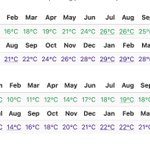
Why do Europeans not have AC everywhere?
Asked Claude Code to run the numbers.
Simple reason:
Before 1980 it was very rare to have days above 32 degrees. The cities, the buildings, the public transport, the infrastructure as a whole isn't set up for it.
But now it's extremely common to have ones above 38 degrees.
Combine that with heatwaves, flashfloods, and draughts. Combine that with farming, river-logistics, river-cooling for power, cities not being built for heat, etc etc.
Europe will be hit brutally by Climate Change.

Andrey Los 🇺🇦🇵🇱🇪🇺 retweeted

18+
This is Kherson. A Russian drone operator hunts down a civilian fruit vendor and attacks him.
The Russian with the controller knows and sees what he is doing. A vile sadist, a subhuman, deliberately steers the drone at the poor man.
Reportedly, he survived.
Absolutely horrific

🦔AI companies are bulk-buying rare books, scanning them through high-speed machines that cut the spines off, and shredding the originals. A service called ISBNdb facilitates orders of up to a million books and keeps buyers anonymous. Pre-2022 books are premium because they're free of AI-generated text. A federal judge ruled the practice is fair use because eliminating the original means only one copy exists at a time. Anthropic hired the former head of Google Books partnerships to obtain "all the books in the world."
My Take
This got to me. A bookseller told 404 Media that rare books with almost no surviving copies are being fed into this pipeline. Books that survived wars, fires, and centuries of handling are being shredded so an AI can learn to write a better marketing email.
ISBNdb's website literally says "'AI company destroys two million books' is not a headline that generates sympathy," and they still built an entire business around making it happen quietly. They offer NDAs as a feature. They coach clients to call it "digital preservation."
I've covered AI companies scraping the internet, torrenting libraries, and stealing music. This is worse because it's irreversible. You can re-upload a website. You can reprint a bestseller. You can't replace the last three copies of an 18th-century botanical text once someone shreds them for training data. And the judge said it's legal. So it's going to accelerate.
"We shred rare books and offer NDAs so nobody finds out" is a legitimate business model in 2026. What a timeline.
Hedgie🤗

Andrey Los 🇺🇦🇵🇱🇪🇺 retweeted
Imagine a 19-year-old scrolling TikTok. She watches a creator list five "signs you have undiagnosed anxiety." She recognizes three in herself. By the end of the week, she's describing herself as anxious to her friends. A month later, she's avoiding situations she used to handle fine.
What went wrong?
In a new paper by my PhD student Dasha Sandra, titled "Why mental health awareness can harm: Converging explanations for a societal problem", we argue that well-meaning mental health awareness can backfire, and we identify how. Four separate literatures (concept creep, nocebo effects, prevalence inflation, and illness self-labeling) have been circling the same problem from different angles. We show they converge on three mechanisms:
1.Awareness lowers the threshold for what counts as a disorder.
2. It trains people to scan their inner lives for symptoms and reinterpret normal distress as pathology.
3. Once someone adopts an illness identity, they behave in ways that confirm and deepen it.
The evidence is wide. Learning that loneliness is harmful makes solitude feel worse. Learning that stress is harmful worsens well-being and performance. Awareness videos about fake conditions like "wind turbine syndrome" produce real headaches. Trigger warnings raise anticipatory anxiety without reducing distress.
This does not mean awareness should stop. It means awareness can have unintended consequences, including manufacturing the suffering it tries to prevent. Inoculating people against these mechanisms works, and we already have evidence it does.
Link to paper: michael-inzlicht.squarespace…

Love to read about OpenClaw, Hermes and all that stuff to still being useless shit. Haven't tried yet, neither of them and so happy.
Once such tool will be really ready for a prime time with minimal configuration it will be hard to miss :) So I'll wait :)
Andrey Los 🇺🇦🇵🇱🇪🇺 retweeted

The PS3 days were such an interesting time in gaming.
For example, Burnout Paradise had this neat feature where you could plug in a webcam, and when you wreck someone it would send a photo of you to them, you could flip them off or point and laugh for a photo, or. As majority of players did, have it send a photo of your penis to the person you wrecked.
Not only would it send them that photo of your penis in game, it would also save it to their hard drive where you could then print it out via the print feature.


Andrey Los 🇺🇦🇵🇱🇪🇺 retweeted

Buying a new car is an act of philanthropy.
Rory Sutherland made the case on the Alex O'Connor's podcast: when you buy a shiny new luxury vehicle, you take the massive depreciation hit so someone much poorer than you can drive essentially the same car a few years later for half the price.
Same goes for iPhones, computers, watches — anything. The rich buy it first, absorb the biggest loss, and everyone else gets the upgraded version later at a steep discount.
His takeaway: we should probably build statues to people who buy things new. They’re quietly subsidizing the rest of society.
Have you ever thought about the fact that buying new is basically philanthropy for the second-hand market — or does that idea flip how you see depreciation and status?
