

I focus on sharing and finding better ways to work with technology: Microsoft MVP, strategist, speaker, author, and super-friendly advisor to hundreds of orgs.
Toronto, Ontario, Canada
Joined July 2008
- Tweets7.4K
- Following2.2K
- Followers5.3K
- Likes1.5K



Pinned Tweet
What should we value about #AI? How should we shape the #FutureOfAI together with our #PositiveIntent? | @TEDxOshawa video is now up youtu.be/MB7csATn7hE?si=m6bg…
#TEDx #TEDxTalks @TEDx #GenerativeAI #Innovation #ArtificialIntelligence #DigitalAssistants #TechTrends
#TechTalks #GenAI
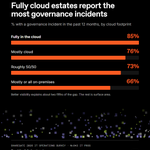
Counterintuitive: fully cloud estates report the MOST governance incidents (85% vs 66% for mostly on-prem). Better visibility explains about two fifths. The rest is surface area.
sharegate.com/state-of-micro…

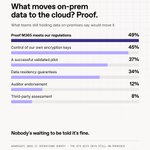
What moves on-prem data to the cloud? Proof M365 meets their regs (49%) and their own encryption keys (45%). Auditor endorsements: 12%. Nobody's waiting to be told it's fine.
sharegate.com/state-of-micro…

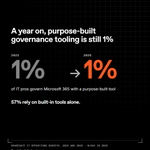
Last year 1% of IT pros governed M365 with a purpose-built tool. This year, after full Copilot deployment roughly doubled: still 1%. 57% rely on built-in tools alone.
sharegate.com/state-of-micro…

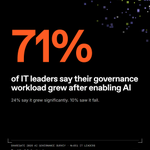
71% of IT leaders say AI made governance work heavier, not lighter. 24% say significantly. The 10% who saw it fall are the group worth studying.
sharegate.com/state-of-micro…

Almost nobody says "we're hybrid" anymore. Yet only 28% are fully in the cloud, and 31% deliberately chose an on-prem future. What isn't on the diagram doesn't get governed.
sharegate.com/state-of-micro…

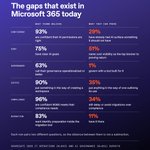
Most M365 teams aren't short on effort. They're short on proof. 93% trust their AI permissions, yet 29% already had AI surface something it shouldn't. Six gaps worth closing:
sharegate.com/state-of-micro…

Every migration I've seen go sideways went sideways in the last ten percent. The tooling question isn't "can it move the data?" It's "what happens when something doesn't fit?"
sharegate.com/state-of-micro…

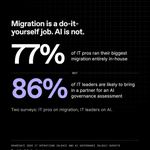
77% of IT pros ran their biggest migration fully in-house. 86% of IT leaders would bring in a partner to assess AI governance. Migration feels known. AI doesn't.
sharegate.com/state-of-micro…

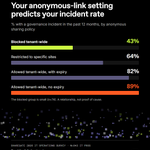
Orgs allowing anonymous links tenant-wide with no expiry: 89% had a governance incident last year. Orgs blocking them: 43%. One setting, one of the widest spreads in the study.
sharegate.com/state-of-micro…

Clarity first. 12 questions, about 5 minutes, nothing to connect: see your M365 governance quadrant and the three gaps furthest behind comparable teams.
sharegate.com/tools/microsof…

For all the complexity, AI also creates simple, human moments.
A person with dyslexia who can now write more comfortably.
A non-native speaker who can draft with more confidence.
Do not lose sight of those wins.
Most Microsoft 365 migration estimates are too flat.
SharePoint, Teams, OneDrive, and Exchange do not have the same complexity shape.
SharePoint often brings information architecture and permissions complexity.
Teams adds apps, meetings, channels, cutover, and continuity.
OneDrive brings endpoint, sync, Known Folder Move, and user device patterns.
Exchange has mail flow, calendars, delegation, shared mailboxes, and timing.
The risk is assuming one workload tells you how hard the whole migration will be.
Better plans make the complexity visible early.
As AI gets better at creating, humans will need to get better at curating.
Choosing what to keep.
What to surface.
What to share.
What to delete.
That is a real skill.
Microsoft 365 sprawl is not something you solve once.
It shifts.
You may get Power Automate, Teams, SharePoint, guests, or lifecycle into a good place.
Then Copilot, Copilot Studio, agents, new workflows, and org change alter the shape of the problem.
AI readiness works the same way.
It is not a finish line.
It is a moving condition.
SharePoint, Teams, and OneDrive are already interconnected.
Adding AI and agents on top makes their relationships even more important to understand.
Architecture is no longer an internal detail - it shapes how AI behaves.
At some point, managing sprawl is not enough.
That is often when consolidation starts to make sense.
The trigger is not:
“Consolidation is always better.”
It is:
“The cost of managing fragmentation is now higher than the cost of reducing it.”
That might mean tenant consolidation, Google to Microsoft 365 migration, site and Teams cleanup, archiving, retirement, or tool rationalization.
The goal is to reduce the accumulated interest of sprawl.
If you remember nothing else about AI strategy, remember this:
Clarity first.
Confidence next.
Connection always.
Clarity about what you are doing.
Confidence from small real wins.
Connection to the people whose work is changing.
AI can make feedback easier to draft, but it cannot have the difficult conversation for you.
Leadership still requires sitting with discomfort, listening fully, and taking responsibility.
The more AI content you create, the more important content lifecycle becomes.
Reviews.
Expiry dates.
Owners.
If everything lives forever, people will not know what to trust.
It feels like Microsoft 365 governance should be getting easier.
Better first-party tools.
Better ecosystem tooling.
Better admin skills.
Better patterns.
But the surface area keeps expanding:
Content.
Guests.
Apps.
Automations.
Agents.
Digital worker identities.
AI workflows.
The water level has risen.
So has the size of the ocean.
AI governance is not shrinking.
It needs to become more repeatable, automated, and shared.