Researching early cancer detection solutions. With 4 boys and ageing parents I know about balancing academic and private live. Keen to encourage aspiring GIs.
Cambridge
Joined September 2014
- Tweets75
- Following24
- Followers314
- Likes5


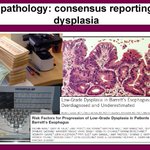


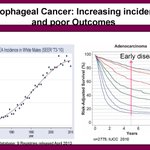
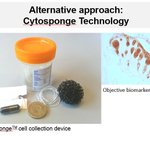
Main points:
- do surveillance well
- get your pathologist to do p53 IHC
- Cytopsonge might save on endoscopy. Watch that space! #FGDebate

Just to emphasize that ablation is for dysplasia and not for everyone. #FGDebate

This is where the #Cytosponge could also be advantageous. Just need to determine biomarkers for surveillance but p53 looks good #FGDebate

@IanARowe @FrontGastro_BMJ @IanForgacs Agree. This is still research territory. Clinical surveillance needs careful white light OGD + path
Advanced imaging needs skilled endoscopists to interpret the images, which can have very subtle changes #FGDebate
Rebecca Fitzgerald retweeted

@IanForgacs Is this the case of centralisation the Dutch have advocated? #FGDebate
Great thing about #Cytosponge is can use it in primary care, little sampling bias and objective biomarker to diagnose #Barretts #FGDebate
Rebecca Fitzgerald retweeted
@RC_Fitzgerald @IanForgacs Here is the link to the @BritSocGastro guidelines on this bsg.org.uk/clinical-guidelin… #FGDebate
Talk to your pathologist about p53 as an adjunct to diagnosing dysplasia. It is really useful! #FGDebate

Consensus reporting of dysplasia essential to avoid over diagnosis and over treatment. #FGDebate

Enough data on increased cancer risk in dysplasia for NICE to recommend ablation therapy. #FGDebate
Endoscopic treatment has massive impact since confirmed dysplasia picked up on surveillance is now treated. #FGDebate

Some people ask whether given the low conversion rate we should do surveillance? #FGDebate

Biopsy all visible lesions and use Seattle Protocol (4 biopsies every 2cm). Sampling bias is a real problem. #FGDebate
Surveillance has to be done well i.e. good inspection, lots of biopsies, good pathology. Otherwise, it is a waste of time. #FGDebate
