Pinned Tweet
For the past few months, a handful of households have kept their money in Quidough. Today, the door opens to everyone.
Every account, in every currency, in one view your whole household shares. Your first 30 days are free, no card needed.
quidough.com
🤖 Made with AI
It's the 31st. Pay lands tomorrow, and rent goes out on the 6th. If the account can't cover it, Quidough tells you today, not on the 6th. What it won't do is hold all of next month's bills against a balance that hasn't seen next month's pay. That would be worrying for nothing.
You want your partner in on the money, and you're braced for a second price. There isn't one. Quidough is one subscription for the whole household, and inviting someone costs nothing. Only the person who set it up ever sees the bill. Who pays for what is your business.
Quidough is open. Every new household gets 30 days free, and we don't ask for a card. If it isn't for you, just stop, and you'll never be charged. We'd rather you spend a month finding out whether it fits than decide from a screenshot.
quidough.com
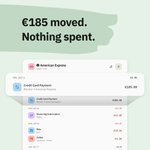
You pay off the credit card and your month suddenly looks twice as expensive. It isn't. The groceries and the train tickets counted when you bought them. Paying the bill just moves your own money from one account to another, so Quidough never counts it as spending a second time.
For households sharing an account: who keeps track of what leaves it? If it's more complicated than this, tell us how it works in your household.
0%Whoever noticed it
0%Whoever holds the card
0%Nobody till the statement
0%Something else
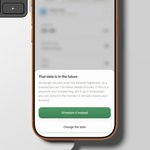
0 votes • Final resultsYou cannot date a transaction in the future.
A payment you expect has not happened, and recording it early empties your balance weeks before your bank does. So Quidough offers to set it up in Scheduled instead, carrying over everything you typed.
A zero is a claim, and Quidough will not make one on your behalf.
On the rare occasion it cannot reach your figures, this month's cash flow shows a dash. Read it as 🤷 rather than as a number. Tap Try again, and it fills back in where you are standing.
4.80. Type "la" in the description and pick Latte. Starbucks and Eating Out fill themselves in.
Quidough remembers what a description carried last time, so a repeat transaction is the amount and two or three letters. Adding things by hand is only slow the first time.
You will never see a total Quidough isn't sure of.
If an exchange rate is missing, that amount is left out, and Quidough says so, rather than folding a guess into your figures. Rates update daily, so it rarely comes up.
Marking an account as yours does not lock your partner out of it.
Everyone in a Quidough household can see and edit every account, no matter who owns it. The owner label shows whose account it is, not who can access it.
Your savings line dipped this month, and you did not take anything out.
The line is what your savings are worth. The bars are what you moved. If some of it sits in another currency, rates move the line and leave the bar alone, because drift is nobody's deposit.
A record you can edit backward is not a record.
Budgets used to store a single cap, so changing it rewrote every month that had already happened. Caps are dated now: each month holds the one that was actually in force, and a change starts this month or next.
Your partner's rent is three days overdue. Quidough shows you and gives you no button to tick it off.
Recording a payment really confirms that it left an account. You cannot confirm what you have not seen, so the button belongs to whoever holds the account.
Moved country and your main account is in the wrong currency?
Archive it, empty or not. Its history stays where it is and still counts. Make a new account in the right currency, and Quidough flags the schedules that pointed to the old one until you repoint them.
Quidough asks for a name so it has something to put at the top of your screen. It does not ask for yours.
Put a nickname, a handle, whatever you would recognize. There is no surname field at all.
Open Quidough for the first time, and there is no graph of a month you have not lived yet, and no row of empty widgets.
There is one prompt. Record anything at all, and the dashboard becomes itself. It is the first thing you see and the last time you see it.