

Postdoc in @Keogh_Lab. From 🇹🇭, currently living in Ngunnawal country (Canberra, 🇦🇺) | https://xitter.cf/t.co/AQYbazpVuL
Australia
Joined April 2009
- Tweets4.5K
- Following673
- Followers588
- Likes2.5K







Pinned Tweet
The "Spags🍝 and snags🌭" study is officially out in @journal_evo. W/ @Keogh_Lab & A. Skeels
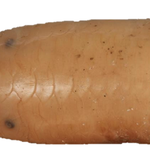
🩵🫰for @StephenZozaya for this amazing photo
of the Kimberley shallow-soil blindsnake
Check it out at: academic.oup.com/evolut/arti…
summary in this series of post/thread 👇

PutterT retweeted

Join us for dartRverse: Harnessing the Force of R for Conservation Genomics! ✨
📅 8–14 Mar 2026 | 🏝️ ANU Kioloa + online
Hands-on pop gen training with world-class speakers.
🔗 Register here cba.anu.edu.au/news-events/e…
#PopGen #Rstats #Genomics

PutterT retweeted
What’s dartR? 🧬
An open-source R package that helps researchers filter, analyse & visualise genomic data — powering 1,000+ studies in conservation, ag & health. A community-built tool making genomics more accessible.
👉 georges.biomatix.org/blog/po…

PutterT retweeted

🏆 dartR from #UniCBR is awarded the @ARDC_AU Eureka Prize for Excellence in Research Software. #EurekaPrizes
Learn more: youtu.be/eM_9H79bPec

PutterT retweeted

Dream Masters by research (MRes) advertised! No fees!
'Origin and evolutionary dynamics of rainforest assembly in the Fiji Islands'
Please get in touch to to discuss the project
Calling to all botanists!
Please RT!
findamasters.com/masters-deg…

PutterT retweeted

Do you use 3D imaging like CT or MRI for research, teaching, outreach, or art? Check out our new article in @iScience_CP featuring a detailed workflow for producing 3D cinematic renderings with stunning realism! doi.org/10.1016/j.isci.2024.… @BIOTECH_UH @HiLIFE_helsinki @helsinkiuni

PutterT retweeted

We’re excited to announce a Mentor-Mentee Networking Session at #AusEvol2024! To participate, be sure to register by Friday, November 22nd!
docs.google.com/forms/d/e/1F…

Another wonderful paper led by @jamesTstroud, I do miss watching these lizards in Miami

New paper! Exploring the interaction between two convergent lizards who evolved separately on different Caribbean islands and were introduced to south Florida.
Read all about how character displacement could play out in real time in the wild!
🦎🦎🦎
nature.com/articles/s41467-0…
PutterT retweeted

Dear fellow vertebrates, We have discovered some fascinating rules about vertebrate counts that you probably weren't aware of. (1/12)
PutterT retweeted

Osteoderms, body armor in the skin, occur in many unrelated species, from tiny worm lizards to massive dinosaurs. But what are they actually good for? Is the term “body armor” even deserved? For an answer, check out our latest article hot of the press: doi.org/10.1111/jzo.13224

PutterT retweeted

The year is flying past, so thought I’d better share the happy news that I’m joining the School of Biological Sciences at @MonashUni @monashbiol as a Group Leader from Jan 2025. Couldn't be more thrilled to be returning to the place that introduced me to research as an undergrad!

7/ and spaghetti like blindsnakes, like this Pilbara blindsnake, tend to occur in hotter + dryer areas with harder soil substrate. 📸 @StephenZozaya

Bonus content from @AntRoom_taku
xitter.cf/AntRoom_taku/status/18…

飼育中のブラーミニメクラヘビ。
捕食場面を動画で撮影しましたが、何度見ても不思議な食べ方をします。
まるで掃除機のように、スルスルと吸い込まれるように口の中へ入っていきます。
blog.livedoor.jp/antroom/arc…
5/ So we asked whether the morphological diversity is correlated with their current environmental niche? 🤔
6/ We found that sasaugey blindsnakes, like this robust blindsnake, tend to occur in areas that are cooler, wetter, with softer soil. 📸 @scott_macor That's a good snag.

3/ and they eat pupae and larvea of ants and termites. So those eye shields are good to have!
Here's a great video of a blindsnake eating some pupae: xitter.cf/i/status/1428609828012…

2/ Blindsnakes aren't actualyl blind, they just have very reduced eyes covered by scales because they spend most of the time underground....

ALT head of blindsnake
