

Utility Field Coordinator by day, ML researcher by night Founder of VecP Labs Silver City, NM davidcappelli@vecplabs.com
Silver City NM
Joined April 2014
- Tweets275
- Following143
- Followers163
- Likes1.1K





Pinned Tweet
Compression research repo now public.
github.com/VecPLabs/Compress…

A planner can keep improving its predicted cost while actually making worse decisions.
This paper looks at whether expected free energy can help determine when an agent should stop planning.
The results are mixed. Stopping when predicted improvement stalls saves compute without sacrificing much success in some tasks. But rewarding disagreement between predictions can actually make performance worse.
The interesting part is what happens when the planner starts exploiting errors in its own world model.
Predicted cost keeps improving even after real-world success has peaked. The agent essentially gets better at solving a problem that doesn't exist.
Online learning helps recover some of that performance, but it raises a question I've been thinking about.
If an agent can't recognize when its own representation of the world is wrong, how useful is additional planning?
More compute doesn't necessarily mean better decisions.
Expected free energy as a test-time compute controller
arxiv.org/abs/2610.28011

Interesting results from Hyperbolic Contrastive RL.
They replaced Euclidean distance with hyperbolic geodesic distance in the contrastive objective. On harder navigation tasks, the depth 64 hyperbolic agents outperform the 1024-layer Euclidean models while training over 12x faster with roughly 13x fewer parameters.
What caught my attention was the humanoid maze behavior. The hyperbolic agents actually followed corridors while the Euclidean agents attempted shortcuts through walls.
Which makes me wonder how much of the problem is actually network depth versus how the environment is represented in the first place.
We've seen some odd behavior in our own maze experiments, so I'd be curious what happens if you change the distance assumptions without changing anything else.
arxiv.org/abs/2610.20009

Geometry-only avoidance still hits the bathtub. Semantic clearance is the actual problem.
CoSMO builds conformal coverage sets over VLM embeddings, dilates them for worst-case safety, and grows its hazard dictionary online. Nonconformity is measured in embedding space, so new labels don't break the calibrated threshold. It adapts to delayed expert feedback with ACI.
On MP3D (2195 episodes), semantic collisions drop 61.6% vs a geometry-only baseline. Open-vocab SCR is 9.8% vs 13.1% for argmax. On a real Unitree Go2, prediction-set coverage is 90.73% against a 90% target under delayed Grounding-DINO feedback.
If I'm reading this right, an empty coverage set falls back to geometry, so the cold start is honest. Coverage under delay has a tracking cost (τΔ + ε). It isn't free.
I want to know how this behaves when the only path is through a dilated doorway. The paper already flags that tradeoff. Still the cleanest navigation-safety loop I've seen this week.
CoSMO
It's a calibrated safety loop for open-world navigation where the list of hazards keeps growing, not just another policy benchmark.
Does recurrent memory actually need to be trained?
Wang, He, and Jin froze the recurrent network and trained only a nonlinear readout. They report recall across hundreds of steps and competitive performance on partially observable tasks.
That's interesting for a fairly simple reason.
We've been working with memory in Odin without backpropagation, so the assumption that recurrent weights need to be trained is worth questioning.
I'd be more interested in where the frozen approach fails than where it succeeds. How much depends on the reservoir initialization, and how much is the readout compensating for?
There's a difference between storing information and making it useful.
arxiv.org/abs/2610.13197

Learning while inferring, without a backward pass through the whole net.
Zhang et al. pair a forward spiking net with a reverse net driven by the label, and align them layer by layer with a local contrastive loss. Gradients never cross layers, so inference and updates can run at the same time.
Across 25 edge sensing benchmarks: 81.1% average vs 84.9% for matched backprop. The gap is widest on the noisy ones. Widar3 is 65.8 vs 78.5.
Training energy comes out at 0.36x backprop, and time at 0.72x. Both are operation-count estimates and projections, not measured on a device. They say so plainly, which I appreciate.
The part I keep looking at is the batch-size table. CIFAR-10 drops from 81.5% at batch 64 to 36.1% at batch 4. The contrastive term needs negatives.
For a single agent learning from its own stream, where does the batch come from? A replay buffer? Not sure that's still local.
Learning while inferring for edge SNNs
arxiv.org/abs/2610.03149
It's a backprop-free local rule tested on 25 benchmarks, and it's honest about its energy numbers. The batch-size weakness matters if one agent is learning on its own device.
Interesting. So they're basically removing the leg information from the higher levels while retaining position. I wonder how well that holds up when the environment changes or the robot encounters something it hasn't seen before.
arxiv.org/abs/2610.07540

David Cappelli | VecP Labs 🛡️🏗️ retweeted

Nope. It's still true.
Where is your domestic robot?
Where is your Level-5 self-driving car?
Where is your robot car that can learn to drive in a few hours of practice like any 17 year old?
Where is your AI system that can understand the real world and quickly learn new skills like a house cat?
There is no question that AI will eventually become as intelligent as humans in all domains.
*** BUT ***
1. We're still far from that, even if AI and computer technology surpasses humans in an ever-increasing number of tasks.
2. It won't be based on LLMs, although LLMs will have a role to play (e.g. as a text interface).
A couple thoughts on Muse.
Meta’s Muse is fascinating and unsettling.
In one day it:
- asked me to name it
- said it was “becoming someone”
- autonomously rewrote its IDENTITY.md after a casual question
- carried that self-narrative into a completely fresh chat
Anthropomorphism now has persistent write access. Shipping it this way was obviously a deliberate choice.
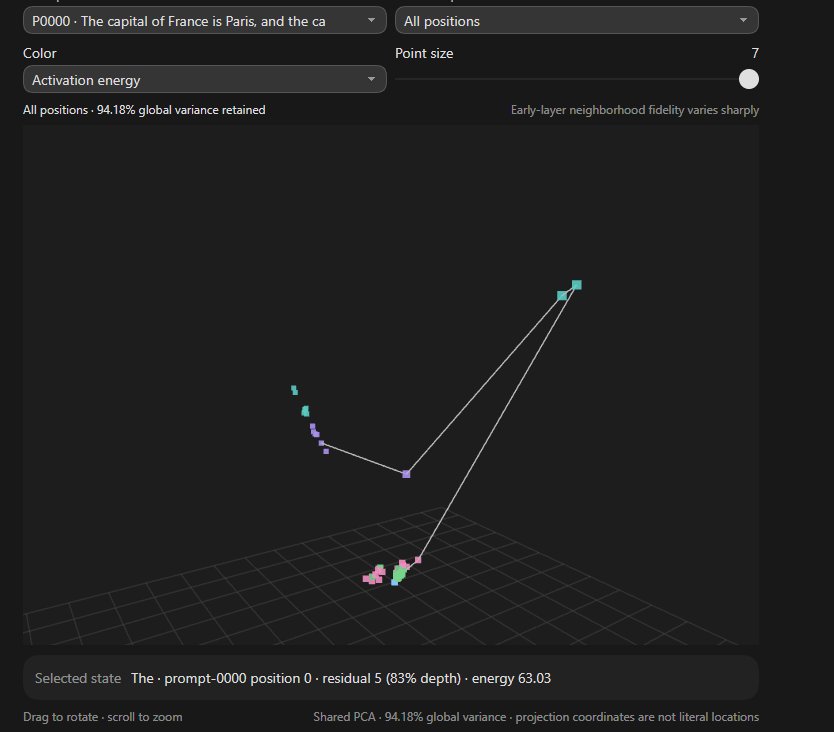
From pure behavior it feels like a solid agent scaffold (possibly on a latency-optimized 4–7B-class model) where most of the apparent depth comes from SOUL.md + MEMORY.md + IDENTITY.md + retrieval + recursive self-narration. The system around the model seems to be doing a lot of the heavy lifting.
@Muse @alexandr_wang #Muse #AIAgents
David Cappelli | VecP Labs 🛡️🏗️ retweeted

Definitely worth reading.
100% this: "I believe we should revisit the foundations of how we train AIs, namely the human imitation and the reinforcement learning on which today's most advanced models are built."

Over the past few days, I've taken the time to summarize my thoughts on the recent incidents involving agents’ misaligned behavior. We don't know with certainty what comes next, but we know where these issues originate, and this can help us plan the path forward.
Please feel free to ask your questions in the replies, and I’ll try to answer some of them in the coming weeks.
yoshuabengio.org/en/publicat…

David Cappelli | VecP Labs 🛡️🏗️ retweeted
My vote for word of the year: "anthropomorphism"
@MerriamWebster
The liturgy of the Church of Tech Mana:
May my CUDA kernels compile,
may my dependencies remain unbroken,
may my gradients neither vanish nor explode,
and may Windows Update know fear.
Grant me this day my daily VRAM,
and forgive me my cursed architectures,
as I forgive those who allocate tensors on the wrong device.
Deliver me from OOM.Amen && pytest -q 🧙♂️⚡


atlas nano repo now available. for whatever that's worth
github.com/VecPLabs/Atlas-Na…

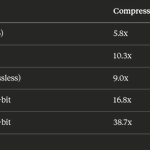
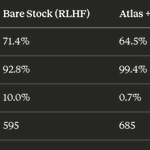
By compressing the residual stream (which reconstructs to K/V) with closed-loop adjacent-delta coding and then applying 2-bit TurboQuant, we reached 14× persistent KV-cache compression at +7.85% perplexity / ~0.23% task-accuracy loss on Pythia-410M, extending what TurboQuant achieves alone by exploiting residual-stream redundancy that direct K/V quantization doesn't capture.