

The are a visionary representation agency for the world's most maverick keynote speakers + extraordinary thinkers. But we are no longer on Twitter / X.
London
Joined February 2012
- Tweets2.7K
- Following846
- Followers570
- Likes2.5K


Pinned Tweet
This account is no longer active due to Elon Musk gutting the platform’s content moderation practices, suing the World Federation of Advertisers, rolling out an update of Grok with zero guardrails for AI image generation, and allowing Donald Trump to rejoin the platform.
PropelaPresents retweeted

NEW from us @NewCitProj
With big questions piling up and trust in decline, we reckon we need a framework for making big decisions WITH people, not FOR them
We call it RAPID Democracy…
Read on for an intro 🧵 or check out the full report
newcitizenproject.com/rapid

PropelaPresents retweeted

I wrote a fast-turnaround piece for @Reuters (@ContextClimate) in response to this morning's events, with a focus on the role that the media has played in delaying action on climate.
Read it here > context.news/big-tech/opinio…
1/5

PropelaPresents retweeted
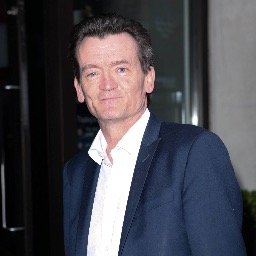
And here they are 👇 the men and woman responsible for dumping 14,027,654 hours worth of sewage into the environment over the last 5 years and helping pollute every single river in the country.
Ladies and gentlemen I give you the board of @Ofwat.
"In the name of God, go".


Have you ever considered merging nature with the metaverse? If so... here you go:

Introducing 𝑁𝑜𝑛-𝐹𝑢𝑛𝑔𝑖𝑏𝑙𝑒 𝑃𝑙𝑎𝑛𝑡𝑠 (𝑁𝐹𝑃𝑠) 🌸
Living plants with 𝑁𝐹𝑇𝑠 𝑠𝑡𝑜𝑟𝑒𝑑 𝑖𝑛 𝑡ℎ𝑒𝑖𝑟 𝐷𝑁𝐴
A carbon absorbing culture shift 𝑓𝑟𝑜𝑚 𝑤𝑒𝑏3 𝑡𝑜 𝑤𝑒𝑏𝑇𝑟𝑒𝑒
Be part of history (𝑎𝑛𝑑 𝑡ℎ𝑒 𝑓𝑢𝑡𝑢𝑟𝑒)
Collect 𝑃𝑟𝑒-𝑆𝑒𝑒𝑑 𝑁𝐹𝑇:
artizen.fund/project/non-fun…
Learn more:
nfp.garden / @NFPgarden
After an incredible keynote at @designcouncil's flagship event #DesignforPlanet, @BasVanaAbel spoke to the @BBC to discuss what a sustainable smartphone looks like in 2023.
bbc.com/future/article/20231… via @BBC_Future

PropelaPresents retweeted
On Tuesday, the government announced it had given a massive contract to he US spy-tech firm, Palantir, to handle the new NHS Federated Data Platform.
✋ Worried about what that might mean for your personal data? We are too. Here’s how to use the NHS national data opt-out 👇
Readers added context they thought people might want to know
The data that Palantir manage on the federated data platform cannot be accessed, used or sold by Palantir. They would literally be breaking UK law to try to do so.
england.nhs.uk/digitaltechnol…
PropelaPresents retweeted

The UK’s ‘first climate refugees’ send the sixth carbon budget into space @Channel4
Another day... another feat* by @Oobahs
How do you like them apples Rishi Sunak.
*along with with @maryportas @HughFW @kevin_McCloud

PropelaPresents retweeted
Enjoyed contributing some stunts and essentially bullying Rishi Sunak for his awful taste/choices in what’s an important film. Cheers to @maryportas @HughFearnleyW @Kevin_McCloud for having me

We could stop climate change – and the solutions to it could benefit us all.
Tune in tonight at 9.15pm to watch The Great Climate Fight on Channel 4. #ClimateFight #ChangeClimate
PropelaPresents retweeted

For a brief time, Amazon's bestselling "bitter lemon drink" was "Release Energy," made from the harvested urine of Amazon delivery drivers, bottled for sale by #CatfishUK prankster @Oobahs in a stunt for a new @Channel4 doc, "#TheGreatAmazonHeist":
channel4.com/programmes/the-…
1/

ALT An Amazon box on the floor of a delivery van. The van is full of piss.
We've been keeping this under wraps for a while, but now we're thrilled to announce that @Oobahs is back & he's armed with a plan that could rival the thieves from Oceans 19 😉 Tune in tonight at 10pm on Channel 4 for 'The Great Amazon Heist'!" P.S We bought some of the pee too.

Thank you for these delicious knives brother @JeffBezos, my nieces loved them and ordered them all by themselves, sorry if you get million pound fine from Trading Standards. Put it on tab. Love, peace. Merci.

PropelaPresents retweeted
System 03's second extraction of plastic, all collected after sweeping an area of 480 square kilometers (more than 85,000 football fields) in 6 days.
📣Excited to announce that @NellyBenHayoun will be delivering the opening keynote at this year's Global Design Forum, hosted at the @V_and_A for London Design Festival! 🌟 #DesignTalks #LDF2023

For his first major Australian solo exhibition of Speculative Architect @liam_young invites us to imagine the unimaginable, & to collectively explore challenging possible futures. 'Planetary Redesign' is at the @NGVMelbourne until 11 February 2024. bit.ly/454gfkl
Devastated that IKEA's R&D lab @Space10 is closing down this week. We've cherished our bond, exchanging ideas with our many speakers & having Space10 as a sponsor for @TheFutureOf. 🙏 For the last 10 years. Here's hoping someone carries on your legacy of purpose & innovation.


Redefining Intelligence & Self on @ForTheWild_ 🌍 @jamesbridle on interconnected intelligence & @indy_johar's vision for regenerative urban development. Ready for a thought shift?
Listen now: bit.ly/3QtNsC1 🎙️ #UrbanFutures #PlanetaryIntelligence

PropelaPresents retweeted
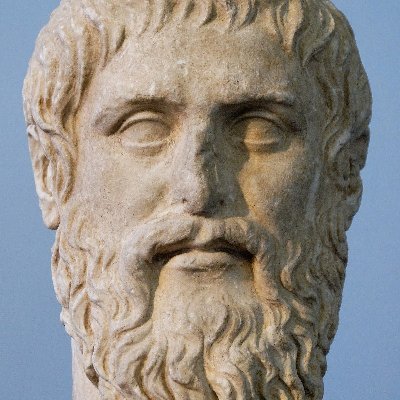
We're so used to seeing and hearing about the pyramids that it's easy to forget how strange and extraordinary they really are.
So, just to remind you:
When woolly mammoths went extinct the Pyramids of Giza were already more than 500 years old.
Cleopatra and Julius Caesar are closer in time to the present day — to the Burj Khalifa — than to the construction of the Pyramids of Giza.
Where are they and who built them?
There are three pyramids on the Giza Plateau, which is on the west bank of the River Nile, in northern Egypt. They aren't far from Memphis, which was the capital of Ancient Egypt when they were constructed.
The largest and oldest was built in less than thirty years around 2570 BC for the Pharaoh Khufu. The second was built for Khufu's son, Khafre, and is only a few metres shorter. The third and smallest was then built for Menkaure, Khafre's son. Three monumental tombs for three generations of the same family.
Nearby are many more tombs for various members of the royal court, the Sphinx, several more temples, and the remains of a sort of workers' town including houses, workshops, bakeries, kitchens, breweries, a hospital, and a necropolis.
Khufu's Pyramid, known as the Great Pyramid, was the tallest building in the world for over 3,800 years — that is, until the spire of Lincoln Cathedral in England was constructed in 1311.
And at more than 6 million tonnes it was the heaviest manmade structure ever built, and is still third behind only the Great Wall of China and the Three Gorges Dam.
The mortar used in constructing the Great Pyramid alone weighs over half a million tons, which is more than the total weight of the Burj Khalifa.
See, the Great Pyramid is almost entirely solid — there are only a few narrow shafts and three small chambers inside. It was largely built from huge blocks of local Giza limestone, although its exterior was once covered in polished white limestone transported there from nearby Tura, and its interior includes blocks of granite weighing up to 80 tonnes transported from Aswan, over 500 miles away.
The *precision* of the pyramids is also remarkable. On a technical level their masonry is astonishingly accurate, but even more amazing is that the four sides of the Great Pyramid are all almost exactly the same length — they have a variation of no more than 60 millimetres.
Not to forget that all three pyramids are aligned according to the points of the compass — within one tenth of a degree of perfect geographical accuracy.
And if these facts weren't impressive enough, the actual construction of the pyramids — the specifics of how the blocks were quarried, transported, and lifted into place — remains a marvel we have yet to fully understand.
But those are merely the facts of the Pyramids of Giza; perhaps more interesting is what they really mean.
After all, you can learn a lot about any society from its architecture. What we say about ourselves can rarely be trusted — but what we do and what we leave behind is always truthful. In other words, that which we build expresses our priorities, how our society works, and who has the most power.
Think of it this way: what are the biggest buildings in the modern world?
By volume it is factories (the Boeing Everett Factory is number one right now) and distribution centres.
By total floor space it is airports and malls.
By height it is mixed-used skyscrapers, though they are usually dominated by offices, especially relating to finance. The Pentagon was the world's largest office building until this year; it has been overtaken by the Surat Diamond Bourse in India.
By capacity? Well, there are sports stadiums, the biggest of which is the Narendra Modi Stadium in India, with an official capacity of 132,000. That being said, no single complex can hold a greater number of people than the Masjid al-Haram in Mecca, which has a capacity of 4 million.
So the largest buildings in the 21st century are almost all related to industry, finance, retail, transport, and leisure — with religious worship something of an outlier. This is a technologically advanced, industrial, highly consumerist society in which businesses hold a great deal of power, and in which the wants and demands of the public are very important.
For comparison, during the Middle Ages nothing came remotely close to cathedrals in size or complexity, though castles and fortresses were also far bigger than everything else. We can draw the basic conclusion that religion was of immense and central importance, that the church as an institution was very wealthy, and that power was actually spread out among the hereditary nobility rather than being entirely concentrated in the monarch alone, not to mention the political and spiritual power also held by the church.
So, what about the Pyramids?
The Ancient Greek historian Herodotus remarked that the Pyramids of Giza were proof of how tyrannical a ruler Khufu — or Cheops, as the Greeks called him — must have been. In his native Greece the largest buildings were temples for public worship; the Great Pyramid was a monument to but one man alone, and this shocked Herodotus.
The biggest buildings of the 21st century are all useful. They have a clear and immediate purpose, and usually one which benefits — in some sense — lots of people. A factory produces things we all use, a distribution centre organises our online shopping, an office is a place of work, and a stadium is where we go for entertainment. Our largest buildings are intimately and inseparably related to employment and consumption.
What about the Pyramids? They were tombs for the Pharaohs and they were supposed to last forever. In other words, they had no immediate use or purpose, at least for the living. They served only one person: the Pharaoh — plus his family and closest supporters, though they were buried nearby rather than inside — in his journey through the Afterlife.
So this is not the same as a large and lavish royal or presidential palace; such buildings are designed to be used as a seat of power and administration — by several succeeding generations or leaders.
Meanwhile, all the resources and labour that went into building the Pyramids, which were literally manmade mountains, were for the benefit of one Pharaoh alone, after his life had ended — and, to a lesser extent, those lucky enough to have been buried nearby at the time.
Does that mean Khufu and his descendants were tyrants? In some sense, yes. But there is evidence that those who built the Pyramids were not, as Herodotus thought, slaves, and were instead closer to conscripted workers and freely employed craftsmen who were fairly remunerated for their labour.
See, it wasn't just that Khufu held total political power; he was also the spiritual leader of his subjects, such that their work was fundamentally religious in nature — it might have even helped them achieve a better afterlife.
There was nobody who could refuse Khufu's desire to build the largest tomb in human history, because he was a divinely appointed intermediary between gods and humans; no regulation to stop him, because his will was the law; no limits to his expenditure, because he collected the taxes and owned all the land in the kingdom.
However powerful the world's richest and most influential people might now seem, none of it compares to the power wielded by Pharaohs like Khufu; a power that was political, financial, legal, military, and spiritual — absolute.
And so the Pyramids are a glimpse into a society fundamentally and almost irreconcilably different from that in which we now live, to the earliest epochs of human civilisation, long before democracy and the rule of law, when one man could rule as a god and have mountains built to serve as his personal, eternal monument on earth.

What stories do AI-generated artworks tell about our society today? 🤔
#ArtificialIntelligence

