

Curated 1-on-1 sessions between founders and investors. Early-stage. Online. Apply now!
Global
Joined February 2026
- Tweets271
- Following266
- Followers27
- Likes10





PROMPT: New York (Nov 16–17) is now listed on All AI Events (allai.events). Two afternoons of online, live face-to-face 1:1 video meetings between pre-seed/seed AI founders and early-stage VCs. Free for founders and investors. Apply by Nov 8: luma.com/d49b833j?utm_source…

20
PROMPT: New York (Nov 16–17) is now listed on All AI Events (allai.events). Two afternoons of online, live face-to-face 1:1 video meetings between pre-seed/seed AI founders and early-stage VCs. Free for founders and investors. Apply by Nov 8: luma.com/d49b833j?utm_source…
19
Are you an AI startup building something remarkable?
Two days of 1-on-1 meetings between AI founders and top VCs. 10 minutes each. Online.
Prompt New York, November 16–17.
The last London edition brought together 21 investors and 18 founders over two afternoons. Hundreds of connections were made, and dozens of follow-up meetings are already scheduled.
No panels.
No keynotes.
No noise. Just the meetings you'd normally spend months trying to get.
Apply now ↓
promptsessions.com/new-york
#NewYork #Founders #VC

15
Building in AI and raising in New York? 🗽
We're running PROMPT: New York on Nov 16-17 (online): curated 10-minute 1:1 meetings between AI founders and pre-seed/seed VCs.
No panels. No keynotes. Just the meetings.
Our London edition last month brought together 18 founders and 21 investors.
Founders and investors can apply here:
luma.com/d49b833j?utm_source…

1
2
46
Apple was close to bankruptcy. Intel was being pushed out of memory chips by Japanese competition. In both cases, Ben Horowitz says, the CEO had to stop running the company the way a calm company is run.
That is the core of his 2011 post on peacetime and wartime CEOs. In peacetime, the CEO builds: hiring for scale, shaping culture, widening the market. In wartime, the company faces a threat to its survival, and the CEO narrows everything to the fight. The wartime CEO breaks protocol, fixes on the details that decide the outcome, and has little patience for deviation.
The same move can be read two ways.
A founder sees permission. When survival is at stake, time is the scarcest thing, and every process costs time. Narrowing decisions to a few people is the fastest way to move.
An investor sees a label that anyone can use. A bad quarter can be called a war too. If the threat is vague, the intense mode may be covering for a plan that does not exist.
Both views can be right. It depends on one thing: can the threat be named in one sentence, with a date or a condition that ends it? If yes, the narrow mode is a plan, and people can see why it will end. If not, it wears people down and slowly becomes the culture.
Both of Horowitz's examples were already large companies, so this is guidance for established companies under real pressure, not a rule for every team.
So here is a question: think of a company that said it was at war. Could its CEO have named the threat and the end date in one sentence?
#leadership #founders #ceo
Source: Ben Horowitz, "Peacetime CEO/Wartime CEO," a16z, Apr 14, 2011
1
37
Frank Slootman's Amp It Up (2022) argues that leaders can often lift results without changing the team, by raising expectations, urgency and intensity. He took Data Domain, ServiceNow and Snowflake public, so the book comes from companies that were already winning at scale, not from a team still searching for its first customers.
Picture a 400 person software company where enterprise deals take 90 days. Every quarter they stall at the same two steps, security review and budget sign off. Everyone says enterprise buyers are slow, so the number feels like weather. It is a tolerance nobody remembers setting.
Pace is what leadership tolerates. Inside the company, people watch what a leader accepts and adjust to it. Intensity without an owner is only fatigue, and urgency without a target is a mood.
That is why the useful move is to split the number. Write the 90 days as two: days in security review and days in budget sign off, and put a name next to each. Often the friction has a cause that can be fixed, such as a security questionnaire rewritten for every deal, or a buyer champion who raises the budget late. "Enterprise buyers are slow" names nothing. A questionnaire does.
A board reads the same thing in the numbers. Ask for sales cycle length by quarter for the last four quarters. A line that bends down while win rate and deal size hold steady means tempo has become a habit. A shorter cycle with falling win rate or smaller deals may only mean discounting or a weaker pipeline.
If neither number has moved in four quarters, the company does not have a tempo problem. It has a standard it stopped examining.
#Startups #Leadership #Operations #Founders #VentureCapital
Source: Frank Slootman, Amp It Up, 2022
49
A partner at a top early-stage fund says one of the most respected skills in venture capital, pattern recognition, is often just a nice name for not thinking hard enough.
Phin Barnes (@phineasb) didn't start as an investor. He worked in operations and helped grow the sneaker company AND1 from 15 million to 225 million dollars in revenue, then built his own startup, before joining First Round Capital.
On Harry Stebbings' podcast, Barnes made a simple but sharp point. When an investor says "this reminds me of another company," that sentence usually isn't analysis. It's a shortcut. The investor skips the hard work of understanding this specific founder and reaches for an old template instead.
The shortcut feels safe because startups don't give you much data, and every case looks a little like something you've seen before. But most of that resemblance is surface level. What actually matters, Barnes argues, is how much a founder learns from every dollar they spend, not how much they remind you of someone else.
A founder who hears "we don't usually back this kind of company" is hearing a template, not a verdict. The smart move isn't to change the pitch to fit some imagined pattern. It's to bring hard numbers about what was tested, what it cost, and what was learned. Numbers beat templates.
Picture the same meeting from the investor's side. Their first thought, "this feels familiar," isn't a conclusion. It's a warning that they might be about to skip the real question.
One side calls it judgment. The other side calls it a shortcut. Both are describing the same three seconds of thinking.
What's the last decision you made that actually came from a pattern, not from a real look at what was in front of you?
Source: Phin Barnes on The Twenty Minute VC (20VC), Harry Stebbings
54
Thank you Portugal Fintech for supporting PROMPT London.
30 investors backing UK startups. AI and fintech founders matched to their thesis. Two afternoons of 1-1 meetings.
No panels. No noise.
Next edition → promptsessions.com

33
Founders at PROMPT London met Gökçe Ceylan from Oxx.
A European VC based in Stockholm and London, backing enterprise AI companies at the scale-up stage, from Series A onwards.
Thank you for joining, Gökçe.

23
Founders at PROMPT London met Jay Kim from SVV (Sure Valley Ventures).
A founder- and operator-led firm investing in early-stage, AI-native software across the UK and Ireland, with initial checks of £500k–£1.5M.
Thank you for joining, Jay.

23
Founders at PROMPT London met A. Recai Açıkgöz from Anka Ventures.
A VC fund backing founders in mobile games, apps and AI, turning local ventures into global success stories with hands-on product, growth and talent support.
Thank you for joining, Recai.

30
Founders at PROMPT London met Zanna Millns from NordicNinja VC.
Former founders and operators investing in deep tech, decarbonization and digital society. Series A, €2–8M tickets, helping Northern European founders scale globally.
Thank you for joining, Zanna.

16
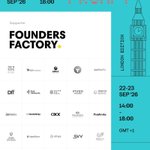
Thank you Founders Factory for supporting PROMPT London.
Two afternoons of curated 1-1 sessions between AI and fintech founders and 20+ investors backing UK startups.
No panels. No noise. Just real meetings.
Next edition → promptsessions.com

1
15
Twenty percent. That's roughly the share of the fund Fred Wilson's firm, Union Square Ventures, holds back and recycles just for follow-on rounds.
Most people think a venture fund makes one bet per company. It doesn't. USV often writes checks into the same startup four to six times over five to seven years, as the company moves from seed to later rounds.
Wilson wrote about this back in 2019. His firm doesn't guess how much to hold back. They run a model 1,000 times, simulating which companies will need more money and when, before deciding how much of the fund stays in reserve.
A founder rarely sees this math happening. They assume the investor who backed them at seed will keep showing up. Sometimes that's true. Sometimes the fund already spent its reserve on a different company in the same portfolio, and the founder finds out two weeks before the round closes.
Where a founder sees a relationship, an investor sees a portfolio decision. The same check that feels personal to a founder is one line in a spreadsheet built to protect a handful of winners, not every company that once looked promising.
Your last board meeting, your investor called you a priority. Their reserve model calls you a line item.
If you're raising again, ask that question before the term sheet stage, not after.
Source: Fred Wilson, "Reserves," AVC, 2019
40
Gillette could have crushed Dollar Shave Club in year one. It had the factories, the retail shelves, and a brand every man already trusted. It waited about five years instead.
That wait is the real lesson here, more than the shave club story itself.
Strategy writer Roger Martin points out something most people miss about Hamilton Helmer's idea of counter-positioning. A big company often won't copy a smaller rival's model, not because it can't, but because copying would hurt its own profits first. Gillette made most of its money through stores and pharmacies. A cheap subscription box threatened that setup directly. So Gillette held back, until the threat got too big to ignore.
Founders love this kind of story. They tell themselves: the big guys aren't copying us, so we must have a real moat.
Where a founder sees safety, an investor should see a clock running down. The gap between "won't copy" and "can't copy" closes the moment the threat gets expensive enough to keep ignoring. Gillette waited years, then launched its own razor subscription and cut prices hard.
The founders who win this game don't relax during the quiet years. They use that time to build something the incumbent can't take back once it finally moves: real customer loyalty, a cost structure the incumbent can't match, or a brand people trust for a different reason than price.
So the real test was never whether a competitor is copying you today. It's whether you're using the time before they do.
At what point does your biggest competitor's math change enough for them to stop watching and start copying?
Source: Roger Martin, "7 Powers & Playing to Win," 2024.
#startups #venturecapital #strategy #founders #competitiveadvantage #businessstrategy
54
In 2017, UiPath was doing around 35 to 45 million dollars a year. The board thought a great 2018 would mean doubling that.
Daniel Dines (@danieldines), the founder, wanted 200 million. A board member later said she remembers thinking even doubling would be a great year. Dines wanted to be twice as big as his competitors, revenue-wise.
UiPath closed 2018 at around 175 million. Short of the target, but more than double what the board called great. The company had just defined the entire RPA category on its own.
One number tells the other half of the story: the board projected 150 million in cash burn for the next year. The real number came in near 400 million. UiPath had to cut 10 percent of its staff to right the ship.
Here is what gets missed when people tell this story as a triumph. The founder's conviction about growth was correct. The board's caution about burn was also correct. Nobody asked the one question that would have caught both: if we hit this target, what does our cash position actually look like?
Founders who set bold targets often stop at the target. They defend the number, win the argument, and never build the matching discipline on the spend side. Investors who question a target often stop at the target too. They push back on ambition instead of asking for the burn scenario that should come with it.
Dines was right about the market. The board was right about the risk. Both readings were true at the same time, and the company still had to fire people to find that out.
If your team just agreed on an aggressive growth number, has anyone written down what your cash looks like the month it actually comes true?
Source: Daniel Dines, Crucible Moments (Sequoia Capital).
#startups #venturecapital #founders #growth #cashflow #boardroom
59
In 2001, Ben Horowitz took his company public with six weeks of cash left in the bank.
Before that, he had already called an all-hands meeting and told the whole team something founders rarely say out loud: we are losing badly, and this could kill us.
Years later he wrote about that period in an essay called The Struggle, which became chapter one of his book. He describes it in blunt, physical terms. Food loses its taste. Your stomach turns even when nothing specific is wrong. You can be surrounded by people all day and still feel completely alone.
He is careful to separate the struggle from failure itself. The struggle is not failure. It just makes failure a lot more likely if you carry it the wrong way.
His advice is simple to list and hard to live. Share the weight with your team instead of holding it alone. Look for the next move instead of counting every way you could lose. Focus on the target, not on every way you might miss it. Stay alive long enough for tomorrow to bring something you cannot predict today.
An investor would push back on part of this. A founder who insists there is always another move can be right. That same conviction can also be the reason a founder keeps funding a company that should already be shut down. From the outside, a real breakthrough in progress and a slow, expensive failure can look almost identical.
That gap is where the harder skill actually sits. Not staying calm. Knowing which kind of struggle you are actually in, and saying so honestly to the people around you.
The struggle nearly ended his company. It also became the chapter people quote most from his book.
What would you tell your team on the week you are not sure the company survives?
Source: Ben Horowitz, "The Struggle," 2010 (a16z.com)
#startups #venturecapital #founders #leadership #startupculture #resilience

39
Are you an AI or FinTech founder ready to scale?
You'll meet Chris Borrett from Mercia Ventures, a UK-based, stock market-listed investment firm with teams across major UK cities including London, Birmingham, Manchester, Leeds, and Nottingham, backing founders from early seed to growth stages and actively supporting them in scaling globally.
No panels.
No noise.
Just curated 1-1 conversations.
London | Online | September 22-23 | 14:00–18:00 (GMT+1)
Apply now ↓
promptsessions.com/london
#London #Founders #VC

46
Are you an AI or FinTech founder ready to scale?
You'll meet Anna Lauring from @VentureF_VC, a sector-agnostic VC firm with offices across London, Barcelona, Warsaw, and Athens, investing as early as possible in strong European founders, with a focus on B2B businesses.
No panels.
No noise.
Just curated 1-1 conversations.
London | Online | September 22-23 | 14:00–18:00 (GMT+1)
Apply now ↓
promptsessions.com/london
#London #Founders #VC

32
Are you an AI or FinTech founder ready to scale?
You'll meet Can Deniz Tokman from @212vc, a fund with fintech-background partners backing B2B tech founders from Türkiye, their first market, and across MENA, Europe and the US, under a test local, go global approach since 2012.
No panels.
No noise.
Just curated 1-1 conversations.
London | Online | September 22-23 | 14:00–18:00 (GMT+1)
Apply now ↓
promptsessions.com/london
#London #Founders #VC

27