

Project WILD, a program of the Association of Fish and Wildlife Agencies, is a wildlife-focused conservation education program for preK-12 educators.
Joined June 2017
- Tweets3.1K
- Following675
- Followers1.3K
- Likes1.7K



Pinned Tweet
Educator trainings are available in-person throughout the year in the US and Canada. Please contact your local Project WILD Coordinator for times and locations. Visit projectwild.org, and click on the "Get Training" button for more information.
How will you imagine and express your life as an "animal" through poetry? In #ProjectWILD's "Animal Poetry" activity, students imagine being animals and write poems to recognize and experience the inspirational value of wildlife.

Look at those feet! Birds have a wide variety of feet. Get your students learning about adaptations like these with the #FlyingWILD activity "Adaptation Artistry." facebook.com/100063881107971…

Be careful stomping in that puddle; it's a habitat! The #AquaticWILD field investigation activity "Puddle Wonders" is a great way for students to discover one of the benefits of rain by exploring the puddles that it makes.

How do wild seeds get to so many places? In the #GrowingUpWILD activity "Seed Need," children explore seeds as food for people and animals and learn how animals spread seeds.

Check out our #FlyingWILD guide! Targeted for the 5-8th grade audience, Flying WILD: Birds Across the Curriculum offers practical hands-on classroom and outdoor field investigation experiences connecting real-world experiences in bird biology, conservation, & natural history.
Visit fishwildlife.org/projectwild… to find the online course information
Follow wild turkeys through historical periods of vast abundance, decline and domestication, and restoration and management in the activity "Let's Talk Turkey" found in the #ProjectWILD guide.

October is #BatAppreciationMonth, and #ProjectWILD is here to celebrate and educate about these amazing flying mammals!
Check out the "WILD About Bats" online course at fishwildlife.org/projectwild…
What forms of ancient life populated this region? Are these same life forms here? How has the waterway changed? Questions like these will be answered by your students in the #AquaticWILD activity "Watered-Down History."

Have your little ones ever seen a bird eating? How and what did it eat? In the #GrowingUpWILD activity "Owl Pellets," children dissect an owl pellet and learn what owls eat. Your students will enjoy making owl collages, owl puppets, singing songs like the "Owl Song," and more!

Want your students to learn more about conservation? In the #FlyingWILD activity "Teaming Up for Birds," your students will research wild bird conservation organizations and create a plan to form one of their own!
birdlife.org/

Oct is #WorldAnimalMonth, & our guides are full of activities to help students appreciate the importance of animals! Try #ProjectWILD's "Oh Deer!," "Eco-Enrichers," & "Turkey Tallies" activities; or, check out #AquaticWILD's "Are You Me?" & "Water Canaries" activities.

For teachers with younger children, our #GrowingUpWILD guide has activities like "First Impressions," "What's Wild?," "Spider Web Wonders" and "Ants on Parade" that are perfect for little ones to develop their understanding of animals.
projectwild.org
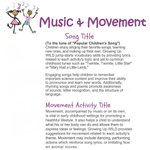
Wondering what to do for #KidsMusicDay? Check out the "Music and Movement" section that is included in every #GrowingUpWILD guide activity!

Happy #WorldHabitatAwarenessMonth! The #ProjectWILD guide is full of activities to raise your students' awareness of the importance of habitats. Check out activities like "Environmental Barometer," "Habitat Heroes," "A Home Away from Home," "HabiCache," & more. Get WILD!

WILD About Bears is now open! Register for Project WILD's latest online professional development course to learn more about the bears of North America and ways to get your students excited about these smart and curious mammals.

Target audience: Formal and non-formal educators who teach students in grades 3-8
In this 3-hour self-paced course, you will learn more about the bears of North America and how to implement the #ProjectWILD activity “Limiting Factors: How Many Bears?”
For more information and the registration link to Conservation Learning Campus, please visit projectwild.org and click on "Online PD Courses for Educators."
#GrowingUpWILD"s activity "Backbone Bonanza" has children learn about the five kinds of vertebrate animals. Your little ones will enjoy singing songs like "I'm a Little Vertebrate," making toad houses in the 'Helping Hands' section, and so much more!

What can the shape of a bird's beak tell us? Why do some birds have colorful feathers and others don't? Design and construct birds in the #FlyingWILD activity "Adaptation Artistry" to learn about the importance of adaptations to birds.
