

Improving condition & long-term resilience of English coastal SPAs to benefit shorebirds. Partners are @Natures_Voice, the @NationalTrust. @LIFEprogramme funded
Joined December 2020
- Tweets1.3K
- Following342
- Followers552
- Likes1.1K




LIFEOnTheEdge retweeted

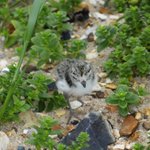
Ringed Plovers have been 'sharing' their beaches with tourists for five months.
Blog about how visitors affect the breeding distributions of Ringed Plovers and Oystercatchers:
wadertales.wordpress.com/202…
🎂4️⃣
#ornithology

LIFEOnTheEdge retweeted
Disturbance of flocks of waders is perceived to be a conservation issue but there are few examples of population level consequences.
Turnstone research by Mark Whittingham et al turned into a WaderTales blog on 3 Feb 2020 🎂5️⃣
wadertales.wordpress.com/202…
#ornithology #waders

LIFEOnTheEdge retweeted

Soil is often hugely overlooked - but you can't have good air or water quality if you don't have good soil quality. The time has come to start taking care of the crumbly brown stuff....Find out more on our brand new WADER youtube channel! youtu.be/aqJL8bMDvko @LIFEprogramme
LIFEOnTheEdge retweeted

The curlew is back 🪿
The #LIFEProject @CurlewLIFE has supported this amazing species in #NorthernIreland, with 52 breeding pairs & 20 fledglings spotted✨
Check out more in the @BBC report: tco.li/u2wrz
#LIFEProgramme
LIFEOnTheEdge retweeted
1⃣6⃣ #waders #shorebirds have had their conservation threat levels upgraded in the latest review by IUCN.
7⃣ species have gone straight from LEAST CONCERN to VULNERABLE (missing out NEAR THREATENED)
Revised thread. 1/7
Release from BirdLife:
birdlife.org/news/2024/10/28…
#ornithology

LIFEOnTheEdge retweeted

La última actualización de la Lista Roja de la @IUCN muestra un alarmante declive de las aves limícolas migratorias en todo el mundo. 🌍⚠️
Vamos con algunos ejemplos de especies que han agravado su categoría de amenaza:👇
ℹ️ seo.org/las-aves-limicolas-m…
#RedList #LibroRojo
@BirdLifeEurope @BirdLife_News

LIFEOnTheEdge retweeted

🚨Red List Update🚨
Migratory shorebird populations are plummeting globally. ⚠️ 📉
16 species have been reclassified to higher threat categories, with potential causes including habitat loss and degradation, disturbance, hunting and climate change. 🌊
🌎 Travelling the world on migration routes called flyways, shorebirds are a familiar sight worldwide.
Protecting shorebirds is vital for all of us. 💚 The places migratory birds stop and rest on their long journeys are important for millions of people.
CBD COP16 is the moment to galvanise action to halt and reverse nature loss by 2030. 🤝
Nature loss can be reversed but extinctions cannot.❌
Read more here 👉 birdlife.org/news/2024/10/28…
#COP16Colombia #BirdLifeInternational #BirdLifeFlyways #RedList #HabitatLoss #Shorebirds #ClimateChange #Extinction #Conservation


LIFEOnTheEdge retweeted

The skies of Sardinia just got wilder! 22 Griffon Vultures were released in southern Sardinia as part of the LIFE Safe for Vultures project! 🦅
#lifesafeforvultures #griffonvultures
4vultures.org/blog/22-griffo…

LIFEOnTheEdge retweeted

Ringed Plover breeding success has increased at a Norfolk site following efforts to keep visitors and dogs away from nests: bit.ly/3XwQtTW

LIFEOnTheEdge retweeted

Unusual interactions on the lagoon this morning... pt 1: sika and spoonies... #WildBrownsea @DWTBrownsea @DorsetWildlife @harbourbirds @DorsetBirdClub @BrownseaNT @BirdGuides
LIFEOnTheEdge retweeted
Could the Wash have a barrage by 2031?
Yes - according to local newspaper report.
Blog about the #waders of the Wash:
wadertales.wordpress.com/201…
My comments on the proposal (@waderquest article):
waderquest.net/wp-content/up…
#ornithology

LIFEOnTheEdge retweeted

Our #SolentSeascapeProject partners, @ProjectSeagrass, are running fragment planting walks this autumn and they need your help to restore seagrass around the #IsleOfWight!
The first walk is:
📍Priory Bay
📅 1 Oct 3.30-6.30pm
For more details, see tickettailor.com/events/proj…

LIFEOnTheEdge retweeted

The first of the Grey Seal pups were recorded today. Please refer to on-site signage for up to date information and keep dogs on a short lead. @NE_Northumbria @LifeWader @LIFEprogramme


LIFEOnTheEdge retweeted
Better Redshank news from @BillyBloodworm!
community.rspb.org.uk/ourwor…
No further declines in East Anglia's breeding population since report summarised in this blog (see graphic ⤵️)
wadertales.wordpress.com/201…
More birds discovered in more extensive survey.
Excellent work!
#ornithology

LIFEOnTheEdge retweeted

Saltmarsh Matters..
Sunken Island on the Essex coast is remarkably regenerating, albeit with Spartina after decades of decline. left image - 2005 - right image - yesterday.

LIFEOnTheEdge retweeted
This week 5 seabird species were added to the UK red list of birds at most need of conservation, including the Arctic Tern - one of the species we are working with @lindisfarne_nnr to protect. They breed in small numbers on Lindisfarne National Nature Reserve🌊@LIFEprogramme

LIFEOnTheEdge retweeted
Beach -nesting #waders #shorebirds.
Under pressure from increased tourism.
wadertales.wordpress.com/202…
Blog from 23 Aug 2021 🎂3⃣
#ornithology

LIFEOnTheEdge retweeted

Rotational management is ideal, with rejuvenation every 3 years or so. Where several scrapes are present, vary drawdown regimes, some early, some late. Key issue: where water levels are stable, available food is eaten, so moving water up and down increases accessible food. 4/4

LIFEOnTheEdge retweeted
Declining bird use of ageing scrapes can be rejuvenated by a regime of drawdown & reflooding, stimulating plant growth & decomposition, creating a food source for invertebrates such as chironomids. In stable conditions predatory inverts increase, competing with birds for food 3/4

LIFEOnTheEdge retweeted
Natural wetlands are usually dynamic habitats, with feeding conditions varying throughout and between years, largely in relation to seasonal & annual water level variations. Highest densities of many waterbirds are found in shallow recently flooded, early succession wetlands 2/4
