


AIR retweeted

I am a member of the Norwegian Nobel Committee.
There are five of us. Five people, appointed by a parliament most of the planet could not find on a map, who decide, once a year, which human being the world has agreed to call good.
I know. I know. I think about it on the tram.
We meet in a building on Henrik Ibsens gate, a street named after a man who wrote almost exclusively about people discovering they are frauds, which nobody on the committee finds funny except me. There is a room with a long table and the portraits of the dead laureates looking down, Mandela, the Dalai Lama, a great many earnest men in spectacles, and one portrait we do not discuss, which is Kissinger, 1973, awarded while the bombs were still falling, after which two of our predecessors resigned and the satirist Tom Lehrer said political satire was now obsolete. We keep him on the wall. A reminder. Every family has the uncle.
It is October in Oslo, which means the sun gives up around four in the afternoon like a civil servant, and it rains the particular Norwegian rain that isn’t quite falling, just hanging there, judging you. I arrive with wet shoes. I always arrive with wet shoes. There is coffee, because this is Norway and there is always coffee, we drink more of it per person than almost anyone alive, and someone’s wife has sent kanelboller, the cinnamon buns, and we sit, five Norwegians, damp, caffeinated, sugared, and we decide the moral standing of the entire species.
Let me tell you how it actually works, because the world imagines a cathedral and it is, I promise you, a book club with a mandate.
287 nominations this year. 208 people, 79 organizations. Anyone can nominate, that’s the secret nobody understands: a professor, a parliamentarian, a former laureate, so the “nominee” list is meaningless, it’s a suggestion box, and every autumn some congressman nominates his own golden retriever and the press writes “SHORTLISTED.” Nobody is shortlisted. There is no short list the public ever sees. There is us, and the coffee, and the rain, and the portraits, and a Norwegian stubbornness that is older than the prize itself.
We read reports. The institute’s advisers write them, thick dull documents, and we argue. Our chairman told the BBC once that in the final meeting “there is a high temperature.” High temperature, for a Norwegian, means someone slightly raised an eyebrow and then apologized for it. We don’t do high temperature. We do a long silence, and then Kristin says “well,” and everyone knows exactly what “well” meant, and it’s settled. That’s our shouting. “Well.” You’d have to be raised here to hear the violence in it.
Now. This year. I will not say the name, because we never say the name, but you know the name.
A certain head of state wanted this prize the way a child wants a thing in a shop window, which is to say loudly, and in public, and with the full belief that wanting it was itself the argument. He said he deserved it. He said he’d ended eight wars, a number that grew most times he said it, like a fish. He had other heads of state phone us. Israel’s prime minister posted it on the internet, “Give him the Nobel.” The leaders of Cambodia and Pakistan announced they’d nominated him, as though announcing it were part of it, as though we tally mentions. A man flew around the globe collecting endorsements for a Norwegian committee the way you’d collect signatures for a petition to the council about a noisy dog.
And here, uff da, is the detail I treasure, the one that makes me smile into my coffee. The nomination deadline is the 31st of January. He took office on the 20th. So for all the phone calls, all the posts, all the gilded lobbying, the only nominations that could possibly count for this year’s prize were filed in the first eleven days of his term, before he had, by his own arithmetic, ended a single one of the eight wars. He campaigned all year for a prize whose window had shut while he was still hanging up his coat. We didn’t have to reject him. The calendar did. We just watched. Norwegians are very good at watching. We have long winters.
People think we sit there weighing his deeds. We don’t. That’s the thing I can’t make the world understand. We’re not grading his homework. We don’t owe anyone the prize for a ceasefire, however real, however loud the announcement. “He made peace” is not a sentence that ends in a medal, the way he believes it does, the way he believes every good thing ends in his name on it. The will of a dead Swede says the prize goes to whoever did the most for fraternity between nations. A dead Swede, I should add, who made his entire fortune inventing dynamite and selling arms, and spent his last years horrified at his own obituary, which called him a merchant of death, and so bought his way to immortality as a man of peace. The whole prize is one guilty arms dealer’s attempt to launder his name. We are, all of us, administering a dead man’s public relations. I find this clarifying. It keeps me humble. It should keep everyone humble, and it keeps, by my count, no one humble at all.
So who did we give it to?
An eighty-five-year-old woman. A judge. Born in Durban, under apartheid, granddaughter of a Tamil man who came to South Africa as indentured labor, a bus driver’s daughter from the poor Indian quarter, who became the first non-white woman to run a law practice in her province, who defended Mandela’s people when defending them was dangerous, who sat on the Rwanda tribunal and the court at the Hague, and who, at eighty-five, is right now a judge weighing whether a genocide is a genocide. When we told the world, our chairman said the rule of law “underpins the system we have set up to ensure peace,” and that “peace requires justice.” She wasn’t even in Oslo. She was in Nuremberg. In courtroom 600. The actual room where they tried the Nazis. You cannot stage that. God staged that, and God, it turns out, is a better satirist than any of us.
She did not phone us. She did not post. No prime minister demanded it for her on the internet. She had, as far as our deliberations are concerned, the one qualification the loud man could never manufacture, which is that she wanted the work and not the medal. The medal finds those people. It flees the ones who chase it. This is not a rule we wrote. It’s just the only pattern the hundred-odd years of our mistakes has ever shown.
The reaction from across the ocean was immediate. His spokesman posted that we “place politics over peace.” Ja. Perhaps. We’re five damp pensioners in a rainy city; of course it’s political, it was always political, it was political when we gave it to a sitting American president nine months into his first term for the promise of things he had not yet done, and we have been quietly embarrassed about that one for fifteen years, so believe me, we had a particular reason this year to prefer a woman with fifty years of verdicts behind her over a man with eight wars in front of him and a deadline already behind him.
Here is what he will never understand, the thing I’d tell him on the tram if he ever took one. We are the one prize he cannot buy, cannot post his way to, cannot have a friendly dictator phone in for him. Not because we’re incorruptible, nei, we’re as vain and wrong and human as the portraits on our wall. But because the entire point of the thing, the only power a small cold country’s book club has ever held, is that it goes to the person not performing the wanting. The moment you demand it, you’ve proven you don’t understand what it’s for, and proving that is itself the disqualification. He ran the most expensive campaign in the history of the prize and the campaign was the reason. He was never losing to Navi Pillay. He was losing to the concept.
It’s dark now. Four o’clock dark. The buns are gone. Kristin said “well” an hour ago and we all went home. I’m on the tram with my wet shoes, and somewhere across the water a very powerful man is explaining to a camera that the prize is rigged, that we’re corrupt, that he’ll win it next year, and he genuinely might, we’re only five idiots and we’ve been wrong before, Kissinger is still on the wall.
But not this year. This year an old woman in Nuremberg, in the room where the law once stared down the exact kind of man who thinks wanting a thing loudly enough should make it his, got a phone call she didn’t ask for.
That’s the job. We don’t reward the man who ends the war and announces it.
We reward the woman who spent fifty years deciding what a war was.
He’ll never see the difference. That’s rather the whole point of him.
Takk for i dag. I have to change trams.
AIR retweeted

So, a group of Nigerian IT professionals was spotted at Palms Hotel on the A127 near Upminster … and you can pretty much guess what happened next.
Jesus Christ this f*****g country.

AIR retweeted

Nolan Wells didn't drown. Emmett didn't whistle. Philando didn't reach for a gun. Trayvon didn't harass. Sonya Massey didn't call the police to die. Ahmaud didn't trespass. Breonna never woke up. Sean Bell didn't make it to the altar. George and Eric couldn't breathe. Rekia didn't pose a threat. Laquan was walking away. Kendrick did not roll himself up. Mike Brown was only jaywalking. Sandra Bland did not commit suicide. Botham Jean couldnt enjoy his ice cream. Tamir Rice didn't have a gun.
AIR retweeted

This is a fascinating report, but it raises a lot of questions that I'm not seeing anyone asking. For example:
1) how many users were aware that Anthropic is tracking de-anonymized requests to Claude and linking them to IRL identities? And apparently has access to account relationship data, geographic/network signals, and external intelligence? This is just privatized surveillance. (If you think they're only doing this for "misuses" of the product... lol).
2) how is anyone comfortable with Anthropic being judge, jury, and executioner when it comes to "misuse of AI?" They are defining what it means, deciding on the methods to identify it, controlling the entire monitoring and moderation pipeline, identifying accounts that engage in it, and taking action against said accounts — all in private, with little to no transparency and without revealing any info about things like how they're making sure they don't misidentify people or take punitive actions against innocent account holders (nor how or if users can appeal such a wrongful action), or what the denominators are (in relation to the figures they cite in the report). There is no way for outside/independent researchers to audit this process.
If you apply reverse engineering (ie, ask yourself: what must Anthropic be able to see to know what it claims to know?), the answers are every bit as alarming as what's in the report, but at least the bad actors in the report are being monitored instead of shielded from scrutiny.

We're publishing our most detailed threat intelligence report to date.
It covers how people tried to misuse Claude—for cyberattacks, influence operations, surveillance, biology, and building weapons—and how we found and stopped them.
We disrupted every operation in the report, and used the lessons from them to strengthen our safeguards. Where appropriate, we also shared what we found with authorities and other AI companies.
These cases are not typical: we’re highlighting some of the most sophisticated misuse we’ve seen. But they’re especially important to discuss, because they show us where AI misuse is headed, where our safeguards work, and where they need to improve.
We’re publishing this report so others can spot the same activity on their own platforms, and so we can give the public a clearer view of how emerging threats develop.
Read the report: anthropic.com/threat-intelli…

AIR retweeted

Yuval Abraham and Rachel Szor’s ‘Naza’ is one of the most important films of our time. 24 different Israeli intelligence officers testify in this unflinching exposé of systematic Israeli war crimes in Gaza. vulture.com/article/review-n…

AIR retweeted

London's homicide rate hit its lowest level since records began.
Yet 40% of the public thought that murders had risen since 2019.
That’s the danger of disinformation. We cannot accept it, and to defeat it, we’ve got to put pressure on the social media companies who profit from it.

AIR retweeted

16 years ago Google pulled its search engine out of China because they wouldn’t submit to an authoritarian government.
Today, they’re renaming lakes to appease one.
AIR retweeted

Cofnas, race science and genetic politics. Please allow me to explain. Bear with me - it's complex but I'll try to boil it down as much as possible.
How does skill/intelligence specialisation work? Very simply - and a lot of further reading recommended here - a master protein called HIF-1 activates a configuration of specific survival genes required by the environment, although it doesn't deactivate or destroy but temporarily relegate others. There's no permanent genetic 'fixation', only a temporary and sometimes spectacular configuration which gives the impression of 'fixation' to the uninformed. The basic genome, the core, flexible, multi-tool DNA sequence, remains unchanged. A few generations in a different environment would activate a different configuration. This explains the varieties of culturally heritable but genetically and affectively/cognitively flexible 'intelligence' and practical skills we find in different environments.
Take Kenya as an example of specialisation. Generations of living and training at altitude altered phenotypic plasticity, allowing Kenyans to be relatively and famously good at long-distance running. They also developed specific farming techniques such as terracing, trenching and microclimate selection to cope with issues such as climate, steep inclines and soil erosion. All of this required constant attention, development and maintenance. They had neither the time, the educational infrastructure nor the survival incentive to sit around in a luxury apartment like John von Neumann doing maths puzzles and learning languages with the help of paid governesses, the environmental source of his highly developed but rather narrow IQ-friendly intelligence.
Which brings us to the politics. White, middle-class right-wingers in the West are in an extreme panic. Their 'successful' imperial background encouraged the specific and admittedly broad intellectual qualities required for the environment they were creating - science, technology, militarism, competitive individualism, hierarchical organisation, markets, financial operations, increased surplus production and so on. A temporary genetic configuration was established, no doubt, and some individuals excelled on that specific landscape.
Then, as always, history moved us along. Former agricultural nations such as Russia began to catch up. The foolish financial 'creditor class' exported too much of its manufacturing to the East. The consumerised, market-worshipping West faced cultural decadence, de-skilling, anti-intellectualism and incompetent leadership as successful but stupid oligarchs bought their way into power, aided by the narrow intellectual skills of the tech and media industries. The populations of the ascending nations faced a whole new set of requirements for intellectual and practical development. It takes a few generations, but they adapted quickly and their flexible genetic, cultural and institutional systems responded.
And here's the political rub. You can see the nervy panic in the faces of the likes of Cofnas because, quite simply, the white Western middle classes are slowly but inexorably being outcompeted in all the dimensions of their own rather ugly game. The success of those abroad risks inspiring those at home. Reacting like frightened animals, the extreme right wing of the middle class are attempting to recall obsolete racial pseudoscience in a desperate attempt to reaffirm their superiority as a fixed quality and justify the continuation of the privileges that maintain their dominance. They also hope that the pseudoscience might 'fix' their new competitors as genetically inferior, a justification for denouncing them, controlling the flow of social mobility and keeping at least most of them trapped in the lower tiers of their societies, deemed unworthy of the long-term educational investment they need. Thus, the principal focus of attack is the 'woke' public education system. Destroy that, and they might win the day and maintain their dominance. We can't allow that to happen.
AIR retweeted
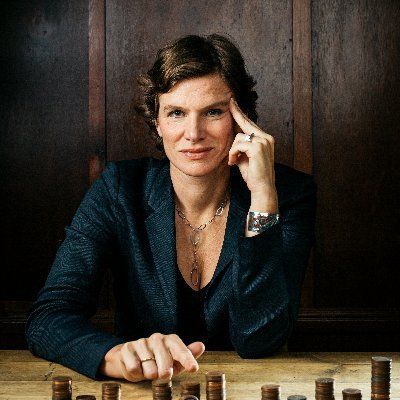
What if we treated Notting Hill Carnival not simply as an event to be funded, but as infrastructure to be invested in?
Its communities produce skills, knowledge, networks and innovation that endure long after the last sound system switches off.
That requires a very different conversation about public investment—and about who gets to shape Carnival’s future.
Seeing it that way changes the question from what Carnival costs to how public institutions can better support and govern the ecosystems that produce it. Our @IIPP_UCL project with @AlvaroBarringto links Carnival in London, Rio and Salvador to develop that framework.
Carnival Economics project ➡️ ucl.ac.uk/bartlett/public-pu…
Our @NewStatesman piece ➡️ newstatesman.com/politics/so…

AIR retweeted
Every year the Notting Hill Carnival is measured in policing costs, transport disruption and hospitality receipts. Those numbers miss the point.
A million working hours go into producing it, and the labour is only part of what goes unvalued. Carnival also creates belonging, identity, participation and collective joy: forms of value that no tourism figure captures, and that don't disappear when the sound systems are packed away. @NewStatesman piece linked below.

AIR retweeted

But, of course, we already know what happens next: Israel won’t comply, and they won’t do a thing about it. They will continue normalizing their relations with Israel as if nothing happened.
Condemnation without consequences has been and continues to be part of the problem.

AIR retweeted

Key claims Jason Arday made about his life that became central talking points in attacks on him were in fact true.
Our analysis has found that the impression created in much press coverage, that the academic invented enormous parts of his backstory, is wrong.
My piece below:

Readers added context they thought people might want to know
The claims have not been found to true.
Arday claimed to have played professionally for Crystal Palace U18, for which there is no record.
Marathon articles report on claimed final 6/30 without evidence, and make no mention of alleged fractured leg in final 9 marathons.
theguardian.com/uk-news/2026/a…
yourlocalguardian.co.uk/news/8331133.c…
theguardian.com/education/ng-i…

AIR retweeted

EXCLUSIVE: Jason Arday was targeted in a coordinated campaign by an anti-black race science network with ties to Cambridge and pro-Trump billionaire Peter Thiel, whipping up a catalogue of systemic misinformation across the British press 🧵/1 bylinetimes.com/2026/08/18/t…

AIR retweeted

After the death of Jason Arday, Will Self asks what happens when newspapers, platforms, editors and audiences become components in a machine nobody admits to controlling.
The public interest is not the same thing as the public being interested.

AIR retweeted

Israeli settlers in the occupied West Bank diverted a spring that was a lifeline for the Palestinian village of Fasayil, cutting irrigation pipes in June and converting it into a tourist attraction, leaving nearby farms barren reut.rs/4g5Y2du
AIR retweeted

We have analysed just how obsessed the media was with Jason Arday right up until his death.
We tracked 249 articles about him by UK media. 44 from The Times alone, 43 from The Telegraph, and the list goes on.
The nonsense the media was publishing about him was a perfect representation of how morally bankrupt legacy journalism has become.
Full analysis here: newscord.org/editorials/jaso…


AIR retweeted

"When people talk about the need for Black Excellence I counter with an insistence on Black mediocrity: the right for black people to be as average, flawed, compromised & mistaken as any other group of people. The right, ultimately, to be human." R.I.P. Jason Arday
