

Random thoughts on science, technology, culture, education, research, and hydrology. Views are personal.
Mumbai
Joined October 2020
- Tweets664
- Following99
- Followers445
- Likes2.4K






Pinned Tweet
We need to address the elephant in the room: science has theological roots. researchgate.net/publication…

Basudev Biswal retweeted

Shocked and horrified by the brazen threats to @ajeetbharti from a public platform. To single him out for his Brahmin identity and then to threaten to skin him alive, is unacceptable. The state must provide him adequate security immediately.
Stay safe, Ajeet. We stand with you.
" What India wants is a true leader, a leader like Guru Gobind Singh or Guru Ramdas and Shivaji. India wants a Krishana who can give a worthy ideal, to be followed not by India alone, but buy all humanity, by all the members of this humanity with diverse temperaments and capacities. Non-violent non-cooperation movement failed not because there was sporadic outburst of suppressed feelings here and there but because the movement was lacking in a worthy ideal. The ideal that you preached was not in keeping with Indian culture and traditions. It savoured of imitation. Your philosophy of non-violence, at least the philosophy that you gave to the people for their acceptance, was a philosophy arising out of despair. It was not the spirit of kshama of the Indian rishis, it was not the spirit of ahimsa of the great Indian yogins. It was an imperfect physical mixture of Tolstoyism and Buddhism and not a chemical mixture of East and West. "
From the letter of Sachindra Nath Sanyal to Gandhi.
Note: In Sanyal's interpretation, ahimsa (non-violence) in Indian philosophy was strictly an individual pursuit that did not mix well with the ashram culture of Buddhism. Buddhism did not sanction top-down imposition of non-violence for political purposes.
Basudev Biswal retweeted
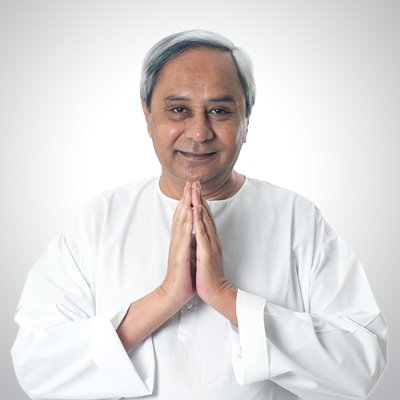
Since the 1999 Super Cyclone, #Odisha has braved nature’s fury with courage and conviction, driven by the sole principle-every life is precious. #Odisha’s transformation from vulnerability to global leadership in disaster management is not just about systems, it is the unwavering focus on people, planning and purpose which turned Odisha from vulnerability into a beacon of resilience. On #InternationalDayForDisasterRiskReduction, let’s pledge to further bolster the famed resilience and readiness to protect every precious life.


What could Chanakya, Genghis Khan, and Stringer Lawrence teach us about Job Selection and Admission into Academic Institutions?
The biggest faultline in India today is affirmative action, which is popularly called as quota. The proponents justify by invoking arguments for social justice, while the opponents argue for meritocracy. To avoid getting into the domain of politics, I will try to keep this discussion as academic as possible. The core of the problem is how we can identify talent. I strongly believe an effective solution to this problem holds the key to unlock India’s potential. I will try to provide some analytical tools to understand the problem, because finding an effective solution would not be very difficult if we understand the problem.
Let me start by mentioning three historical personalities:
i) Chanakya picks the young Chandragupta Maurya for the seemingly impossible task of dismantling the powerful Nanda Empire, and you know Chandragupta Maurya eventually succeeded and became one of the greatest emperors in Indian history.
ii) Genghis Khan spots the young Jebe (Jirqo'adai) among the members of a rival tribe he had defeated in battle. Jebe had shot an arrow at him, seriously injuring him. Instead of punishing him, Genghis Khan gives him an opportunity to lead his army. Jebe went on to conquer China and many other parts of the world for him.
iii) Stringer Lawrence picks the young Robert Clive for the audacious task of storming the Devikottai fort with a small contingent, in which he succeeds, showing extraordinary bravery and presence of mind. Clive eventually climbed the ranks to become the first Governor-General of India.
What is the common thread that connects these three examples? Can you imagine a standardized test that could have recognized the talent of Chandragupta Maurya, Jebe, and Robert Clive? Absolutely not! Because the primary objective of a standardized test is to eliminate candidates, recognition of talent comes afterward. Chandragupta was too young to appear for a test and had no proven talent for the leadership role. Jebe would have been viewed as a potential threat – he had almost killed Genghis Khan in the battle. Clive would have been marked as mentally unstable. In fact, he tried to commit suicide twice before the battle of Devikotta; both times, his pistol failed to fire (he eventually died by suicide in Britain long after his retirement). These three decisions were possible only because the selectors relied on their intuition.
Throughout history, we relied on personalized evaluation models. However, today it is hard to even have a serious discussion about the merits of these evaluation models. You will be accused of empowering Dronas who would discriminate against Ekalavyas. True, personalized evaluation systems played a major role in the formation of rigid social groups. This is perhaps one of the reasons why standardized evaluation models gained widespread trust and are seen as meritocratic. However, any argument suggesting that we should fully rely on standardized learning evaluation models is not just overly simplistic but also ignores empirical evidence.
To give a brief historical overview, standardized evaluation is not new. The first large-scale standardized evaluation in recorded history was perhaps the Imperial Civil Service Examination (Keju), held in China about 2,000 years ago to fill top bureaucratic positions. Several East Asian nations, including Korea and Japan, later adopted similar systems. The first major standardized examination outside East Asia was the Indian Civil Service (ICS) examination, held in London in 1855. Ironically, the intent behind the examination was to promote meritocracy while making it extremely difficult for Indians to succeed because of geographical and language barriers. In fact, the first Indian to pass the examination was Satyendranath Tagore, who did so in 1863, eight years after the examination was introduced.
Most academic admissions and job selection processes heavily rely on standardized tests. Is that working? Apparently not. If it were, we would not need quotas in educational institutions or jobs. Where does it go wrong, then? No serious study has shown a strong correlation between performance on standardized examinations and the ability to solve problems under real-world conditions. Intelligence is a multifaceted construct; each individual displays strengths as well as weaknesses across different situations. Assessing a group of people using the same set of metrics is akin to evaluating the physical abilities of a monkey and a penguin based on how well they can climb or swim.
Unfortunately, after Independence, the Indian government, instead of conducting a rigorous review, expanded the scope of standardized examinations. The result is that we have raised generation after generation of students who find no purpose other than cracking exams. Standardized written examinations mainly test memorization skills. As a result, communities whose traditional occupations place greater emphasis on memorization may be advantaged by such assessments, while communities whose occupations rely less on memorization may be disadvantaged in educational admissions and job selection. Nevertheless, the quota system is a quick fix. Moreover, we cannot invoke the idea of justice while depriving students who score higher marks on an examination in favour of those who score lower marks.
To conclude, neither personalized evaluation models are inherently discriminatory, nor are standardized examinations inherently meritocratic or inherently capable of cutting across social groups. Both have their strengths as well as weaknesses. It is essential to understand these nuances and design better evaluation models for admissions and job selection. In fact, the UK, which introduced standardized evaluation models in India, has gradually moved away from relying heavily on standardized examinations and now gives significantly greater importance to personalized evaluation for both job selection and admission to academic institutions. There is no reason why India should remain trapped in a colonial-era mindset that is clearly not in its best interest.
(Text version of the speech given on 16th August 2026, as part of Independence Day Celebration by Bridges to Bharat, a community of students, scholars, researchers, and professionals across the US who are passionate about contributing to India's future. A few minor edits were incorporated for improving clarity.)
GROW Symposium 2026 at IIT Bombay (22–23 November) is an excellent opportunity for interacting with leading academics and practicing engineers in Remote Sensing, Ocean Engineering, and Water Resources Engineering.
The main purpose of the symposium is to discuss strategies to bridge the gap between academic research and practical engineering. The program has been designed to maximize interaction among attendees while giving all participants, including student participants, adequate opportunity to present their ideas. There will be awards for student participants.
We have so far got confirmation from close to 20 leading experts including:
Prof. Prof. D. Nagesh Kumar (IISc Bangalore)
Prof. Sharad Jain (Visting Professor, IIT Gandhinagar and former Director NIH)
Prof. Dr R N Sankhua (Visiting Professor IIT Bombay and former Member KRMB, MoJS)
Prof. subashisa dutta (IIT Guwahati)
Prof. PL Patel (Director NIT Nagpur)
We are waiting for confirmation from many leading industry experts and government engineers and will share the list shortly.
We will share the list of all who have confirmed within a couple of days.
Given that we have a limited number of guest house and hostel rooms to host participants (maximum of 200 in total), please fill out the Google Form (in the comment section below) as early as possible.
Those filling out the form will get a separate link to register (Registration fee: Rs. 8,000 for regular participants and Rs. 4,000 for student participants).
Please share the information with anyone likely to be interested.

Link to express interest: forms.gle/GrQsokdb2m7EKfeB6

A few days back, I gave a talk titled "Serving and Thriving in the Age of AI." The session host, a practicing civil engineer, interrupted me in between, asking me why I was talking about the history of AI.
It is not only engineers from the old generations who have this view. Even the students of my second-year undergraduate hydromechanics course did not think there was any need to discuss the history of science and engineering. You can also see so many engineers on social media saying IITs should close down their humanities departments.
No one should be surprised by why Indians are lagging in technological development.
Most engineers in India think engineering is all about applying tools. What most do not realize is that technological development requires a multi-dimensional understanding of a subject.
With AI automating routine tasks, the future will see a declining demand for engineers who know tools but lack in-depth understanding.
I hope Anthropic inviting a Vedanta scholar as an expert for AI system development will generate some interest among engineers in India to read history and philosophy.

So this is the part I did not expect.
Anthropic called Swami Sarvapriyananda, a Vedanta monk and flew him to the San Francisco head-office.
> Closed door meeting with NDA signed.
> theologians and mental health people in the same sitting, all of it aimed at training Claude.
> and one of the founders stayed in the room the whole time.
----
From 'Ramakrishna Vedanta Society of North Texas" YT channel (full video link in comment)
Awesome.

Many people get tired of following the powers that be. Example below is an inspiration to all the civic activists. #PowaiLake issue cropped up in 2004. Crores were lost. Nothing happened. But @powaiactionform that includes me & #PLRF Powai Lake Rejuvenation Foundation of IIT Alumni kept meeting @mybmc. Finally, a wonderful officer AMC Bangar ji took over and things changed dramatically. Today, we are positive that Powai Lake will be saved. 😊

A fake post on Reddit led to students protesting violently at Lovely Professional University, with students burning down some of the buildings.
And this is not an isolated incident. Students are lately joining violent protests over trivial issues, and universities are clueless about how to handle them.
Where are universities getting it wrong?
My hypothesis: University administrations are quite clueless about social media dynamics. For fear of getting dragged into controversies, universities are shying away from social media, which gives space to troublemakers.
There is a need to engage with the public, and the sooner universities realize this, the better.
(Image from News18)

No one cares about harassment of teachers by students.
There are cases of teachers harassing students, and we see outrage on social media, which is as it should be.
Nevertheless, instances of students harassing teachers are not that rare. And not every teacher is emotionally strong enough to handle difficult situations.
Gave the talk “Surviving and Thriving in the Age of AI” for the fourth time as part of a workshop today. The idea was to give an overview of AI, particularly the philosophy behind it, and what the future holds for us. The host of the session wondered why I was talking about history and asked me to come to the point. Me: That is the main point. Unless we know how AI works, we are not going to do well in the future. AI is already automating routine tasks, so the need to use buttons in software is going to become less and less in the future. What we need is the development of an in-depth understanding of how things work.

If one were to single out the factors that have undermined Indian universities, campus politics would be at the top. Campus politics does not make students more politically aware; it only helps political parties use academic campuses as recruitment grounds and misguide innocent students into becoming cannon fodder.
I am not saying that students should not have any representation in university administration, but student representation does not require the involvement of political parties on campuses.
Political parties are not allowed to operate on academic campuses in the US by law. IITs have managed to keep political parties away from their campuses to a large extent. But things are changing in IITs for the worse.
Many among my colleagues at IIT Bombay are terrified about the current situation and thus want protocols for interacting with students.
The problem is a problem of trust deficit (between students and instructors) cannot be solved by bringing in more rules.
This is how great institutions degrade with time: they bring in more rules when something does not work, and with time an overload of rules drags the system to a halt.
The root cause of the problem is politics entering IIT campuses.
Time for either biting the bullet or watching quietly a great system falling apart.
IITs are not great because no IIT faculty has won a Nobel Prize.
A bridge in Bihar collapsed because of the reservation system.
Both are terribly wrong statements.
Suicides and the vultures on social media:
Nearly two years back, I commented on a social media post urging responsible reporting of suicide incidents. There was then a mob dog-whistled against me.
Every suicide incident is a huge tragedy, but turning each suicide incident into a matter of either a professor or the institute administration, or both, oppressing the student to the point of suicide is plainly irresponsible.
Why was I interested in the subject? I was a PhD student when Y. S. Rajasekhara Reddy died in a helicopter crash, following which more than 100 of his followers committed suicide. As someone with a high level of curiosity, I did some research. It is important to note that suicidal thoughts are highly contagious. You can find tens of academic articles on this subject. Just search “suicide contagion” on the internet.
Suicides are multifactorial phenomena, and blaming someone without clear evidence is plainly irresponsible. According to a National Crime Records Bureau report, the top five reasons for suicides in India are: family problems (23.7%), illness (21%) (including mental illness), love affairs (2.9%), sudden change in economic status (2.5%), and drug abuse (2.3%).
Irresponsible reporting of suicides has far-reaching negative consequences. There are many journalists in the media who see suicide incidents as opportunities. The article titled “Everybody Loves Farm Suicides” is a revelation. In the 90s, farm suicides gained so much media attention that many farmer-centric political groups gained national prominence, and to this day they decide the fate of all major political parties. However, the entire issue was based on wrong data – the rate of farmer suicides was not very different from that of the general population.
My mistake was to assume that all students making irresponsible comments were ignorant and would like to engage in a healthy discussion.
You can see a pattern: after every student suicide, you see wannabe student leaders who had no relationship with the deceased person descend like vultures and start peddling their pet theories. And, it is not at all about empathy.
Emotional responses to a suicide incident should not ignore the fact that ruining someone's life due to a false accusation is horrible.
Lawyership is the most absurd profession invented by humanity. Zero accountability. "There was no professor at the solidarity protest" is a complete lie.

#WATCH | Mumbai: On the IIT Bombay suicide case, the deceased Sahil Wakode's family lawyer says, "False propaganda is being spread. The solidarity protest that took place in support of Professor Doolla—there wasn't a single professor involved in it. It consisted entirely of people brought in from outside. An attempt was made to create the impression that Professor Doolla is a very good person and that people ought to support him. In reality, neither students nor professors support him; in fact, if students were to support him, they would have done so from day one. Instead, they have been the ones protesting most vehemently against him, demanding his suspension and termination."

What is happening in IITs is a part of a larger game. Understanding it is very important: xitter.cf/ProfBasudev/status/210…

Unprecedented -- the faculty association of IIT Madras has expressed solidarity with Prof. Doolla. The IIT Roorkee Faculty Association has also done the same. However, the press release is yet to happen.
During my entire life at IIT (as a student and then as a faculty member), I am seeing this for the first time. This incident also shows the JNU-fication of IITs is now at an advanced stage -- IIT campuses are increasingly used for political purposes.
As per my information, students came out to protest (at IIT Bombay) for various reasons, which were then hijacked by a few students, mostly from the HSS department, affiliated with left-leaning political groups.
During the protest march yesterday, a large number of concerned students thus came out expressing solidarity with Prof. Doolla.
Nevertheless, nothing that is happening was unexpected. @RajivMessage has been warning about this for years. It is like his book "The Battle for IITs: A Defense of Meritocracy" has been turned into a movie, and we are seeing only the trailer now.
Harder times are ahead. Concerned students and faculty members at IITs must be prepared for them. A proper strategy is needed.
In my understanding, most responsible and concerned members of IITs are completely unaware of the power of social media and show hesitancy in voicing their opinions, which makes it easy for the left-leaning groups to capture the narrative space.
Voice your opinions.