

Daily tweets on probability from @JohnDCook.
Joined November 2009
- Tweets9.4K
- Following19
- Followers147K
- Likes66




Probability Fact retweeted

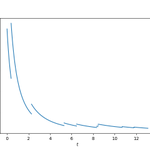
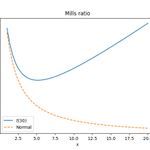
New post: Gaussian distributed weights for LLMs
johndcook.com/blog/2026/04/1…



Probability Fact retweeted

André Weil, one of the founders of the Bourbaki Group, once said:
“A mathematician is someone who has discovered at least one new theorem.”
By this standard, Kiyosi Itô was not just a mathematician, but a giant among them.
His work transformed the way we understand randomness. He introduced powerful ideas like the stochastic integral and stochastic differential equations, which later became the foundation of what we now call Itô calculus.
These tools help scientists describe systems that change in unpredictable ways—like stock markets, weather patterns, or particles moving in fluids.
In recognition of his groundbreaking work, Itô was awarded the Wolf Prize in Mathematics in 1987. The citation praised him for his deep contributions to both pure and applied probability, especially for creating a new kind of calculus designed for randomness.
The story begins earlier, with Albert Einstein. In 1905, he proposed a mathematical model to explain Brownian motion—the seemingly random movement of tiny particles suspended in a liquid.
Later, in the 1920s, Norbert Wiener and others showed that Einstein’s idea could be made rigorous using advanced mathematics.
This led to what is now called the Wiener process, a mathematical model of random motion.
However, there was a major challenge: how do you define an integral—a key tool in calculus—when the function itself behaves randomly?
This is where Itô made his breakthrough. In the early 1940s, he rebuilt the idea of integration from the ground up for random systems.
In 1942, he published his first formulation of the stochastic integral. At first, his work went largely unnoticed. Written originally in Japanese, it took years before the global mathematical community realized its importance.
Reflecting on this, Itô once compared mathematics to music and art.
He said that while anyone can enjoy a symphony by Wolfgang Amadeus Mozart or admire a grand structure like the Cologne Cathedral, mathematics is different.
Its beauty is hidden in formulas and symbols, and only those who understand its language can truly “hear” its music.
He believed his work was like a musical score—one that few could read at first. It took more than a decade before other mathematicians began to understand and build upon his ideas, turning his original “melody” into a rich and powerful theory.
Today, Itô’s equations are widely used to describe systems that evolve with uncertainty over time. From physics to finance, his ideas continue to shape how we model the unpredictable world around us.

Probability Fact retweeted

I did not know that, for any random variable x,
| mean(x) - median(x) | <= stdev(x)
Direct proof:

Probability Fact retweeted

The martingale central limit theorem (CLT) extends the classical CLT to sequences of dependent random variables that form a martingale difference array. It shows that, under suitable conditional variance and moment conditions, normalized sums of such dependent terms still converge to a normal distribution. In probability, the martingale CLT is a cornerstone for studying stochastic processes, random algorithms, and limit behavior in dependent settings. In machine learning, it justifies asymptotic normality of stochastic gradient descent, online learning, and adaptive algorithms where data dependence is unavoidable. In real life, the martingale CLT supports inference in finance, queueing systems, network traffic, and control systems, allowing reliable uncertainty quantification even when observations evolve over time and influence future outcomes.

Probability Fact retweeted
Say you toss a coin 250 times. You want to report a "good" metric describing the biasedness of the coin. % heads will do. Reporting the longest streak of tails is not informative. In fact, it can be misleading. And yet, that is what most portfolio manager tearsheets do.


Probability Fact retweeted

Rapidly mixing random walks on graphs johndcook.com/blog/2016/12/2…
Probability Fact retweeted

This is exactly how not to do probability.
Good grief.

The Med is experiencing a 1-in-216-billion-year sea temperature anomaly.
To grasp how rare that is:
▸ Earth is only 4.5 billion years old. For this event to occur naturally, earth would need to exist for 48x longer
▸ This is 15x rarer than the age of the universe
▸ Equally likely to win the lottery 1,500 times, in a row
This isn’t “unusual.”
It’s statistically impossible that this would occur without anthropogenic climate change.



Probability Fact retweeted
New post: Distribution of runtimes for the Euclidean algorithm
johndcook.com/blog/2025/04/2…


Probability Fact retweeted
I rarely do an explicit information theory calculation, but I find information theory ideas useful every day.
Probability Fact retweeted
A man is known to speak the truth 3 out of 4 times. He throws a die and reports that it is a six. Find the probability that it is actually a six.
Probability Fact retweeted

Surprising number of people lack basic understanding of information. I stopped reading NYT when science section review of a book on information theory observed that holding two copies of the book doubled the information.

