
Co Founder - Trinetra Asset Managers, Investor Learning Everyday
Mumbai
Joined September 2021
- Tweets364
- Following610
- Followers1.7K
- Likes5.4K



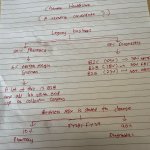


We met the management of SG Finserve yesterday.
Since the Tata Steel and APL Apollo deal, one question has been on everyone's mind: what does this mean for SG Finserve? Here is what we took away from our conversation with the CEO.
How it started
SG Finserve was set up to solve one problem. APL Apollo's dealers and suppliers needed working capital, and the company started lending to them. Since then the business has grown well beyond the group. Today group exposure is only about 20% of the loan book, and the company has zero NPAs.
Why NPAs are nil
We asked how they have kept NPAs at zero, and the answer was their process. They track every dealer's data every day, so each dealer has something like a live credit score. If a payment is late by even one day, they act on it straight away. They also have stop-supply agreements with the anchor companies. If a dealer doesn't pay, the anchor stops supplying material to that dealer until the dues are cleared. A dealer can't run his business without supply, so he has every reason to pay on time. Daily tracking, quick action and stop-supply agreements together are what keep the book clean.
Scale and growth
AUM is now around ₹5,700 crore. Management had earlier guided for ₹10,000 crore by FY30. Growth has been faster than planned, so they now expect to reach ₹10,000 to 11,000 crore in the next 2 to 3 years.
The big question: the APL Apollo deal
SG Finserve currently works with about 175 of APL Apollo's roughly 500 dealers. These are the larger dealers, the ones who actually need this kind of funding. The CEO said they do not expect to lose these dealers after the deal.
He actually sees the deal as a possible positive. Tata Steel has around ₹2 lakh crore of revenue, and Tata Capital does not offer supply chain finance to all of its dealers. That leaves a gap SG Finserve could fill. Over time, a Tata Steel mandate could come to them and give them access to a much larger dealer network.
Governance
SG Finserve is run by professional management. The Gupta family is not involved in day-to-day operations. They support management at the board level, mainly for approvals. So in the CEO's view, the change at APL Apollo does not change how SG Finserve is run.
Unit economics
Their cost of funds is around 8.25% and their lending rate is around 12.5%. Borrowers pay in the 11 to 13% range, which management calls the sweet spot for this segment. That gives them a healthy spread on a book with no bad loans.
Balance sheet
Leverage is around 3.7x today and can go up to 5x if needed. Management says they will not need fresh equity until AUM reaches around ₹10,000 to 11,000 crore. So the next phase of growth can be funded from profits and borrowings, without diluting shareholders.
Our takeaway
The stock has fallen sharply, mostly because of worry about the promoter group, not because of any problem in the business. Management's message was clear. APL Apollo is now a small part of the book, the dealer relationships stay, the company is run by professionals, and the Tata Steel side could even widen the opportunity. From here, we will keep tracking execution, new anchor additions and whether asset quality holds as the book grows.
Disclaimer: This is not investment advice. These views are based on our interaction with management and public disclosures. Please do your own research.
@TrinetraAsset
A one hour video on Yatharth Hospitals and why we are bullish on the Sector and this business
In brief;
One of the biggest cycles of bed additions is underway in India ( in absoulute terms )
Does that mean everyone will do well? - Broadly yes but what matters is who is doing what in this cycle.
Love Yatharth for goingf against the crowd and focussing only on acquisitions - Their strength is acquiring assets , upgrading them and revamping them
Numbers will come through Fast .
The Commercial Aerospace Industry is in a sweet spot - The demand supply mismatch is so wide, that everyone in the ecosystem has a eight to 10 year visibility for business.
Almost every player in the listed Universe doing a Pref Raise / QIP is a sign that capacity ramp up and / or incremental working capital is the need of the hour to complete order books that keep on extending.
This is a profit pool that more or less did not exist 10 years ago, in Listed India Inc
Covid turned out to be an inflection point for the industry, as travel resumed very early but bthe supply chain which was mostly and still is centered around the West could not resume , forcing the Global OEMs to increase sourcing from India
The value chain of commercial Aerospace looks like this :
A - AirFramers - Boeing and Airbus, a duopoly that more or less source almost all the componenets from outside and build and operate final assembly lines .
B - OEMs and Engine Manufacturers - Important as an engine forms roughly 25% of the entire value of an Aircraft
Engine manufacturers mainly Rolls Royce, GE, Saffran and Pratt and Whitney command all of the market share in both narrow and Wide Bodied Aircraft. Almsot impossible for a new single player to enter and make a new engine from scratch
C - Sub Assembly - Players that can make an array of components and prove their capability to make them correctly and repeatedly, then graduate to make sub assemblky systems of those components - Few Indian Firms like Dynamatic Technologies making Flap Trtack Beams
D - Component Manufacturers - This is where most Indian firms exist - Making Components that range from Aero Engine components ( That go within an engine), Aero Structures ( Landing gears, Seats ) and even low value add componets like MRO tools - These are broadly the areas where Indian manufacturers operate today )
E - Raw Material Suppliers - Aerospace Grade Titanium, Steel and Aluminium are different and of a higher grade compared to conventional steel and alumium - have better realisations but these mills need to be vetted and approved by the Global OEMs for them to be used in aerospace - India has a limited prescence here .
The entire sourcing that happens through this value chain is anywhere between 160 to 180 billion dollars annually - With India's share in it being only 2.5 to 3 billion USD as of today
This can , not easily but in a calibrated way move up to at least 7 to 8 times from here over the next 8 to 10 years, with actiovity already visible in growth of order books
Why do we have a right to win ?
A - We have heard about the demographic dividend aplenty now - Within Aerospace the average age of a machinist is nearing 50. With New workforce refusing to do blue collar work - India becomes a natural hedge - abundant and skilled workforce
A lot fo firms are alredy acquiring companies in the West and on shoring their work into India and significantly expanding margins ( Indias IT Moment ? _ I wish )
B - We also have been blessed to have a healthny Auto Ancillary ecosystem - A lot of Auto Ancilklary cos have stepped and greaduated into aersoapce
JK Maini - Raymond
Motherson Sumi just announced their foray
Mahindra Aerosapce
A lot of the manufacturing process at the core is simlilar - Namely Casting ->Forging -> Machining ->Finishing , with the only difference being that the end products need to have much lower tolerances in aerospace.
C - Cost - Look at Azad Enginnering ; Only one of the few firms in the world that can make rotating airfoils .
The unit economics is so superior that they are cheaper to the tune of 20/25% than even what China can make.
With Labour and Power being a significant percentage of % the P/L - India has a definite advantage over the West
Onhsoring and increase in sourcing from India is now a certainity.

Priyam shah retweeted

Trinetra Asset Managers | Initiating Coverage - Solara Active Pharma Sciences Ltd
Over the last few years, Solara Active Pharma Sciences has been undergoing a major reset - moving away from a volume-led, commodity-heavy API model toward growth APIs, speciality products and CRAMS/CDMO, with greater focus on regulated markets and higher-quality earnings.
The key part of the story is Ibuprofen. In FY26, the business generated ~₹334 Cr of revenue but lost ~₹53 Cr at the EBITDA level, while the remaining business generated ~₹1,041 Cr of revenue at ~23.5% EBITDA margin. Management is evaluating restructuring or exiting the commodity Ibuprofen business, which could remove a meaningful drag on profitability.
At the same time, Solara is scaling growth APIs, speciality polymers and CRAMS, improving Vizag utilisation and strengthening its balance sheet. Net debt has already reduced from ~₹999 Cr to ~₹479 Cr.
The opportunity is therefore less about aggressive revenue growth and more about improving the quality of the business. We estimate EBITDA can increase from ₹187 Cr in FY26 to ~₹384 Cr by FY29E, with PAT improving to ~₹233 Cr.
Our detailed initiating coverage report covers the business model, historical journey, industry, management, growth drivers, risks, forensic analysis and valuation.
Read the full report:
canvaqr.com/RGSWCgozss
SEBI Registered: Research Analyst
Registration No: INH000015783
solara.co.in/
#Trinetra #SolaraActivePharmaSciences

Super move in Q Line, more to come.
Moblio listing and recent statement by the Commerce Mionistry to give 100% incentive for medical devices manuifacturing has changed the sentiment

Q Line Biotech Ltd - The IVD Diagnostics space is an interesting ancillary play to the Diagnostic sector
Q Line is the only Listed play right now that is manufacturing the entire value chain
Analyser machines
Reagents - A 70% gross margin business
Calibrators and Controls
The biomedical devices manufacturing story in India is just bgetting started - GOI has a lot of focus on indegenisation
There are a few red flags here - including the sister concern being the main bidder for State governmnet contracts , but that is how the business is inherently structured
At this point we feel , the valuation is in our favour. Trading at 15X FY 27 earnings ~
SEBI RA - INH000015783
Educational purposes only
Q line is in a sweet spot - When the CMO for medical devices kicks in + as they add more and more diagnostic machines , the reagent revenue will keep increasing
Molbio Diagnostics listing at 80x +, will also lead to re rating eventually
Q line trades at 15x FY 27 !

Deep Dive : Q-Line Biotech
(with @MayankKapur16 )
- Best proxy to Indian diagnostics growth?
Video Link - youtu.be/K_TvssBxhAI?si=xJO3…
Time stamps
0:00 Introduction
0:38 Q-Line Biotech IPO Overview & Financials
2:40 Products, History, and Business Model
14:06 Guidance, Thesis, & Anti Thesis
25:39 2 MINUTES BREAK
27:59 Thesis Continued
35:35 Valuations
Disclaimer - No recommendation

Fabulous numbers of ShadowFax Technologies Ltd
The fastest growing 3PL logistics company in the country
Fascinated to see the growth and the design of the business
A traditional courier company owns trucks, employs delivery staff - crores locked on the road, fixed costs everywhere
Shadowfax owns ZERO trucks and employs ZERO delivery boys
100% of last mile is crowdsourced - gig riders paid per order. Nobody else in the country runs this model at full scale
For the uninitiated, Shadowfax is not a "courier company" per se
It is a network orchestrator - it owns the sorting centres and the algorithms, and rents everything that moves
85% of capex goes into automated sortation hubs (5+ year assets). Everything on the road stays variable
The business is fabulous - a perfect mixture of a great infrastructure business and a great platform business (unit economics wise)
Every parcel earns ~ Rs 54. About Rs 2.60 is kept as profit
Sounds thin? Volume makes up for it - 25 crore shipments last quarter alone
As many parcels in 90 days as the whole of FY23
The other side of the business - quick commerce - is even better
Zepto, Blinkit, Instamart, Amazon Now - no platform can staff every pin code at every hour of the day
So 12-15% of QC volumes get outsourced. Shadowfax owns 50%+ of that slice
Shadowfax has gone from ~2,500 cr topline in FY25 to 4,200 cr this FY (69% growth, PAT up from 6 cr to 112 cr)
Management just raised FY27 guidance from 27-30% to 38-40%
We believe, with the kind of growth in the offing
AND margins guided to early-teens EBITDA (vs ~5% today) while capex stays flat at 180-190 cr
Its not hard to visualise a 900 to 1000 cr PAT by FY32/33
And a ~ 50,000 cr +market cap
Multiples will stay elevated as its near impossible to replicate this model at scale .
#investing
Video coming out soon
Q Line Biotech Ltd - The IVD Diagnostics space is an interesting ancillary play to the Diagnostic sector
Q Line is the only Listed play right now that is manufacturing the entire value chain
Analyser machines
Reagents - A 70% gross margin business
Calibrators and Controls
The biomedical devices manufacturing story in India is just bgetting started - GOI has a lot of focus on indegenisation
There are a few red flags here - including the sister concern being the main bidder for State governmnet contracts , but that is how the business is inherently structured
At this point we feel , the valuation is in our favour. Trading at 15X FY 27 earnings ~
SEBI RA - INH000015783
Educational purposes only
Priyam shah retweeted

Excellent breakdown of the structural realities facing Sat Kartar Life. from a digital product vendor to a hospital operator Highlighted by @PriyamInvests co-founder of @TrinetraAsset
Source :- xitter.cf/PriyamInvests/status/2…
Ep 2 -= Sat Kartar Life Ltd
WEe continue looking at all the listed players within the listed Ayurvedic ecosystem
Sat Kartar stands out from all other manufacturers and vendors of medicnes ( allopathy and ayurvedic) as it is pure play D2C brand in the listed space
Exciting model but untested on scale
The more and more we look at other models , the more we realise how operationally effecient and Superior Jeena Sikho really is.
@TrinetraAsset #investing
Priyam shah retweeted

Never give up

> you’ll never start a rocket company
> you’ll never build your own engines
> you’ll never be able to use off-the-shelf parts
> you’ll never survive three launch failures
> you’ll never reach orbit
> you’ll never win NASA’s trust
> you’ll never launch cargo to the ISS
> you’ll never compete with Boeing
> you’ll never compete with Lockheed
> you’ll never make rockets reusable
> you’ll never land a rocket vertically
> you’ll never land one on a drone ship
> you’ll never reuse a booster
> you’ll never fly the same booster 10 times
> you’ll never fly the same booster 20 times
> you’ll never fly the same booster 30 times
> you’ll never recover and reuse the fairing
> you’ll never lower launch costs
> you’ll never launch every month
> you’ll never launch every week
> you’ll never launch multiple times a week
> you’ll never carry astronauts
> you’ll never replace Roscosmos
> you’ll never fly civilians to orbit
> you’ll never manufacture satellites at scale
> you’ll never build the biggest constellation ever
> you’ll never make satellite internet work
> you’ll never make satellite internet fast
> you’ll never make satellite internet affordable
> you’ll never serve rural customers
> you’ll never serve aircraft and ships
> you’ll never build a methane rocket engine
> you’ll never make full-flow staged combustion work
> you’ll never build the most powerful rocket ever
> you’ll never build a rocket bigger than Saturn V
> you’ll never build it out of stainless steel
> you’ll never launch Starship
> you’ll never separate Super Heavy and Starship
> you’ll never relight Raptor in space
> you’ll never bring Super Heavy back
> you’ll never catch a booster with Mechazilla tower arms
> you’ll never launch 85% of mass to orbit worldwide
> you’ll never change the economics of space
> you’ll never force the entire industry to copy you
> you’ll never win
> you’ll never IPO
Congratulations to @elonmusk and the SpaceX team. You did what countless people said was impossible, and you did it time and time again.
Today is your day. You deserve this. May it be a glorious one.

The TAM Based story telling that folks are skeptical about Jeena Sikho can is not too much of a concern ;
Having visited ~ 4 Hospitals/ Day Care centers in Mumbai and Surat - The demand is very real
A - Five Lakh Seventy Thousand people walked through Clinics and Day Care centers ( OPD Patients) through FY 26
The demand is real , visible and not manufactured - If there wasnt an underlying belief in Ayurveda or usage of Ayurvedic products - This pace of growth wouldn t have been possible .
You can fool one person all the time, but not all people all the time .
B - The Unit economics can be questioned on paper but you need to visit a hospital to understand why this is the case
They look nothing like a allopathy hospital - No OTs, Cath Labs, ICUs, radiology machines - nothing
The rents are low as almost all are on the outskirts of cities.
C - I still believe, the way JSL operates unit economics are very similar to how a Hotel runs , and not a hospital
The model has evereything that a well run Hotel needs
Low Opex, high occupancy , High Average Length of Stay ( ALOS )
Its actually quite opposite to a allopathy hospital as any reputable hospital would try to shorten their ALOS - reason being Day 1 or 2 has surgery post which any additional days of stay tends to taper off the ARPOB
D - Insurance tie ups validate their workings
Why has IRDAI mandated that AYUSH treatments be covered by all insurers
Why is every single insurer , including GIPSA ( Government insurers) on board and on the panel for JSL
E - Mental model to think aboout JSL is that it operates on the intersection on health and wellness - leveraging the fact that Ayurveda has always existed in India
But has only existed with the abscence of a national end to end integrated chain . JSL is simple institutionalising what has already existed
Ayurvedic doctors have always been there . Medicines have always been there - JSL Has branded them and formalised the chain
E - Yes treatment efficacy for some causes like Cancer is questionable but that is a miniscule percentage of revenue
Everything that Ayurveda propogates is ultimately wellness and a way of life.
Theyve never said its a magical 8 day treatment - Its a way of life that needs to be followed
F - Yes the key man risk is real and always be there.
Best of brands in India are first built on personal brands and institutionalised over time
There can be endless debates on the clinical efficacy of treatments and the fact that they may not work - Think about JSL as a category creator.
Some super explicit Guidance On Jeena Sikho Concall right Now;
Our aim is to grow PAT 4x to 5X in the next 5 years
And it is doable.
A 45 minute video taking you through the Jeena sikho business
We like the business and are in awe of the execution that has happened and also what yet has to take place
You may ot may not be a believer in Ayurveda but cannot deny that massive tailwinds exist here
If an Industry has gone from 2.5 billion to 45 billion USD ( AYUSH prooduct sales), something special has already taken place and the demand is real
Pace of Growth
Why do we say, that Good times never last
They did not last, even for the King of Good Times
Investing across small or midcaps have crated this narrative that multibaggers are easy to disover, hold and nurture and see through
Some potential investors we talk to @TrinetraAsset , whether we are discussiong our model portfolios or individual stock research - tell us they expect multibaggers 5 years out
We find it funny because the future is uncretain , unpredictable and definitely not on an excel sheet
Intrinsic value, a concept washed down your throat by professors and finance magazine peddlers is a broken word.
Intrinsic value of a stock today for FY 30 or FY 35 is basically your abiliity to chart out all the cash that the business will at will generate over the next 5 to 10 years, use a discount rate and get it back to its Present value
The only problem , is neither the promoter knows the shape of his company 10 years out , neither the merchant bankers who bought the issue and defintely not you.
Our view on looking at companies is to follow earnings , intead of predicting them
Continue investing in companies which exhibit and deliver high pace of earnings growth and exit those who dont. ( earnings momentum, not price momentum - I will one day take a seperate session on why Technical analysis is a dastardly and stupid thing to do )
Instead of considering investing outcomes as certainities , we consider them as variables, say in a Bayes probability theorem
Probaility of a ( Multibagger Stock A ) =
Prior Knowledge of the event ( Stock A )
+
New evidence that either adds to or refutes Prior knowledge
The fact that , in the last 10 years only 150 odd cos out of the 4500 companies were able to cross from the 1000 cr to 5000 + cr market cap says, that our starting probability itself is 5% tops and not what people assume.
Not to be a pessimist here, we look for asymmetrical returns but not through single bets and single mindedness .
Look out for companies doing better than others, and continue backing them as long as they continue outperforming ( in numbers)
Markets mimic life very well - The world only cares about winners.
If Indias richest man, circa 2008 and bankrupt today - couldnt map his own cash flows - Aap or hum toh kya hi he.
hashtag#investing
Not as bad as it sounds
We have more or less been running a current account deficit since forever.
I would split CAD into controllables and uncontrollables
A current account statement is like a P/L statement that then flows into The Balance Sheet
Put simply - A current account has 4 variables
A - (Good exports - Good imports) - Uncontrollable
The imports are primarily crude and Gold - And exports from India will never match up in the forseeable deficit
We ran a negative Deficit of 87 Billion USD in Q2 FY 26
B - ( Serevices exports - Services Imports ) - Controllable
Our services , namely IT services exports and the GCC wave has kept this tab in surplus since 2 decades now - This nicely negatesd the impact that our Goods deficit has
As long as talent pool doesnt shrink and we continue to have a cost arbitrage with the west, this will continue to do well
C - Primary Income - ( Income earned by Indians owning assets abroad - Income paid to foreigners on Indian Assets ) - Uncontrollable
Here the income earned is NOT remittances but say dividends on our reserves, a majority of which are hel;d through T Bills, dividends received by Indian cos have a subsidiary abroad'
Income paid to foreigners include everything from dividends paid to bond holders to all the OFS that MNC cos do in India at obscene valuations and promptly remit the money home
D - Secondary Income ( Incoming transfers - Outgoing transfers) - Controllable
Thank god to our India Loving diaspora abroad, we have a very healthy inward remittance that offsets a lot of pain
So the Current account is largely - A + B + C + D = which has largely been negative
Whatb do you do when you incur a loss on the P/L ?
You draw from your reserves
What do you do do when reserves are depleting ( Like we had in 1991? )
You do a QIP - Only caveat is here the institution would be the World Bank
None of this of course is going to happen to us. We have healthy reserves and many monetary measures to offset this
Only problem is that GOI is trying to control the uncontrollables
Wont work
In India, if you tell someone to not do something - They will definitely do it.
We need some bold economic policy decisions, rationalisation of taxes and a need to tone down the freebies .
#investing

Hospital scuttlebutt
We were in Delhi and Faridabad a whike back to visit some of the newer hospitals of Yatharth Hospitals, a listed entity that is expanding fast within the NCR region
Public data suggests that the hospital industry is entering into a new capex cycle
Almost every single hospital chain has announced major capex with the likes and size of even *Max* hospitals announcing their intention of doubling their bed size over the next 4/5 years
When one of the largest players in the industry announces capex at this scale, it means that the industry as a whole has entered into a capex mode.
We crunched some data on when the last time the hospital industry went into a capex mode as whole – 2015 to 2019
-Hospital bed counts almost increased by 70 to 100% for multiple hospital chains during that period ( 2015 to 2019)
-The period had low/ no returns for hospital stocks
We believe that while we are in a hospital supercycle as of today similar to that we saw in 2015/2019 – but we are unlikely to see the same low/no return cycle.
There are *distinct* differences between the both cycles
A – Conventional capex in the 2015 to 2019 cycle was greenfield and brownfield.
In simple terms ;
*Greenfield* capex cycle means purchase of land, construction of building and the entire facility – Has a 5 to 6 year payback period.
*Brownfield* capex is construction of a new facility either on or near your existing hospital/ Land parcel. – Has a 2 to 3 year payback period.
This time the capex cycle has one distinct difference -
A - A lot of the new capacity that is being added in few hospital chains is through *acquisitions* .
There are 500 + multiple defunct hospital assets available for sale if you just look at *SARFAESI* website
These hospitals went defunct due to lack talent/ Branding.
The new play within the sector is to acquire hospitals either through NCLT/ SARFAESI in a good location, spend a minimal amount on capex, re brand them and voila you have a running asset in a few months
These Hospitals are take less than 6 months to breakeven and thus add to the topline very fast.
B – Unlike the last cycle, when a lot of these new assets were created through debt, the new playbook is acquiring these new assets through money raised via QIP/ Prefential issues.
While this leads to equity dilution , there is no debt burden so ROE expands immediately on breakeven unlike the last cycle where it took years for the new capacity to be ROE positive for shareholders
Our view on *Yatharth*
-Went from 1000 to 2800 beds – almost all through acquisitions led by QIPs and IPO proceeds
-Plans to follow similar playbook to reach 6000 beds in 3 to 4 years
-Major focus on oncology which is the highest ARPOB ( Average revenue per occupied bed )
-The mental model with such business models is to stay with them to as long as growth persists
@TrinetraAsset

Priyam shah retweeted

Grateful to present at TIA 20:20 at IIT Madras, sharing my thesis on #Azad Eng 650+ passionate investors. Powerful conversations.
Honoured to share the stage with Mr. G. Maran, Mr. Sunil Shah, Mr. Naresh Katariya, & Mr. Shyam Sekhar sir & many more.
Thank you team @TIA_Investors


