

Ex-GeenStijl. Terpbewonert. Rentmeester des Rijksmonuments, houthakker, tuinier, lacht hardop om Progressief Nederland. Proud member of The Lucky Few.
Platteland
Joined March 2008
- Tweets106K
- Following3.8K
- Followers30.7K
- Likes4.2K





Prima brandpreventie!


Pritt retweeted

The newest painting in the Louvre. “The Girl with the Suicidal Empathy.” Oil on canvas. Go see it while the Louvre is still standing.

Daar gaat je herfstreces

Geert #Wilders zit voorin de zaal, met zijn beveiligers achter hem. De uit Soedan afkomstige verdachte is er niet. Volgens zijn advocaat heeft hij ervan afgezien "vanwege de te verwachten media-aandacht".
Pritt retweeted

🚨 President Trump just called out the REAL REASON France is BURNING tonight
"What's happening in France has to do with IMMIGRATION. NOT schools... it's immigration!"
"They let people into their country that don't love their country, they don't love their buildings, they don't love their art." 🎯
"I told [Macron] the first time I met him, 'close up your borders. You're going to have nothing but TROUBLE.'"
He warned them. They didn't listen. Now look at France. And it's SPREADING to OTHER countries within Europe.

De genocide op Nederland bedroeg in week 42 ongeveer 840.
rijksoverheid.nl/documenten/…

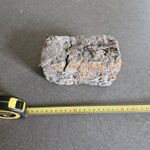
Dit is een broodje turf uit turfschip ZK46 dat rond 1772 verging in de Zuiderzee, en afgelopen augustus deels werd opgegraven bij Almere/Oosterwold. Turfje valt nu snel uitelkaar, dus die gaat binnenkort de kachel in. SPANNOND!

Pritt retweeted

For about 300 years, the Dutch dug up their own farmland and burned it to keep their houses warm.
That whole lake is the hole they left behind. The skinny islands with houses on them are strips of land they saved on purpose, because you can't burn wet dirt and they needed somewhere to dry it.
The dirt was peat. It's basically thousands of years of dead marsh plants squished into a thick, spongy layer, and once it dries out it burns a lot like weak coal. Holland was sitting on meters of the stuff.
At first people just cut it out with shovels. By around 1530 they'd dug down so far they hit the water table, so they started fishing it out instead. A guy would stand at the edge of a trench with a net on a long pole and drag black sludge up from under the water.
That sludge went onto a narrow strip of land left running alongside the trench. The Dutch call it a legakker. They'd spread the peat across it, stomp it flat, cut it into bricks, and let the sun and wind dry it out. Then it got loaded onto boats headed for Amsterdam and Utrecht.
You can probably see where this is going. Every brick they sold made the trench a little wider.
People kept wanting more fuel, so the trenches kept getting wider and deeper while the drying strips got thinner and thinner. Then a storm would roll through, wash one of the strips away, and two trenches would turn into one big pond. Keep that up for a few hundred years and you end up with the Loosdrecht lakes. The strips in these photos are just the ones that made it.
And this was way bigger than one town. Back in 1978 a Dutch researcher named J.W. de Zeeuw made the case that the whole Dutch Golden Age ran on peat, the same way Britain ran on coal. Historians still argue about how far to push that idea. What nobody disputes is that Amsterdam's breweries, brick kilns and salt works burned peat, and so did most of the fireplaces in town. One Leiden dissertation went even further and argued peat mattered more to medieval Holland's economy than natural gas matters to the Netherlands today.
Sometimes the digging got completely out of hand. Just west of Amsterdam, peat cutting plus storms grew a lake called the Haarlemmermeer from about 9,100 hectares to 16,850. In November 1836 a storm pushed its water across 4,000 hectares toward Amsterdam. A month later another one flooded 7,500 hectares in the direction of Leiden. The government finally had enough, brought in giant steam pumps, and drained roughly 800 million tons of water out of it by 1852.
Then they put an airport on the bottom. Schiphol sits on that old lake floor about 11 feet below sea level, so if you've ever flown into Amsterdam, you landed at the bottom of a lake that people helped dig out for fuel.
Nobody ever drained Loosdrecht, so the drying strips just sat there in the water for a few centuries until people started building homes and boat docks on them.
So the only reason those houses have anything to stand on is that somebody 400 years ago needed a place to dry out his fuel.


Volgens @LodewijkA zijn het apothekers uit Aleppo, dus het zal wel zijn om de bestelde medicijnen snel rond te brengen.


Pritt retweeted

Opnieuw een flinke tik voor uw portemonnee. Niet alleen de gasprijs, ook elektriciteit en inflatie.
Het zal u niet verbazen dat handelaren de matige vulgraad van de Europese gasopslagen als een van de belangrijke oorzaken voor de prijsstijging noemen.
#grafiekvandedag

De Tweet du Jour is voor Joris

Nederlandse jongeren die hier zijn opgegroeid moeten dus elke dag staand in de trein naar hun werk ver weg forenzen omdat ze op hun 30e nog steeds bij hun ouders wonen, om belasting te kunnen betalen voor de nieuwe huizen voor rijke rolkofferjongens en hun families uit Ruziemaakiestan, die alles met voorrang gratis krijgen.
Het is compleet gestoord. Iedere schijnempathische geldverbrander die dit zelfmoordsysteem nog steeds verdedigt en loopt te jammeren over woordjes die je zogenaamd niet mag zeggen liegt, en is medeverantwoordelijk voor het moedwillig om zeep helpen van dit land.
Mogen we van de @NPO niet zien hoe een ranzige jodenhatende moslimnazi eruit ziet?
Rare foto van rapper Appa.
Taakstraf voor rapper Appa na 'doxing' van Joodse vrouw en journalist nos.nl/artikel/2635245-taaks… via @NOS

Rare foto van rapper Appa.
Taakstraf voor rapper Appa na 'doxing' van Joodse vrouw en journalist nos.nl/artikel/2635245-taaks… via @NOS

Tussentijdse vochtmeter-check ivm gasvoorraadvulgraadgeknoei door onze overheid. Alles prima, nu al. Voor de Pasen gekloofd = met de Kerst gestookt. #eigenhouteerst


Komen ze dan naar Nederland? Naar die 10 nieuwe steden van #MinPres?

Nearly half of Muslims would consider leaving France if Marine Le Pen wins election, survey finds trib.al/Vvq1y5c
