

Time to reach PRIME Connecting AI, crypto and private markets before everyone else
PRIME
Joined November 2025
- Tweets550
- Following80
- Followers100
- Likes1.2K

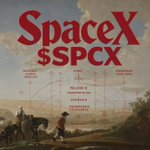





$SPCX could win twice from cheaper launches: lower Starlink deployment costs
+ higher commercial margins if pricing holds.
A forecast attributed to TD Cowen sees $1,000/kg in 2026E - $354 by 2031E, a ~65% drop.
Powerful economics. Execution still has to deliver.


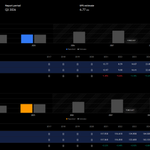
$SPCX EARNINGS: $12.9B REVENUE EXPECTED
SpaceX reports Q3 results earlier than expected, with investors watching four key metrics:
Revenue: $12.9B expected
AI + Starlink: growth and profitability
Capex: ~$70B projected
Launch costs: targeted to fall ~70% to $354/kg by 2031
Shares are near $148, down from a $225 peak. Meanwhile, 28% of shares are scheduled to unlock on October 22, with another 7% on October 25.
The timing is notable: 28% of shares are scheduled to unlock on October 22, followed by another 7% on October 25. Shares have also fallen toward $148 from a peak of $225.
Longer term, SpaceX projects launch costs could decline roughly 70% to $354 per kilogram by 2031, as reusable rockets and higher launch frequency improve economics across Starlink deployments and commercial missions.
The key questions: Can AI and Starlink justify the growth expectations, and how will the upcoming share unlocks affect the stock?
$SPCX
CHINA WANTS MILLIONS OF NVIDIA GPUS. NVIDIA MAY NOT HAVE ENOUGH TO SHIP.
ByteDance, Alibaba $BABA , and Tencent have reportedly ordered more than 3M $NVDA RTX PRO 5500 GPUs, with reported Chinese demand exceeding 6M units.
The catch? These export-compliant chips cost around $11,400 each and are designed primarily for AI inference, while U.S. restrictions limit China's access to more advanced processors.
Nvidia reportedly expects global production of just 3M units in 2027 as capacity shifts toward its next-gen Rubin platform. Partners have reportedly been warned they could receive only 5–10% of requested quantities, with shipments expected to begin in Q1 2027.
China has the demand. Nvidia has the supply constraints. Export rules determine which chips can bridge the gap.
The AI race isn't just about who has the best chips. It's about who can actually get them.

CHINESE TECH GIANTS REPORTEDLY ORDER OVER $35B IN $NVDA AI CHIPS
ByteDance, Alibaba $BABA and Tencent have reportedly placed orders for more than 3M Nvidia RTX PRO 5500 GPUs as U.S. export restrictions limit access to more advanced AI processors.
The export-compliant chips cost around $11,400 each and are primarily designed for AI inference workloads.
Total Chinese orders reportedly exceed 6M GPUs, while Nvidia expects to produce no more than 3M globally in 2027 as manufacturing capacity shifts toward its next-generation Rubin chips.
Nvidia has warned partners they may receive just 5-10% of requested quantities, with commercial shipments expected to begin in Q1 2027.
The reported order values do not represent confirmed sales or guaranteed deliveries.
Source: Reuters.

The biggest threat to Nvidia might not come from a chipmaker.
It could come from its own customers deciding that renting Nvidia's compute forever isn't the best business model.
Hyperscalers have the cash, the workloads, and the distribution to build alternatives. The hard part is getting developers on board.
At what point does $NVDA's biggest strength become its customers' biggest incentive to leave?
$AMZN JUMPS 5% AS WALL STREET BETS ON AN AWS + TRAINIUM BREAKOUT
Morgan Stanley named Amazon its top pick and raised its price target to $350, implying roughly 40% upside.
The bull case:
AWS growth projected at 47% in 2027 and 42% in 2028
New TorchNeuron software makes it easier to run PyTorch workloads on Trainium2 and Trainium3, challenging one of $NVDA ’s biggest advantages: CUDA
$AMZN posts its best day since August
Amazon has lagged the Nasdaq over five years: +50% vs. +94% for $QQQ .
The 2027 thesis is AWS acceleration, Trainium adoption, and a potential rotation from semis into the Mag 7.
Is 2027 finally Amazon’s year, or have investors been waiting for this turnaround for two years already?

The AI trade might be shifting from whoever builds the best chip to whoever controls the full stack.
Silicon, cloud infrastructure, software, distribution.
That's where $AMZN gets interesting. It's not starting from zero and asking developers to show up. It already owns the environment where many of them build.
Are investors still underestimating the value of owning the entire stack?
$AMZN JUMPS 5% AS WALL STREET BETS ON AN AWS + TRAINIUM BREAKOUT
Morgan Stanley named Amazon its top pick and raised its price target to $350, implying roughly 40% upside.
The bull case:
AWS growth projected at 47% in 2027 and 42% in 2028
New TorchNeuron software makes it easier to run PyTorch workloads on Trainium2 and Trainium3, challenging one of $NVDA ’s biggest advantages: CUDA
$AMZN posts its best day since August
Amazon has lagged the Nasdaq over five years: +50% vs. +94% for $QQQ .
The 2027 thesis is AWS acceleration, Trainium adoption, and a potential rotation from semis into the Mag 7.
Is 2027 finally Amazon’s year, or have investors been waiting for this turnaround for two years already?
Everyone focuses on whether $AMZN can build chips that compete with $NVDA .
The more interesting question is whether Amazon can make developers care less about whose chips they're running.
You don't have to beat CUDA overnight if you can make switching away from it painless.
$AMZN JUMPS 5% AS WALL STREET BETS ON AN AWS + TRAINIUM BREAKOUT
Morgan Stanley named Amazon its top pick and raised its price target to $350, implying roughly 40% upside.
The bull case:
AWS growth projected at 47% in 2027 and 42% in 2028
New TorchNeuron software makes it easier to run PyTorch workloads on Trainium2 and Trainium3, challenging one of $NVDA ’s biggest advantages: CUDA
$AMZN posts its best day since August
Amazon has lagged the Nasdaq over five years: +50% vs. +94% for $QQQ .
The 2027 thesis is AWS acceleration, Trainium adoption, and a potential rotation from semis into the Mag 7.
Is 2027 finally Amazon’s year, or have investors been waiting for this turnaround for two years already?

$135 BILLION has been added to Amazon's market cap just today as it jumps +5.22%.
Morgan Stanley named $AMZN its Top Pick today and raised its price target to $350.
That is about 33% above today's price.

Same AI boom. Same time horizon. A massive downgrade for $AMD , zero change for Nvidia.
The gap between challenging $NVDA and actually taking market share may be bigger than AMD bulls want to admit.
WALL STREET JUST CUT AMD’S GPU OUTLOOK BY 43%. NVIDIA? UNCHANGED.
Morgan Stanley slashed its 2026–2030 GPU demand forecast for $AMD from 14.1M to 8.0M units.
That’s a 43.3% haircut.
Meanwhile, its forecast for $NVDA remains unchanged.
The AI compute race is getting more competitive, but apparently not all chipmakers are benefiting equally.
Is this a warning sign for AMD, or is Morgan Stanley underestimating its ability to gain market share?

Jensen Huang says “we’re also growing share because we offer more to the world’s capex” as $NVDA revenue opportunity per gigawatt of AI capacity has more than doubled to over $40B.
And that’s what makes Nvidia’s expansion beyond GPUs so real because even as ASICs gain share you can see how Nvidia can capture more spending across CPUs, networking and entire AI systems with every new gigawatt built.

WHAT IF ELON MUSK DECIDES TO TAKE ON AMAZON?
If Musk actually builds an AI-native competitor to $AMZN , the impact could go far beyond online shopping.
AI agents could search products, compare prices, place orders, and handle returns without users ever opening Amazon. The battle shifts from owning the marketplace to owning the AI agent that controls the purchase.
For $AMZN, that creates a new risk: losing control of the customer relationship and potentially facing pressure on its retail margins.
But Amazon has major advantages of its own: logistics, fulfillment infrastructure, Prime, and an enormous seller network. Musk would need much more than a chatbot to compete.
The real threat isn't another online store. It's an AI layer that decides where consumers spend their money.
If Musk goes after e-commerce, does $AMZN become a target, or does AI make Amazon even stronger?
ELON MUSK IS FLOATING AN AMAZON COMPETITOR ON X
After users reported that $AMZN was blocking Grok AI agents from placing orders and handling returns, Musk suggested building a rival platform.
He argued that AI bots can already shop on sites like LEGO without the same restrictions. He also said SpaceX would cover mistakes made by its bots during purchases.




Could $TSLA and $SPCX be heading toward a merger?
Barclays analyst Dan Levy sees a potential announcement before the December 6 deadline.


CEO Michael Intrator remains confident in the company's funding, sales pipeline, and ~$99B backlog after raising more than $20B this year.
Demand for AI infrastructure is clearly strong. The problem? Rising yields and interest costs approaching 25% of revenue are putting pressure on the business.
Big backlog, massive demand, but how much of that growth will actually translate into profits?
$CRWV

$CRWV CEO Michael Intrator told employees he remains “confident” in funding, sales and its ~$99B backlog after raising more than $20B this year.
The demand is clearly there but rising yields and interest costs near 25% of revenue are putting pressure on the business.


THE MARKET IS PRICING IN A CXMT THREAT TO $MU BUT HAS CHINA REALLY CAUGHT UP?
CXMT moving from 6F² to 4F² doesn't automatically mean Micron is losing its technological edge.
The key question is how CXMT achieves that density. The argument is that it's extending DUV scaling at a relatively mature 13–14nm node, not leapfrogging memory manufacturers using more advanced EUV processes.
And DRAM competition isn't just about cell geometry. It's about manufacturing yields, cost per bit, production scale, and performance.
Even if CXMT succeeds, translating a denser cell design into competitive, profitable mass production is a different challenge.
The market may be pricing in future competition before the manufacturing economics are proven.
Is this a genuine threat to $MU's long-term margins, or is the market confusing a design milestone with technological parity?
THE MARKET SAW CXMT + 4F² AND INSTANTLY DECLARED WAR ON $MU AND $SKHY .
But moving from 6F² to 4F² doesn't automatically mean China has caught up with Samsung and SK hynix.
The argument is that CXMT is trying to extend DUV scaling at a relatively mature 13–14nm node,
while the Korean memory giants are dealing with a different set of manufacturing and yield constraints.
A smaller DRAM cell is one thing. Producing it at scale, with competitive yields and economics, is another.
If the selloff assumes those are the same milestone, the market may be getting ahead of itself.
