

Bruxellois. Philosopher. Europe, technology, politics, and complaining. Tweets personal. RT not (always) endorsement.
Brussels, Belgium
Joined June 2012
- Tweets6K
- Following3.7K
- Followers1.2K
- Likes5K




Darian Meacham retweeted

The 🇫🇷 protesters are complaining to the manager. But the manager just does what the shareholders tell him to do. The rioters want to be seen, but identity & representation do nothing when distant moneymen call the shots. It’s sad how we’ve forgotten basic lessons of the… 1/2
Darian Meacham retweeted

I see the protests in France are trending.
Since I just spent 10 days there during the heart of them, I figured I'd chime in with what's actually going on.
The news and clickbait accounts on X will show you the outlier events: burning buildings, raging violence and everything that triggers you.
I was in the heart of Aix en Provence during the biggest protest day and filmed the center where it was happening. (See below)
This is right the University, across from the church, dead center of town.
The students are dancing, singing, kicking soccer balls and have comically barricaded the entrance doors to force the school to close.
I visited many cities in France during the protest period, and saw zero violence or malpractice of any kind.
More broadly, I spent more than a month this year in France across 3 trips and 10+ cities, including Paris, Bordeaux, Aix en Provence, Nice, Antibes, Biarritz, and others, and it's incredibly safe, charming, peaceful and beautiful.
Every city I visited is nicer than almost every American city, and there's zero comparison.
So much that it wouldn't even be insulting to France to try, because nobody who has spent significant time in both countries would take this comparison seriously.
I spoke with the students at length about their views. I also spoke with waiters, drivers, merchants, staff and whoever.
They were all civil, well articulated and genuinely wanted to see change.
We can disagree about their reasoning, logic or whatever, and it's true that France has fiscal problems, but to chalk up the France protests to raging extremist violence from "pick your favorite group to blame", is a laughable misrepresentation of what's actually going on.
If you exclusively watch the news and believe the top 1% extreme situations, you have likely been psyoped.
Darian Meacham retweeted

France, Education, Thomas Piketty ecrit:
“des centaines de milliers de jeunes ont travaillé dur pour obtenir leur baccalauréat, mais que rien n’a été prévu pour les accueillir dans le supérieur. En particulier, le nombre de bacheliers technologiques et professionnels a fortement progressé, mais les places en IUT et BTS n’ont pas suivi, si bien que beaucoup se retrouvent affectés dans des filières universitaires surpeuplées et moins coûteuses, et souvent totalement inadaptées à leurs besoins et aspirations. Le gâchis humain et économique est gigantesque,…”
Pas d’argent pour l’Education?
“le pouvoir en place et ses soutiens expliquent que la France n’a pas les moyens d’investir davantage. Ils commettent une double erreur de raisonnement. La dette publique est certes passée de 20 % du PIB en 1970 à 120 % aujourd’hui. Mais dans le même temps, les patrimoines privés ont augmenté beaucoup plus fortement : ils sont passés de 300 % à 600 % du PIB, avec une concentration extrême au sein des plus grandes fortunes financières. Autrement dit, le patrimoine national de la France – somme du patrimoine privé et public, après déduction des dettes privées et publiques – n’a jamais été aussi élevé, non seulement en montant absolu, mais aussi en pourcentage du PIB (qui lui-même n’a jamais été aussi élevé).”
“Autrement dit, la France n’a jamais été aussi riche : le problème que nous avons à régler est uniquement une question de répartition…”
C’est pourquoi @Amnesty considere que les impots equitables constituent un enjeu de protection des droits humains. C’est pourquoi nous plaidons pour l’adoption d’une Convention sur la coopération internationale en matière fiscale.
lemonde.fr/la-chronique-de-t…

Darian Meacham retweeted
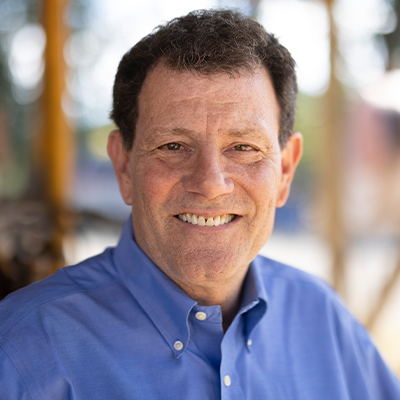
Israeli settlers are out of control, because the Israeli government allows them to be. And while attacks on diplomats or journalists command attention, as they should, this happens unnoticed to Palestinian farmers all the time.

#Breaking: European diplomats, including French and Polish representatives, who went to the West Bank to observe the olive harvest, have been violently assaulted by Israeli settlers.

Darian Meacham retweeted

"Gaza has exposed how Europe’s supposedly universal commitment to human rights is now conditional on whose suffering is recognized, whose resistance is considered legitimate and whose demands for justice are considered worthy of attention." trib.al/z2Yy5At

Darian Meacham retweeted

Il est l'un des visages de la contestation lycéenne, Seydou Ba était l'invité de Ccesoir sur France 5. Dans ces interventions très écoutées, il y en a une qui a surpris, c'est lorsqu'il a mis en avant la question du temps, du rapport au temps, au temps de vie d'un lycéen aujourd'hui, un temps compressé par des horaires imposés qui comprime sans cesse les esprits et les corps, un temps scolaire et de transport qui ne tient pas compte de la vie tout simplement. Cette question est aussi dit-il au cœur du mouvement lycéen.
#MouvementLyceen
Darian Meacham retweeted
Iran’s Theory of Victory
By @vali_nasr & @nargesbajoghli
..."The vast majority [of Iranians we have interviewed over time] expressed deep distress and anger at their government after the massacres that took place in response to January’s mass protests.
But we found that political opinions have shifted drastically as the war has dragged on and as Trump has upped his annihilatory rhetoric. “We believed so much in the American promise,” Ali, a 45-year-old long-time dissident who has spent years in prison for his activism on social and political issues, told us. “Yet with this war and everything that Trump and his administration have said and done, it’s obvious the Americans sold us a false bill of goods. They want nothing but Iran’s total submission, and that’s not acceptable to us.”
Mahsa, a writer and artist in her 30s, relayed similar sentiments. “Everything we believed the [United States] stood for, freedom and respect and democracy, I now see as lies,” she said. “As angry as I’ve been at our state over the years, this is our homeland, and no outside country has the right to kill our leaders and drop bombs on our children and attempt to destroy us.”
Little wonder, then, that Khamenei’s July funeral procession drew millions of mourners, even though the country was in the midst of conflict. At the event, people handed out red flags, symbolizing their desire for bloody vengeance. Shortly after, Iran attacked commercial vessels crossing the Strait of Hormuz, unraveling the precarious cease-fire the country had struck with the United States three months earlier.
Many U.S. officials seem to think that stiff economic pressure will ultimately prompt a shift in opinion—that if they suffer enough, Iranians will decide to try overthrowing their government or that the Islamic Republic, fearing for its survival, will submit to American demands. But this is magical thinking. Iran has spent the past 15 years developing an economy specifically designed to withstand American economic warfare. Iranian officials, for instance, have forged strong relations with neighboring traders and made the country nearly self-sufficient when it comes to food. As a result, even though Iran’s economy is hurting and inflation is high, cities and towns have had no shortages of important goods or services to date. “It’s incredible how well-run everything has been inside of the country,” Hamid Reza, an engineer who regularly travels between Isfahan and Tehran for work, said. “Things are expensive, but there have been no shortages whatsoever across the country. Everything has been managed internally with a lot of care.”
"That is not to say that Iranians feel optimistic about their country. They are anxious about the future, and they yearn for a return to calm and economic relief. But they do not see the U.S.-Israeli war as liberating. Instead, they see it as gratuitous aggression, and the resulting nationalism has blurred the lines between political factions and diminished the likelihood of another political uprising. The war, then, has strengthened the Islamic Republic."...
foreignaffairs.com/iran/iran… via @ForeignAffairs

Darian Meacham retweeted

Mr. @SecRubio, I write this as an educator at one of your Ivy League schools, the University of Pennsylvania, and as someone who has spent years teaching Persian history and culture and their intersections with Greek and Western history and culture.
Your dangerously Eurocentric account of Perso-Greek history is not only distorted and misleading; it also ignores the most basic facts about centuries of cultural exchange between civilizations you frame as fundamentally opposed.
Greek civilization did not develop in isolation from its eastern neighbors, nor did what we now call Western civilization emerge independently of the intellectual and cultural worlds to its east. The Persians and Greeks were not simply enemies locked in an eternal civilizational struggle. They were also neighbors whose worlds intersected through diplomacy, trade, art, religion, literature, philosophy, science, and political thought. The Achaemenid Empire itself was a vast, multicultural world connecting the Mediterranean to Central Asia. Greek thinkers lived and traveled in the wider Persian world, while Greek knowledge, art, and political ideas circulated across the eastern Mediterranean and beyond. These encounters were complex, reciprocal, and often shaped by both conflict and cooperation.
Yes, there were imperial wars between Persians and Greeks, just as there were wars between other ancient empires. But reducing their history to military invasions while erasing centuries of cultural contact and exchange is not historical analysis. It is ideological mythmaking.
Had you engaged seriously with the histories of Persian and Greek philosophy, mathematics, astronomy, mythology, art, and literature, you might have recognized how inadequate and dangerous it is to reproduce the crude civilizational binaries popularized by the notoriously racist movie 300. Invoking this caricature of ancient history to mobilize support for contemporary military aggression is not an innocent historical error. It is a way of manufacturing an enemy by presenting an entire civilization as an existential threat.
History shows us where such rhetoric can lead. The Nazis exploited myths of national humiliation and betrayal after the First World War, scapegoating Jews to legitimize exclusion, persecution, and ultimately genocide. The historical circumstances are different, but the broader warning remains: the deliberate construction of civilizational enemies can help normalize dehumanization and mass violence.
When a senior US official selectively weaponizes a complex history he demonstrably misrepresents, he does more than spread misinformation. He helps advance a worldview in which war between civilizations appears inevitable and aggression becomes defensible. That is how dangerous political narratives are built, and how human catastrophes are made easier to justify.
Your speech is historically uninformed, aggressively Eurocentric, and deeply troubling. At a moment when the consequences of military escalation are measured in human lives, we need historical literacy and intellectual responsibility, not racist caricatures dressed up as civilizational history.

Darian Meacham retweeted

"Israel has carried out a genocide in Gaza" -
Not a sentence I thought I would ever seen @nytimes
Congratulations @lpolgreen on a fine piece
nytimes.com/2026/10/03/opini…

Darian Meacham retweeted

Amy Goodman and @jeremyscahill discuss @DropSiteNews's new investigation into the U.S. bombing of the Shajareh Tayyebeh children's school in the Iranian city of Minab on February 28.
Darian Meacham retweeted

Just been on Google Maps looking at the new satellite images of Gaza and it's hard to know what to say.
It's eerie, it's heartbreaking and it's enraging. We already knew, but it's yet another reminder that this one of the greatest crimes in human history.
Darian Meacham retweeted

For more than two months, I have been working on a truly horrific story about one of the gravest war crimes committed by the United States since Vietnam: The bombing of the Shajareh Tayyebeh school in Minab, Iran. It was one of the first targets struck in the opening hours of the war on February 28, 2026.
At least 156 people were killed in the U.S. cruise missile strikes—120 of them were children and 26 were teachers. We spoke to survivors, first responders, parents, doctors, teachers, psychologists, and other witnesses. Some of them had never before shared their experiences of that day.
It would be impossible to do justice to what happened in Minab that day with words alone. In more than 25 years in journalism and reporting on war, I do not believe I have reported on a more heinous single crime.
Massacre at Minab: The School That Became a Grave
dropsitenews.com/p/minab-sch…
Please share this story with as many people as you can.

Darian Meacham retweeted
A fair question: How did humanity allow Gaza to happen? And the answer is not just about Israel, but also about the role of the US in particular in providing the 2,000-pound bombs and diplomatic support that resulted in this. Democrats and Republicans alike bear responsibility.

Years from now, my grandkids will ask me how humanity allowed Gaza to happen. I still don’t have an answer for them 💔 xitter.cf/mhmd_s09/status/209257…
Darian Meacham retweeted

What’s Trump threatening when he says “annihilating” Iran
We discussed on Piers Morgan yesterday and agreed, likely taking down Iran’s power plants— much more catastrophic than many realize
Darian Meacham retweeted
Gaza is now largely out of mind for many around the world, but not if you're one of the 94 percent of Gazans who lack shelter as winter approaches. And of course the US provided weapons in ways that make us complicit in that nightmare.


Darian Meacham retweeted

Bloomberg just dropped the most disturbing investigation I have read this year, and every AI builder should read it and take it seriously.
On February 28, two Tomahawk missiles hit an elementary school in Minab, a small town in southern Iran. 156 people died. At least 123 were children. The Pentagon knew within hours that it had bombed a school.
The school had its own website. It was labeled on Google Maps. You could see the soccer pitch from a satellite view. You could see the brightly painted walls. Any 12-year-old with a browser could tell what the building was.
The AI system could not.
Inside US Central Command, personnel were using Palantir's Maven Smart System. It is an AI targeting platform running on a $1.3 billion Pentagon contract, and embedded inside it is Anthropic's Claude.
On day one of the war, more than 1,000 targets went through it in 24 hours. Work that used to take a team hours per target got compressed into minutes.
The satellite imagery Maven was pulling from was seven years old. The site was still tagged in the database as an Islamic Revolutionary Guard facility.
The system spat it out as a recommended day-one target. Humans signed off. The first missile flew. Then a second one landed minutes later to hit the people who came to help.
Investigators later found that some Central Command staff had assumed Maven would flag stale intelligence for them. It did not. Nobody had told it to.
Palantir told Bloomberg the government is responsible for the underlying data. The Pentagon's civilian harm mitigation team, the people whose actual job is to catch a target like this, had been cut back before the war started.
This is not AI going rogue. This is the opposite.
This is AI doing exactly what it was built to do at exactly the speed it was built to do it. And a school full of little girls got vaporized because the humans in the loop trusted the machine more than they trusted their own eyes.
I keep thinking about the version of this story that comes next. What happens when the system is faster. When the target list is not 1,000 in a day but 10,000. When "review" becomes a button the operator has three seconds to hit before the next target loads. When there is no human left slow enough to notice that a soccer pitch is not a helipad.
We are not talking about a spam filter mislabeling an email. We are talking about a system that turned a seven-year-old database entry into two cruise missiles landing on children in the middle of a morning class.
A UN-backed panel has now called it a potential war crime.
In terms of children killed, it is the deadliest American targeting error of the entire 21st century. And according to Bloomberg, some of Defense Secretary Hegseth's own advisors are worried that too much public scrutiny of Maven might slow down its adoption inside the Pentagon.
Read that last line again.
If you build this stuff, you own what it does. You do not get to hide behind "the government owns the data." The whole pitch of your product is that speed and integration save lives. When it takes them instead, that is also on you.
I am not against AI in defense. I am against AI in a hurry. Speed is the entire mechanism that made Minab possible. Every guardrail we already know how to build takes time, and time is exactly what the system was designed to eliminate.
So here is the question I have not been able to stop asking, and I genuinely want to know what you think.
If a piece of software helped kill 123 children in a single morning while behaving exactly as designed, what does "responsible AI" even mean anymore?

Darian Meacham retweeted

Governments and tech companies are creating systems that remove anonymity, expand surveillance and give them more control over what people can say, access and do online.
Tech companies amplify fear about extreme AI risks because they want regulation that protects their interests. Compliance costs shut out smaller and open source competitors, leaving a few corporations controlling AI.
Governments gain more control over digital services, while those companies gain more data, fewer competitors and deeper control over online life.
Child safety is one of the easiest ways to overcome public resistance because few people want to be seen opposing it.
The EU Kids Act uses that pressure to normalise identity verification for online access. People are then pushed to connect their legal identity to more of what they do online.
Device based parental controls already let parents restrict apps, websites and screen time without collecting identity data. That shows child protection isn’t the reason for “robust” age checks.
Zero knowledge proofs don’t solve the privacy problem. They still depend on an approved credential to establish the claim.
“Chat Control”
CSAM justifies scanning private communications. Once that’s possible, the device becomes a surveillance point. Encryption becomes irrelevant if content can be examined before encryption or after decryption.
“Going Dark”
Fraud, terrorism and serious crime justify lawful access to encrypted data. The EU is developing tech to give law enforcement greater access to encrypted information and plans new decryption capabilities for Europol.
End to end encryption means nobody except the people communicating can read the content. Once governments have access, that protection ends.
VPNs
Their privacy value comes from separating identity from internet activity and preventing 3rd parties from seeing traffic. Force age checks, logging or government access and the service may still be called a VPN, but its protection is gone.
The pattern
Protect children to justify identity verification.
Stop CSAM to justify scanning private communications.
Stop fraud and serious crime to justify access to encryption.
Each argument targets something almost nobody will defend. Each solution creates powers that apply to everyone.
Mandatory verification ends pseudonymity by linking online activity to a real identity. That can then be used to profile populations, influence spending and shape political behaviour.
Payments, private messages and travel records can then be linked through a small number of controlled, state monitored services.
State agencies adapt cold war subversion tactics to parse these data streams, running predictive algorithms to identify potential dissent. Pre emptive intervention replaces post crime prosecution.
Access to money, travel and speech can be granted only while someone complies, then removed before they’ve committed any crime.
A centralised digital system gives authorities a kill switch. Once identity, payments, communication and movement are connected, a targeted person or group can be cut off from money, platforms and travel almost instantly because an automated system flagged their behaviour.
Blackouts stop people organising before resistance can form. If people can’t communicate, coordinate or mobilise, political opposition becomes far harder.
Total surveillance makes private, unmonitored communication unacceptable. The open web can then be recast as a dark web, making anonymous communication look criminal. People who still want privacy and basic civil liberties are forced to build separate networks outside state control.
The EU describes strong encryption as necessary for privacy and cybersecurity while developing technology for lawful access to encrypted data. That contradiction is more powerful than claiming it has already abolished encryption or VPNs.
xitter.cf/paul__walsh/status/210…

Today we proposed the EU KIDS Act.
No social media under the age of 13. No personal accounts under the age of 15. That’s our recommendation.
As European Commission President, @vonderleyen said: “The question is not whether kids should have access to social media. The question is whether social media platforms should have access to our children.”
Darian Meacham retweeted

The biggest threat to Anthropic and its alleged $2+ trillion valuation is open-source AI.
We’re now entering the max fear mongering stage. Open-source AI could theoretically destroy enormous amounts of value in the snap of a finger.
The incentive is obvious. Protect the wealth, power, and valuations that have been created around centralized AI. This is a chess game to preserve that power and push valuations as high as possible, while preventing open source from throwing a wrench into the entire plan.
There is currently a massive PR effort to get the public behind government “protection” of these companies, under the guise of protecting the public.
Ultimately, centralized control over the most impactful technology in existence risks becoming a small group of people trying to play God.
Darian Meacham retweeted
I visited these Palestinian villages in the spring. Families were still struggling to farm the land of their ancestors despite repeated violent attacks by settlers. The settlers also blocked me but left when I tried to interview them. What do you call this but ethnic cleansing?
