
FinTech, Markets, India, Food, Asia. Trust Only Data. Bengaluru Boy. Farmer.
Joined August 2014
- Tweets8K
- Following769
- Followers6.9K
- Likes11K



ARR as a metric is so dead. In a dynamic agent led world where each spend is being negotiated/auctioned/optimized, more parts of the AI software stack need to be valued like hedge fund GPs (low single digit multiple of profits), rather than annuity streams.

Multiply these choices together and the companies assembling agents become always-on negotiators. Much enterprise software is still bought on multi-year contracts, but agent workloads are increasingly bought by the request. Assemblers test combinations of models, tools and runtimes against completion rate, speed and cost, and send more work to whatever wins. Swapping a runtime takes integration work; once routes are wired up, switching models takes a configuration change. The assembler can re-decide the mix on every run, so every supplier is competing for the next request.
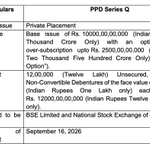
Yes Bank dominating headlines post verdict. Few things to note while calculating liability/impact
a. Interest on the bonds were at the discretion of the bank board. Key condition was bank couldn't pay an equity dividend if they chose not to pay interest on AT1 bonds.
b. Interest on the bonds was non-cumulative. If they decided to skip interest for a year, the bank did not need to pay interest for previous & current year.
c. Yes Bank has not paid an equity dividend since 2020.
d. The AT1 do not have a maturity date. Technically, Yes Bank does not need to pay back the bonds anytime.
Coreweave unsecured 5 year bonds are trading at a yield of 15%.
If the sell-off continues, they may need to decide whether they should allocate incremental cash to buy back bonds (Liability Management Exercise) or buy Nvdia GPUs.
Krishna Hegde retweeted

The only site you need to visit to track EVERYTHING about Indian markets, from index performance, breadth, flows, risk, portfolio performance, macros, and more. This is essentially everything I track. Claude put it all in one place.
tipsheet.markets

Krishna Hegde retweeted

The conversation that moves stocks increasingly happens on X in real time. The sell-side still isn't here. I spent two years trying to help solve that from the inside. It hasn't worked so far, so I built it myself. Here is what M Squared Capital is all about:
Dedicated coverage. Every single quarter. Whether you care about the name or not. We don't chase the topic du jour. So, when you do care about a name, the work is already done, and you get more than the same AI answer everyone else has.
We currently cover 20 companies across Athletic and Home, brands and retailers together. Wall Street doesn't. No sell-side analyst who covers Asics is also responsible for Nike. About half the analysts on Dick's follow none of the brands it sells. It is one industry, researched in pieces, and the most useful questions sit in the gaps between those pieces.
Beyond that, I wrote about why the sell-side struggles in: Confessions Of A Sell-Side Analyst.
xitter.cf/MattJMcClintock/status…
The short version is three problems. Corporate access is now what the sell-side gets paid for, and analysts who say critical things rarely get it, so staying uncontroversial is the safe choice. The senior analysts who know the most spend their days marketing to the largest funds while junior associates write the notes. And the bureaucracy is stuck in 1995: a reaction to an earnings call can take a day or more to publish, and none of it is allowed on a platform like this one. Many sell-siders are good analysts in a system that no longer lets them do the job.
I'm not anonymous. I spent 15 years at bulge bracket banks, and anyone in Retail/Consumer can look up what I wrote and whether I was right. That is the underrated thing about sell-side analysts: everything they do is on the public record. Plenty of people post here anonymously, often for good reasons. But it means you can't check their history. You can check mine, and I'm comfortable with that.
My notes from earnings calls are posted here, free, as soon as the call ends. Subscribers get a full report on each company every quarter and the primary research behind it: store visits, pricing checks, and the questions that take weeks of research to nail down. None of the three problems above apply to me, and I'm paid only by subscribers.
Don't take my word for any of it. Everything I've written on $NKE and $RH is open to everyone, models included. Read it and decide whether the other 18 are worth it. Link in bio.
PS: More to come 😉


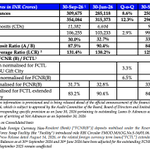
Yes Bank's update of Sep end loans & advances shows how difficult it will be to project bank earnings for Q2.
Large increase in deposits due to FCNR. But, some of the FCNR deposits were funded by Foreign Currency Term Loans (FCTL) that were extended by Gift City branch. FCTL pushed up the loans & advances.

If you want to reduce demand for an asset you
a. Make it easier to borrow against it?
b. Make it tougher to borrow against it?
underdog is invite only apparently. anyone got one spare? @underdogai .
Considering my new Mac Mini was delivered on Sep 22, will be a shame not to use Underdog. @0xSigil
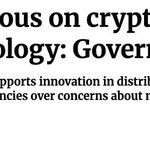
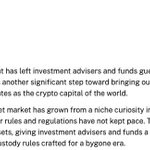
Meanwhile, the US SEC is fixing issues wrt how investment advisers & funds actually custody their crypto.

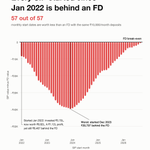
This festival season, young Indians who convinced family members to put money in SIP instead of FD/gold need to be ready for swalpa awkward conversations.

Tough being an AI-pilled macro investor.
When someone says 'Dots' - my internal Jev needs to figure out is it Fed Dots or OpenAI Dots.
Frank has sharp observations & doesn't shy away from discussing what he got wrong previously.
Huge opportunity in building Agentic licensed fintechs.

Banking In The Agentic Age
Banks have spent decades competing for cheap, sticky deposits.
Insurers have spent decades counting on inertia at renewal.
AI agents could be the catalyst to break both assumptions.
If an agent can continuously find a better savings rate, refinance your debt, move your deposits, shop your insurance, cancel subscriptions, and execute the switch for you, business models will no longer be able to count on “customer inertia” as a source of profit.
This is a very different world from the one I wrote about in 2018 in The Copernican Revolution in Banking.
Back then, my thesis was that once consumers could easily compare financial products, market share would move toward the best product.
I was mostly right, but I missed something important.
Comparison isn’t enough. The real unlock is execution.
“Tell me what I should do” is useful but “do it for me” might just change the economics of some very large industries.
This is why AI assistants and agents are suddenly such a big deal to the Financial Services industry.
I went back to the original piece, graded what I got right and wrong, and rewrote the thesis for what’s happening now.
Banking In The Agentic Era: The Kepler Correction.
Link to a downloadable copy is in the comments.

Krishna Hegde retweeted

tweet from the future:
traders today have no idea how bad they had it
some examples:
- markets actually closed every night and weekend
- settlement took 1–2 business days
- you needed different brokers to trade stocks in different countries
- moving assets between brokers could take days or weeks
- companies listed on one exchange and hoped investors found them
then we tokenized all assets

Futures traders today have no idea how great they have it
Some examples:
-Retail traders in the 1970s paid as much as $30 to $50 commissions per contract
-Market hours were limited to as few at 4 to 5 hours per day
-Clients might wait hours to find out the price at which they were filled - or even if a limit order was filled
Insurance in India is mostly sold & not bought.
Sellers sell when they have incentives.
If insurance sellers don't sell insurance, they will sell something else.
If insurance companies don't have sellers selling insurance, they sell less insurance.
An insurance regulator's incentives are typically to enable insurance companies to sell more insurance rather than less.
If Muse doesn't launch in India soon after this post, will be a wasted opportunity.
This quoted post is unavailable.
Imagine if your agent went through your order history across quick commerce apps, figured out your consumption patterns for staples & used the D-Mart Ready API to place a home delivery order at a 10% discount to MRP with no added fees.
A lot of Indian quick commerce could be trouble if consumers only use it for top up/last minute stuff.
Wonder what an Indian basket would look like.. I would imagine a lot of legacy financial services providers would feature on this basket.
That regular plan SIP into a high fee lagging mutual fund, that an advisor who met you thrice, sold you 7 years ago?
That UPI autopay content tease you fell for?

This is one of the most interesting AI trades I’ve seen yet.
Goldman Sachs has a “Consumer Inertia” basket.
Basically: companies that benefit because customers keep paying, renewing, booking, or buying out of habit.
Today it got crushed.
Planet Fitness: -9.5% $PLNT
LPL Financial: -7.5% $LPLA
New York Times: -7.2% $NYT
Schwab: -6.1% $SCHW
Allstate: -5.5% $ALL
Why?
Investors are starting to ask what happens when personal AI agents begin shopping around for us.
Imagine an AI that automatically:
- Finds cheaper insurance
- Moves your cash to a better account
- Cancels subscriptions you barely use
- Compares travel prices instantly
- Shops for better financial products
A huge amount of corporate profit depends on friction, complexity, and people simply not bothering to switch.
AI could attack all three.
We’ve spent years asking which jobs AI will replace.
Maybe the bigger question is:
Which business models only work because consumers are too busy to look for a better deal?

No such bounce for Indian IT stocks.
NIFTY IT index is down 9.5% between Feb 23 (Citrini post) & Sep 22.


The SaaSpocalypse is off to a slow start
Software stocks since the Feb 22 Citrini post:
Large cap: ~+27%
Small cap: ~+30%
Mid cap: ~+34%
More charts: a16z.news/p/charts-of-the-we…

Even after the sharp rally, $META market cap is less than the $2 trillion where Anthropic wanted to IPO.