

PLT aims to enhance green spaces primarily in central London to support native pollinators with a longterm vision to inspire change in urban areas across the UK
London
Joined January 2020
- Tweets776
- Following467
- Followers478
- Likes2.8K




Happy 100th birthday to Winnie-the-Pooh!
First published on 14 October 1926, Pooh's stories have delighted readers for a century. While he might love honey, the Hundred Acre Wood has other wildlife to celebrate!
Bees and other pollinators help our gardens and woodlands thrive

Species spotlight: the Pinocchio Hoverfly
One of our favourite hoverflies has a rather unusual feature: a long ‘nose’!
The larvae of Pinocchio Hoverflies (Rhingia campestris) develop in cow dung.
#PollinatingLT

The Painted Lady is a great long-distance traveller.
Every year, these butterflies migrate north from areas including North Africa, the Middle East and central Asia, travelling through Europe before reaching Britain and Ireland.
#PollinatingLT
Our 2026 pollinator surveys are well underway!
We’re now around halfway through our fourth and final survey round.
It’s still too early to reveal the full results, but we’ve already seen some species appearing in greater numbers than in previous years.
#PollinatingLT
Found a tired bee? Put down the honey!
It might seem like the obvious thing to offer a struggling bee, but honey can contain pathogens that are harmful to bees.
Instead, if a bee needs a helping hand, offer a little sugar water, or even better, place it somewhere on a flower.

Bombus pascuorum is one of the UK’s most familiar bumblebees but its appearance can be quite variable.
Some individuals can look very similar to two much rarer species: the Brown-banded Carder Bee (B. humilis) and Moss Carder Bee (B. muscorum).
#PollinatingLT
Pollinating London Together retweeted

@BBC @CountryfileMag why are you demonising native wildflowers ragwort and spear thistle? Dangerously misleading information. Not illegal to grow in gardens. Vital resource for declining pollinators. No wonder people refuse to pay the license fee when you publish such DRIVEL.


Discover Clerkenwell’s Pollinator Path!
Join us on 22 September at 3pm for an afternoon exploring the links between plants, pollinators and people.
We’ll visit two gardens, including St John’s ancient physic garden, and take a guided tour of the Museum of the Order of St John.

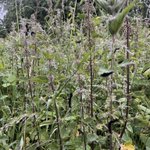
Some of our most familiar butterflies, including peacocks and small tortoiseshells, depend on stinging nettles. Adult butterflies visit other plants for nectar, but their caterpillars need host plants. No nettles can mean fewer butterflies.
#PollinatingLT


PLT is a charity, and donations help support the work we do for pollinators across London. From surveys and events to advice and education, every contribution helps us keep going. You can donate via our website.
#PollinatingLT

Hummingbird hawkmoths are not hummingbirds, and they’re not hawks either, they’re moths. You’d probably do a double take if you saw one hover at flowers, using their long tongues to feed on nectar. We’ve seen plenty this year, always a nice one to come across.
#PollinatingLT
Have you ever tried a FIT Count? Flower-Insect Timed Counts are simple 10-minute surveys that help build a picture of which insects are visiting flowers, and where. They’re really easy to do and can be quite fun too!
#PollinatingLT

Meet the Batman hoverfly: Myathropa florea. This striking hoverfly gets its common name from the dark, bat-like marking on its thorax. Once you’ve seen it, you won’t unsee it.
#PollinatingLT

Seeing bumblebee queens again in late summer? In some species, a second generation may be emerging. Not every queen you spot is fresh out of hibernation, some are part of the next wave of summer activity.
#PollinatingLT
Seen swarms of flying ants lately? Odds are its “flying ant day”, a natural mating event. While they don’t
pollinate as well as bees do, ants do visit flowers!
#PollinatingLT

Not much longer left to wait!
On 13th July, we’re holding our Annual Pollinator Count and Seminar.
Join the count, hear about this year’s findings, and help shape the future of pollinator conservation in London.
#PollinatingLT

Drought stresses plants and pollinators alike. Flowers produce less nectar during dry spells, though the sugar concentration can increase. This could mean pollinators must work harder for fewer rewards. What changes have you noticed in your garden this summer?
#PollinatingLT
On 13th July, we’re holding our Annual Pollinator Count and Seminar.
Join the count, hear about this year’s findings, and help shape the future of pollinator conservation in London.
#PollinatingLT

Spotted a spiky little bug on your plants? It might be a ladybird larva!
They look totally different from adults but are great garden helpers, eating aphids by the dozen.
#PollinatingLT

Bees Needs Week is around the corner! It’s a great time to plant, learn, and act for our buzzing friends. Have a look on our website for tips and activities!
#PollinatingLT
