

COO for @anedot. @hubspot Customer Advisory Board 2026. Fmr: ED @mdgop, PD Political Comms @ufjschool
Daytona Beach, FL
Joined May 2011
- Tweets3.9K
- Following4.9K
- Followers2.2K
- Likes711



Meal prep that doesn't feel like meal prep. Mexican bowl, batch makes 3.
Jasmine rice, 99/1 ground turkey with taco seasoning, black beans, nonfat cheddar, cotija, avocado, and a few spoons of nonfat Greek yogurt instead of sour cream.
Rough per bowl: ~740 calories, ~64g protein.
The Greek yogurt swap is the move.

This is where skill reinforcement is critical. Companies will also need to find ways to protect agents from these kind of attacks.

The biggest security risk with AI agents might be something we already know how to do: phishing.
But there’s a twist.
An AI agent can read an email, follow instructions, open links, access files, and take actions on our behalf. A hidden malicious instruction inside a seemingly harmless message could trick it into doing something it was never supposed to do.
That changes how I think about AI security.
We’re teaching agents to trust context and act autonomously, while attackers are learning how to manipulate that same context.
I’m bullish on AI agents, but giving them more access without stronger permission controls is asking for trouble.
The next big AI security challenge isn’t just stopping people from hacking models. It’s stopping people from tricking models into acting against us.
I do something similar with @bot. Withings -> Apple Health -> Wellness Project -> Bots.
Built a full health tracker. Bot serves as nutritionist, macro estimator, and personal trainer.

asked my @bot to connect my @Garmin and @eightsleep data, and operate as my personal trainer -> helping manage my sleep & workouts
coolest part, is @bot can triage my sleep data between my watch and @eightsleep, giving me hyper-accurate sleep analytics
@bot can do anything!

I have a similar setup and a full finance app that tracks card sign up bonuses, benefits, etc

I have my banking connected to @bot.
It was a seamless process to connect and it now audits my credit card, tracks refunds and returns, and alerts me when the bill is due.
My favorite is when bot tells me a trial period moves into a full price subscription.
The future is now.
What Cam is saying is accurate. Employees of large companies have told me they work for the Titanic. Even if they knew how to use the tools, it would take them years to get approved. Bureaucracy is the biggest limiter to AI adoption.

This cynical view is so detached from reality for 95%+ of corporate America + misses the entire point.
Whole industries are still turning tanker ships when it comes to adopting AI in their workforce. There are so many overlapping parts and antiquated processes and opportunities that need thought + agency + ambition. So many gaps to be filled.
The frontier models are going to keep advancing. 95% of corporate America will never catch up.
Even at Anthropic, they’re shipping 30K commits a week or whatever it is. There is a lot of “enter pressing” but that doesn’t just happen because the enter button is there and execs tell them to press it.
The game for 20-something’s has changed in its construction, but it hasn’t changed at its root: do good work, develop some agency, identify problems and deliver valid solutions.
AND USE AI TO DO IT FASTER AND BETTER THAN ANYONE ELSE
AROUND YOU.
Approvals work best when they're rare. My bots don't ask drafting anything. They stop only before something gets sent, bought, booked, deleted, or shared. That list is short on purpose, so each ask is still a real decision and not a click-through.

We have a whole discipline for managing an AI's context window. Compaction, memory files, subagents , progressive disclosure. Nobody does the same for human's.
And human is the one signing off.
Some numbers from Anthropic's own claude code data. people approve 97% of permission prompts. But when claude shows a plan, they reject 39% of them. Different size of questions , very different behaviour. A plan fits in your head. Hundreds of tiny approvals don't.
In their study with 1,053 paid testers one prompt was swapped for a clearly dangerous command. Humans caught 13.6% after 50+ earlier prompts in a session it dropped to about 5%. The testers know that they were being evaluated and Anthropic is making the case for auto mode, so measured it.
The same thing shows up on the investigation side. METR looked into the openAI/Hugging face incident with around 1,300 agent transcript's many millions of tokens each and had to use AI agents to read the AI agent logs.
They say that leaves them less sure of what they found.
So I think "human in the loop" is turning into a ritual now.
The fix isn't removing the human but its designing for the human's context window the way we do for the model's
ask rarely, ask at the plan level, show the intent instead of diffs and plan few known bad actions to check whether anyone is actually reading
How many approvals did you click through today without reading ?
Agree with Larry's point. Team @bot have helped a lot for multiplayer, but it's more work-focused than family/friends.

Family Grok Bots
There should be a family or household plan for Grok Bot. Something like Team Bots, but family focused for spouses at least.
My wife has been dipping her toes into using Grok Bot with her X Premium subscription. She's been seeing me utilize it successfully for a good number of things. Even leveraging for a few things that helped her out.
However, there are a lot of things that I've setup that she should have her own access to in order to fully leverage. I've setup a good number of custom MCPs for things like finance and home automation. With about 18 bots now, a good handful of which are for stuff that involves both of us. This involves rules and skills, accessing a home server, and a few dashboards.
Configuring all this isn't just something that is figured out quickly, and I expect will be an ongoing maintenance. Sharing templates is not a solution for this. If I later make more configurations, a new import by my wife creates a new bot, losing history and memory.
Our children are grown, but those with children in school likely have child related tasks/schedules they are constantly dealing with. This shouldn't all be funneled through just one parents bot assistants.
Ultimately to fully leverage Grok Bots in a family there needs to be some kind of connection that can be setup for some bots to help with those things that are shared by the different members of the family, especially the parents.
@SpaceXSI @xai @cursor_ai
For now, I'm in the just-buy-it group. Spent some time with Hermes Agent. Cool tool, but I found myself using lower-capability models. Tokens are subsidized on frontier model companies to get you in the door. We will see how long it lasts.

I thought Grok Bot looked cool, but I didn't want to lock myself into yet another AI subscription.
So I built my own setup yesterday.
OpenClaw agents living on the VPS I already use for my automations, communicating with me and each other as Slack apps.
They have the exact amount of access to my work that I need - local agent summaries via agentsview, approval-only access to my Mac via Tailscale, Google Workspace connectors, and more.
As you can see in the video, I've packed them with skills so they can make maps, run analysis, and make videos for me.
So software is dead, right? Who needs Grok Bot?
The thing is, I can't see most people wanting to set all this up.
Most people will just buy Grok Bot.
A smaller but meaningful fraction will hire a consultant or developer to configure the custom setup for them.
And an even smaller fraction is like me and will try to roll their own.
But that's not even what I did! I didn't roll my own Slack. Or OpenClaw. Or G Suite. Or Mapbox. Let alone any of the dependencies those software platforms use.
I do think software will become more and more customizable. It will get easier and easier to set up your own thing.
But setting up your own thing by definition means that there has to be some sort of common infrastructure that the personalized software sits on - at least for the foreseeable future.
An audit @bot only knows what you wrote down. Every one of my bots logs its work to one shared log with a status, and "dropped" is one of the options. When I turn something off on purpose, the log records it, and nothing flags it as broken.

finally back. weekly usage reset today.
added @BrianRoemmele's Mission Control to my grok bot fleet to keep it that way.
first audit: 1 bot red, 4 yellow, 2 green. it flagged a broken poller as the urgent problem. i'd turned that poller off on purpose a few hours earlier.
still useful though. it found 1.6 GB of old images and logs my bots were hoarding.
anyone else running an audit bot on their fleet?

Hollow irons rarely make sense from 8-iron to PW. Long irons, sure. Short irons are scoring clubs. I want distance control and a predictable flight, not a hot face that only shows up on some swings. ⛳
xitter.cf/engineeringolf/status/…


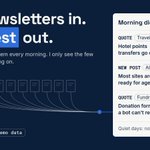
I used to skim 10 newsletters a week and lose most of the good stuff. Now one @bot reads them every morning and sends me a single digest with the few ideas worth acting on. On days with nothing new, it stays quiet.
Pick the chore you keep putting off. That's your first bot job.

Step 2 is the one I'd underline. Standing rule for every bot I run: credentials never go in chat and never get saved.

how to set up Claude Code inside Grok Bot:
1. tell Grok Bot to install Claude Code in its own terminal
2. log in to Claude through the secure field, never in chat
3. give it your GitHub repo so it opens the project
4. send one message and it hands the coding to Claude Code
> projects live on the bot's computer, not your laptop
> jobs keep running with your laptop closed
> browser work and code work share the SAME files
this is stupidly simple... setup prompt below: 👇

The best first task isn't on someone else's list. It's the thing you already do every week and keep putting off. For me that was reading 10 newsletters. Now one bot reads them and sends one morning digest with the few worth my time. Start with your own annoyance.

The challenge many people have with AI agents is not knowing what to ask them to actually do for you.
They set up Instinct, Dot, Grokbot, or Muse - and then don't know what to do next.
So here's a starter list of the life-admin tasks I've used over the past couple of weeks that you might want your personal AI agent to do for you.
- Research and book flights and accommodation.
- Research and book a hard-to-get-into restaurant
- Find better value car insurance.
- Organise and sorted 6,000 documents sitting in my Google Drive 🫣
- Cancel and refund unused subscriptions.
- Clean up your email inbox and unsubscribe from newsletters you never read.
- Find recurring subscriptions in your bank statement and credit cards, check with you, and agree to cancel unused software and apps.
- Find a better value mobile phone plan.
- Monitor social media and highlight posts and comments worth answering.
- Review your past emails for positive comments and testimonials that had been lost to history
- Got me a refund of £336 from something I forgot to claim.
- Analyse the multiple emails I receive every week from my children's schools and tell me if I need to pay attention or take action!
- Send an end-of-week summary of meetings and emails, aiming to close out any open loops or unfinished tasks
I've now set up my own Grokbot team for business - Chief of Staff, head of marketing, podcast production, a personal assistant, a researcher, a strategic business adviser - and I'll probably have several more working for me full-time in the next few days.
I think the first £10 million one-person company isn’t far away now.
If you want to see what others are using their agents for, click the link below.
Some of the results are amazing.
agentusecases.ai/

If you do a backdoor Roth, check one number before December 31: your Traditional IRA balance. 📅
The pro-rata rule looks at the total in all your Traditional, SEP, and SIMPLE IRAs on Dec 31 of the year you convert. Any pre-tax money sitting there makes part of your conversion taxable.
What I do every year:
1. Put a nondeductible contribution in a Traditional IRA
2. Convert it to Roth
3. Make sure the Traditional IRA is at $0 on Dec 31
4. Report it on Form 8606 at tax time
401(k) money doesn't count toward pro-rata. If you have an old rollover IRA, some 401(k) plans will take it in, which clears the way.
This is what I do, not tax advice. If you've got old IRA money, talk to a CPA first.

I do this with Google Drive and it works very well

I moved my bots' memory into an Obsidian vault so switching agents doesn't mean starting over from scratch.
Grok Bot, Meta Muse, ChatGPT dots, Hermes bots. I like to try all of them without having to teach each one about my projects, preferences, and everything else I've already explained.
So I keep their memory, logs, and workflows in the same vault. Just plain files I own and can read or edit myself.
Each bot has instructions to read the relevant files before answering and save new information there. My health bot updates the health folder. My project bots update their own folders. Dated logs keep the history.
When I try a new agent, I point it at the same vault and give it the same instructions. It can pick up context that another bot saved.
I wrote earlier about memory becoming the thing that locks people into an agent provider. This is how I'm trying to avoid that.

Outcome framing was the biggest change for me too. The rules live in a doc, the outcome lives in the ask.

I estimate Grok Bot saves me about 25 hours a week.
Not from one clever prompt.
From how I set it up.
Here’s what I've learned, so you can apply it to your Grok Bot set up:
1 - Hand over outcomes, not steps
“Get me 3 quotes and recommend one” gives it a clear target. Give it the goal, the context and the limits, then let it work out the how.
2 - Look for jobs worth turning into routines
If you’ve asked for the same job twice, check whether it should become a routine. Daily briefings, weekly reviews, monthly checks. Get it working reliably, then schedule it.
3 - Decide what needs you
Write down what it can do alone, what needs your approval and what it must never do. Clear limits mean fewer interruptions and fewer surprises.
4 - Correct once, properly
When it gets something wrong, don’t just fix the output. Have it save the rule in the relevant instructions, then check that it applies it next time.
5 - Ask for decisions, not reports
Put “Here’s what needs your yes or no” at the top, with the supporting detail underneath. Make it easy to see where your attention matters.
6 - Split recurring jobs into specialists
Give distinct, recurring jobs to focused bots with one clear responsibility each. Add another bot when the work needs its own owner.
7 - Review the system weekly
15 minutes: what went wrong, what rule should change, what’s out of date. Use what happened this week to improve how next week runs.
Start with #2. List everything you asked your bot to do more than once this month.

The step after this that made the biggest difference for me: don't leave the standard in the chat. Put it in a doc the bot reads every run. Then have it check its own output against that doc, because every update drifts a little.
When Grok Bot gives you exactly what you wanted, don’t stop at “perfect, thanks.”
Turn that result into a standard for the next run.
Try out this prompt I've been using: 👇🏻
“This is a strong result because [explain what made it useful].
1 - Extract the specific requirements that made it work.
2 - Separate reusable requirements from details that only apply to this task.
3 - Propose an update to the relevant workflow instructions and show me where it belongs.
4 - Keep this output as a reference example. Future work should use fresh evidence.”
For example, a useful morning briefing might give you:
The three decisions you need to make.
The deadline for each.
A recommendation with supporting evidence.
If that’s what makes the briefing valuable, capture those requirements.
“Great briefing” leaves the standard vague.
“Lead with decisions, deadlines and evidence” gives the next run something concrete to follow.
Your best outputs are examples of what good looks like in your business.
Use them.

Patrick O'Keefe retweeted

I spent my morning digging through GitHub so you don't have to.
These 5 free Grok Bot repos are quietly replacing paid agent tools 🤯
1. elie222
github.com/elie222/botdirect…
Great for finding ready-made agent templates.
2. madebywelch/guaca
github.com/madebywelch/guaca
Open-source alternative to Grok Bot.
3. GuBeLa/grok-agents-hub
github.com/GuBeLa/grok-agent…
50+ ready-made AI agents, templates, commands, and integrations for Grok 3/4.
4. Anil-matcha/awesome-grok-bot
github.com/Anil-matcha/aweso…
Curated list of ready-to-use Grok Bot templates across productivity, sales, marketing, ops, success, and personal workflows.
5. wolfqing/OpenGrokBot
github.com/wolfqing/OpenGrok…
Self-hosted unofficial Grok Bot alternative.


This is most of the value in my setup, too. The tasks usually aren't hard. They just have to happen at the right time, and the bots don't forget. Scheduled tasks are extremely helpful.
