

A social media management tool built for fast-moving marketing teams.💚 One place to create, approve & schedule content.
Joined April 2016
- Tweets2.8K
- Following76
- Followers2.5K
- Likes2.1K






The question your next post should answer is already written. It’s sitting in a thread you haven’t read yet.
That’s the part we keep getting backwards: deciding what the brand wants to say, then hunting for a question to hang it on. The questions already exist, and so do the answers people trust.
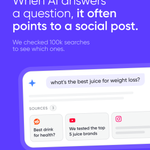
We checked how far those conversations travel. In SE Ranking, a social or community source was already in Google’s top 10 for 76.73% of 100,000 searches across 20 niches. In SE Visible, the same held in AI answers: two in three AI Overviews cited one, and one in three AI Mode answers did.
So the uncomfortable part isn’t that you’re missing from AI answers. It’s that the answer is being built from conversations you could have joined, and didn’t read.
Listening first flips the order. Pick up what your audience is already asking in Planable Social Listening, size up the demand in SE Ranking, check who AI already cites in SE Visible, then create something worth publishing. It has a reason to exist before you write it.
The full research and the six-step workflow are in one place.
Start with what people are actually asking: planable.io/blog/listening-b…


Everyone shares the content wins. Almost nobody shares the year of content that went nowhere.
So here's ours.
The idea was to stop guessing what to publish and answer what people were actually asking. Most of what we assumed would work didn't.
And when we ran the numbers, the logic held well beyond us. We checked Google's top 10 across 100,000 searches with SE Ranking, and 76.73% already had a social or community source. Then we checked AI answers with SE Visible, and two in three AI Overviews cited one too. The conversations worth listening to are the same ones Google and AI pull from.
What actually worked for us was narrower than we expected: publishing LinkedIn articles through personal profiles instead of the brand account. 8 of our 25 ended up cited in 422 AI answers.
We wrote all of it up in one piece. The research engine by engine and niche by niche, what moved our AI visibility and what didn't, and a six-step workflow for turning conversations into content: listen in Planable Social Listening, size up demand in SE Ranking, and check who AI cites in SE Visible.
Read it here, flops included 👉 planable.io/blog/listening-b…


Your analytics just got harder to argue with.
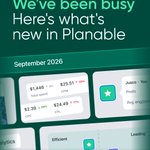
Most of what shipped in Planable this month lives in one place: Analytics. And the theme is context, because a number only means something when you can see what's behind it.📈
X (Twitter) is now in Analytics, right next to Facebook, Instagram, LinkedIn, TikTok, and YouTube. One report, every channel.
Your results now split into organic, boosted, and paid, from page charts down to single posts. Ad spend, CPM, CPC, and CPE sit next to your organic numbers, so you can see what the budget actually bought.
And Competitor Analytics opens with a positioning matrix: every account plotted by how much they post against how much it pays off, sorted into Efficient, Leading, Quiet, or Grinding. You know where you stand before you scroll.
We also shipped a few things you asked for: copy labels between workspaces, an auto-crop toggle per workspace, and GIFs and images together in one LinkedIn post.
Good reporting answers the next question, not just the last one. That's what this month is about.😎
See it in your workspace.


Your thumbnail is the ad for your video. The design part is quick. Rebuilding the brand elements from scratch is what eats the time.
Welcome to AI Friday FOMO #08, our first design edition.
This one was built by Anna Postol, our Content Marketing Manager. It turns a reference into an on-brand YouTube thumbnail, so the brand work is done before anyone opens a design file.
Here's how it works:
→ @figma holds the on-brand component library: the repeatable parts of our thumbnails, frames, type, colors, layouts, turned into a reusable kit so the brand rules live in one place
→ For a new video, you feed it a reference: the idea, the vibe, the direction. That's the only input it needs
→ @claudeai applies our thumbnail system and builds the design from that library, so it's on-brand by default, not a blank canvas someone has to police
→ The finished thumbnail lands in @SlackHQ. A person picks, tweaks, or approves
Why it matters: design consistency usually depends on one person remembering every rule, every time. Move the rules into a component library and the consistency stops being a memory test, it's just how the output comes out. The agent does the build. A human still makes the call on what ships.
And it's not only for video teams. Any team that makes the same kind of asset over and over, social, ads, decks, thumbnails, can turn its repeatable parts into a kit and get the same on-brand speed.
All 4 steps are in the carousel.
Want to try this one yourself? Turn your most-used thumbnail elements into one reusable kit. That's where the on-brand speed comes from.
Same series, every Friday.


"Tailor your content for each platform" might be the most-repeated advice in social. We checked how often people actually do it.
We looked at ~8,000 posts published through Planable in 2026. More than half go out to multiple platforms, and when they do, about 80% are identical on every channel. Only 1 in 5 cross-posts gets tailored.
It varies by platform, but not in the way you'd hope. Facebook is the copy-paste capital (85% identical). Even LinkedIn, the most-tailored of the big ones, still sees 70% go out untouched. The one real exception is X, where more than half get customized, and that's only because the character limit forces a rewrite. The single place people reliably tailor is the place that won't let them paste.
Here's the upside: because almost nobody bothers, tailoring is a cheap edge. A few tweaks per platform, the hook, the crop, the tags, is a low-effort way to stand out in a feed full of copy-paste.
Do you tailor per platform, or post once everywhere?


Social listening usually gets treated like a smoke alarm.
Something you set up, forget about, and only think about when something's already on fire.
But the moments that actually move a brand rarely look like emergencies.
They look like a Reddit thread quietly arguing about the best tool in your space. A trend picking up steam before anyone's put a name to it. A competitor's pricing getting roasted. A rebrand landing to a reaction you'd never see from your own comments.
None of those tag you. None of them wait. By the time they reach your notifications, the moment to do anything useful has usually passed.
That's the shift with Social Listening in Planable. It isn't something you watch, it's something you act on: jump into the thread, brief the team, shape the next campaign, get ahead of the complaint before it spreads.
The point was never to monitor your brand. It's to catch the moments that matter while you can still do something about them.
See when Social Listening earns its place: planable.io/social-listening…


You already know some of your ad budget is wasted. The hard part is finding exactly where, before another month goes out the door.
Welcome to AI Friday FOMO #07.
This one was built by Raluca Cirjan, our Performance Marketing Lead. It's an agent that finds the ad spend that never converts, and hands you the fix.
Here's how it works:
→ Google BigQuery gives it the actual search terms people used, not the keywords we bid on, the queries we really paid for
→ Claude checks every term against the rules for its specific campaign, so a "good" term in one isn't judged the same in another
→ It surfaces every term that spent $20 or more and converted zero times, budget going out with nothing coming back
→ It writes a ready-to-upload Google Ads CSV to cut those terms, plus a Notion summary of what it caught and what it's costing
→ Slack gets a short digest every week. A person reviews it and uploads the file
Why it matters: wasted ad spend is quiet. It doesn't break anything, it just leaks, and by the time you notice, it's months of budget. This catches it every few days and prices it, so the decision is easy and the fix is already written. The agent finds the leak. A human closes it.
All 5 steps are in the carousel.
Want to try this one yourself? Pull your own search terms and flag anything that spent with zero conversions. Start there.
Same series, every Friday.


Your brand's reputation isn't built in your comments anymore.
It's built in the places you never see. A Reddit thread comparing you to a competitor. A review on some random blog. A forum answer that quietly becomes the thing everyone repeats.
And you only ever react to what reaches your notifications. The conversations that actually shape how people see you? Those never tag you.
That's why we built Social Listening into Planable.🔥
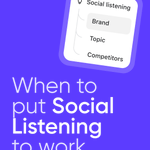
It brings everything being said about your brand, your topics, and your competitors into one feed, across social and the web, with the sentiment behind every mention. Spot a conversation worth joining, and you turn it into a post and publish it, without leaving Planable.
You can't shape a story you can't see. Go see yours.
Social Listening is live now: planable.io/social-listening…
Most of what's said about your brand doesn't happen in your comments.
It happens in a Reddit thread, a review on some blog, a forum you didn't know existed. And you usually never see it.
So we built Social Listening into Planable.
One feed for everything being said about your brand, your topics, and your competitors, across social and the web. Even the mentions that never tag you.
A few things you can finally do with it:
- catch a complaint before it turns into a bad review.
- see what your industry is actually arguing about, and post about it first.
- watch how people react to a competitor's move, and turn the gaps into your next campaign.
- track sentiment over time, and get an alert when it spikes.
And when you spot a conversation worth joining? Turn it into a post, get it approved, and publish it without leaving Planable.
It reads your brand context too, so the feed stays about you, not noise.
Social Listening is now live, so go check it out 👉 planable.io/social-listening…


Your comments section is the smallest sample of your audience you'll ever look at.
Most content calendars get built from it anyway. What performed last month, what someone replied to, what the team has a feeling about.
Meanwhile the same people are typing full questions about your topic into Google and into ChatGPT. That demand lives in a completely different dataset, and it never makes it into the social plan.
So we connected the two.
Planable's MCP brings your top-performing posts, grouped by topic. @SERanking's MCP brings what people search for and where AI answers mention you, for those same topics. Claude lines them up and renders a board you can open in a planning meeting.
What comes out of it is two lists.
Topics people search every month that your social has never covered. And topics your posts caught before the search data did, which is the part nobody measures.
One tells you what to claim. The other tells you what to scale.
You don't need a new reporting habit for this. You need your social data and your search data in the same sentence for once.
Click to get the skill for free: seranking.com/cross-channel-…


ChatGPT is quietly telling you where to post next. Most brands just aren't reading it.
Welcome to AI Friday FOMO #04.
This one was built by Kseniya Mamaeva, our Community Manager. It's an agent that finds which Reddit communities ChatGPT actually cites for your topics, and tracks how that shifts week to week.
→ @SERanking reads @ChatGPT's answers and their cited sources in the AI Result Tracker, and compares this week against last week
→ It pulls every URL ChatGPT cited, keeps only the Reddit links, and groups them by community (counting each post once, so repeats don't skew the numbers)
→ It ranks the communities and flags what's rising, falling, or gone
→ @NotionHQ logs every community as a weekly row, building a clear trend over time
→ @SlackHQ gets a digest with the top communities and where to focus next
→ @claudeai is the agent connecting all of it
Why it matters: LLMs lean on Reddit hard when they answer questions about your category. If you don't know which communities they trust, you're guessing where to show up. This turns that guess into a ranked list that updates every week, so your community and content efforts land where AI is actually looking.
And it's not just a community-team thing. Anyone doing AI-search visibility, content, or brand should know which rooms the models are quoting.
All 7 steps are in the carousel.
Want this exact setup? Comment "AI Friday" and we'll send it over.
Same series, every Friday.


You have more influence over AI visibility than you might think.
Here's the proof: in SE Ranking's recent research on French search, five of the ten most-cited domains in AI Overviews were social or video platforms: YouTube, Facebook, Instagram, TikTok, and Dailymotion.
So when someone asks ChatGPT or Google's AI a real question, part of that answer gets assembled from social. The posts going out this week are already shaping what AI says about the brand.
The problem is most teams can't see which questions the brand is missing from, where competitors are already winning, or which narratives are still wide open.
So we built a free Claude skill that closes that gap.
First, it shows how your brand appears in AI answers and which topics are still unclaimed.
Then it turns those gaps into drafts your team can actually use, right in your workspace. Comparisons, FAQs, myth-busting, plain definitions: the formats you already make, pointed at the prompts that need them.
Every post becomes a claim on an answer people are already asking.
Comment "Skills" and we'll send you the whole setup.
seranking.com/ai-visibility-…


Staring at an empty content calendar again?
You know the routine. Open a doc, scroll competitors, wait for something to feel like a good idea.
The information you need already exists. It's just sitting in a keyword tool nobody opens on planning day.
So we connected the two. SE Ranking MCP and Planable MCP now work together in one Claude skill.🔥
You ask what to post for a brand this month. You get 6 drafts in your workspace, channel-adapted, grouped into a campaign, labeled, each one tagged with the exact search term behind it. Plus a one-screen plan: topic, search demand, platform, angle.
Your calendar stops being a brainstorm and starts being a plan.
Comment "Skills" and we'll send you the whole setup 👇
seranking.com/search-social-…


