

Exploring with giants’ treasure maps. PhD student with Yves Boubenec and Jean-Rémi King
ENS - McGill
Joined February 2020
- Tweets98
- Following294
- Followers178
- Likes766


Pinned Tweet
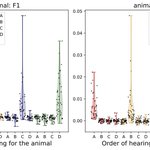
New result! A theory of @AdrianDu_'s data, where we model distributions of tuning curves.
-Random connection brings symmetry 🌈
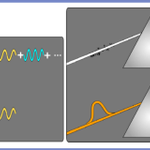
-SVD revealed the distribution of Fourier coefficients 🥳
-The model is a null-hypothesis usable anywhere in the brain
With @apeyrache and @AdrianDu_
pierre orhan retweeted

1/7 Does the infant brain have representational structure? 👶🧠In the FOUNDCOG project, we scanned 134 awake infants using fMRI. Published in Nature Neuroscience, our research reveals 2-month-old infants already possess complex visual representations in VVC that align with DNNs.
pierre orhan retweeted

New preprint! w/ @dr_han_jones
Adding human-like fleeting memory to transformers improves language learning, but impairs reading time prediction
This supports ideas from cognitive science but complicates the link between model architecture and behavioural prediction

pierre orhan retweeted

Jérémy Rapin and I are very happy to present you: exca
A python decorator to eliminate the overhead of caching and cluster-based executions for complex pipelines.
- install: `pip install exca`
- doc: github.com/facebookresearch/…
#python #DataScience #OpenSource
🙏 @AIatMeta
pierre orhan retweeted

We grieve the passing of Dr. Yves Frégnac.
Yves has shaped the study of cortical processing and plasticity. He heralded interdisciplinarity and was one of the founding fathers of our institute.
Our thoughts go to his family and to his friends in the community and beyond. xitter.cf/NeuroPSI_saclay/status…
pierre orhan retweeted

Feeling very inspired about ✨Using ANNs for Studying Human Language Learning and Processing (ANN-humlang.github.io)✨ after the workshop that @tamar_john1 and I organized this week at @ILLC_amsterdam! Many thanks to all our speakers and participants for such a great event,


pierre orhan retweeted

👋@FlatironCCN is currently hiring Flatiron Research Fellows! For openings in Neuro-AI and Geometric Data Analysis group, you can find more information here: apply.interfolio.com/134616
P.S. This is a great job in an incredible environment for computational research. If you know, you know😉
Email me if you have any questions!


pierre orhan retweeted

🔥New paper accepted to ACL 2023!
“Language acquisition: do children and language models follow similar learning stages?”
With @lakretz and @JeanRemiKing
arxiv.org/abs/2306.03586
Very happy to share this work from my internship at @MetaAI !
Three key results below 👇
1/8

pierre orhan retweeted

The season finale of the mixed 🍝 vs. modular 🧱 selectivity debate will take place this year at #cosyne2023 workshops!
Join us to hear what our stellar lineup thinks about single-neuron interpretability and disentangled representations!
Co-org w @wjeffjohnston @jcrwhittington

ALT March 13th, Cosyne Workshop on neuron interpretability featuring Morning session 8:00 - Lea Duncker 8:30 - Adrian Valente 15 min break 9:15 - Takuya Ito 9:45 - Christine Constantinople Afternoon session 4:00 - Adam Kepecs 4:30 - James Whittington 15 min break 5:15 - Kiah Hardcastle 5:45 - Stefano Fusi 6:20 - Panel discussion
pierre orhan retweeted

Our paper is out in Nature Human Behaviour🔥🔥
‘Evidence of a predictive coding hierarchy in the human brain listening to speech’
📄nature.com/articles/s41562-0…
💡Unlike language models, our brain makes distant & hierarchical predictions
with @agramfort and @JeanRemiKing
Thread👇
pierre orhan retweeted
We have 2 open calls for a fully-funded PhD in #NeuroAI at Ecole Normale Supérieure:
1. euraxess.ec.europa.eu/jobs/6… w/ Pierre Bourdillon
2. euraxess.ec.europa.eu/jobs/6… w/ Yair Lakretz.
pierre orhan retweeted

Major update on our "dual" feature encoding by excitatory and inhibitory cortical cells, now including simulations and super cool theoretical work by @PierreOrhan.
And again, kudos to @AdrianDu_ for all the hard work!
biorxiv.org/content/10.1101/…

Just take your favorite music hits, and walk between them through diffusion, new year mix set will be 👌

Riffusion, real-time music generation with stable diffusion
@huggingface model: huggingface.co/riffusion/rif…
project page: riffusion.com/about

pierre orhan retweeted

Riffusion, real-time music generation with stable diffusion
@huggingface model: huggingface.co/riffusion/rif…
project page: riffusion.com/about
pierre orhan retweeted
🔥Our work has now been accepted to NeurIPS 2022 !!
`Toward a realistic model of speech processing in the brain with self-supervised learning’:
arxiv.org/abs/2206.01685
Let’s meet in New Orleans on Tue 29 Nov 2:30pm PST (Hall J #524).
A recap of the 3 main results below 👇
pierre orhan retweeted

1/ Our new preprint biorxiv.org/content/10.1101/… on when grid cells appear in trained path integrators w/ Sorscher @meldefon @aran_nayebi @lisa_giocomo @dyamins critically assesses claims made in a #NeurIPS2022 paper described below. Several corrections in our thread ->


Very excited to announce our #NeurIPS2022 paper No Free Lunch from Deep Learning in Neuroscience: A Case Study through Models of the Entorhinal-Hippocampal Circuit.
It's a story about NeuroAI, told through a story about grid & place cells.
Joint w/ @KhonaMikail @FieteGroup 1/15

the lineup and the spot 🤯⛷
(p.s: and lots of train to go to Les Houches 🚅 ✅ )

🎉Applications are open for our #workshop on the theory of neural networks in Les Houches (France) from 20.-24.02.23, organised w/ @s_y_chung & @marc_mezard. Check out our fantastic set of speakers from neuro & ML and apply until Dec 1st statphysneuro.github.io/ (and pls retweet!)
pierre orhan retweeted

I have with one area chair (AC) at @iclr_conf 2023 some difficulties to find reviewers for papers at the interface between physics/PDEs and ML. If you have a few spare cycles to help us in the next 3 days send me a DM.
Thanks a lot 🙏
—
🚒🚑 senior area chair at @iclr_conf
pierre orhan retweeted

We don't yet know what learning rules are implemented in the brain. Can we understand the representation and function dynamics induced by candidate learning rules in deep networks? New preprint with @CPehlevan arxiv.org/abs/2210.02157
pierre orhan retweeted

A few people have asked me how our recent superposition paper (transformer-circuits.pub/202…) relates to classical ideas in neural coding / connectionism / distributed representations.
I wanted to share a few thoughts, although I'll caveat I'm very much not an expert on these topics!
pierre orhan retweeted

Our article on the perturbative approach is out on Nature communications. Check out how perturbations can be used to study the way neurons perceive the world. Work in collaboration with
@matigoldin, @RetinaGeek and @alxecker
Thread below:
nature.com/articles/s41467-0…