

Collector & researcher of English, Irish & Scottish hammered coins minted during the 13th-14th centuries. Member BNS, ANS & ANA, RNS.
Joined November 2014
- Tweets4.1K
- Following295
- Followers2K
- Likes9.4K



Pinned Tweet
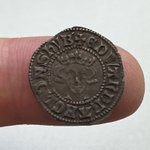
Here is an extraordinary Edward III half penny, Pre-Treaty Series F minted only for a few months in London in 1356. According to L.A. Lawrence and Lord Stewartby, there is only *ONE* other known specimen of this coin. Note the 👑 mint mark on the obverse.


J.J. North Wannabe retweeted

The besieging army’s new stealth tactic was a complete bust - 15th century, Det Kongelige Bibliotek, MS Thott.290.2º, f. 23v

One of my favorite obverse’s of any silver medieval coin has to be this!
A Charles II, Duke of the Duchy of Lorraine, minted in Nancy between 1390-1431.
Obv: KAROLUS DVX LOTHOR
Rev: MONETA FCA IN NANCY
That suit of armor is 🔥


Three denominations of Edward III Pre-Treaty Series F (crown initial mint mark) coins minted in 1356 photographed together for the first time!
Left: Groat
Center: Penny
Right: Half Penny
*This is the only known half penny of this series outside of one in a museum collection*

Edward I penny from the rare class 6 (specifically 6b) minted in London btwn 1292-1296.
The very large crown punch and splayed side fleurs identify this class of pennies that were minted during the lull bookended by Edward’s massive recoinage in 1279 and his second in 1299-1301


Edward I penny minted between 1296-1310 at Berwick-upon-Tweed which utilizes does produced locally and not from the Tower mint in London unlike all the other regional mints.
Withers type 6
Obv: EDWA R ANGL DNS hY’B
Rev: VILL/ABE/REV/VICI


A rare Robert II Scottish halfpenny minted in Edinburgh between 1371-1390.
Obv: ROBERTVS REXS
Rev: VIL/AED/IDN/BVG
Happy Friday!


Edward I penny minted in Durham between 1302-1303, class 10ab2 with an error in reverse legend.
Obv: EDWARD R ANGL DNS hYB’
Rev: CIVI/TAS/DVR/D*H*E
Should be EME


Edward III groat, Pre-Treaty Series E minted in London between 1354-1355.
The die punch used for the letter “V” on the reverse was cracked, so most Series E groats show this flaw on the limb of the letter as is very clear on this specimen.


A scarce Edward II penny, class 12b, minted in London between 1314-1317. One can readily ID these class 12 pennies by the unusual (flat) formation of the side fleurs and maple leaf shaped central fleur.


While not much to look at, these two Edward I Irish farthings minted in Dublin & Waterford btwn 1280-84 are scarce even in this condition


J.J. North Wannabe retweeted

Very exciting news from the Isle of Man, where a new coin hoard of the mid-11th century has been found. manxnationalheritage.im/news…

Edward I introduced the first groat (4d) in England during the major recoinage of 1279 to only be abandoned in 1281 as the denomination never saw widespread adoption and most were melted down.
This very rare, very fine specimen is of North variety “D” or Fox type 7.


After taking back control of Berwick-upon-Tweed from the Scots in 1296, Edward I opened a mint there and began producing coins with locally made dies (penny on the left), not dies produced in London as was the case with every other mint in England at the time (penny on the right)

A rare example of a contemporary imitation of an Edward I penny struck at Alast by Count Robert of Bethune minted ~1317 whose rule was dominated by intermittent war and truce with France, divisions within Flemish society and widespread metallic debasement.


The translation of the abbreviated Latin legends for an Edward III groat prior to the signing of the Treaty of Bretigny. This coin was minted in London between 1351-1352.


Identifying the class of an Edward I-II is quite tricky to the untrained eye.
The style of the crown punch used is key to narrowing down which of the classes your penny belongs.
Below are photos of each crown punch going in order from class 1 to 15.


