This account is no longer active. Please follow @PewTrusts for key ocean conservation updates—and subscribe to our newsletter: https://xitter.cf/t.co/ASnWhJfgh0
Brussels
Joined June 2009
- Tweets24.5K
- Following1.1K
- Followers11.5K
- Likes7.1K
Pinned Tweet
This account is no longer active. For key ocean conservation updates, follow @PewTrusts and find us on:
✔️ LinkedIn: linkedin.com/company/the-pew…
✔️ Facebook: facebook.com/PewEnvironment/
✔️ IG: instagram.com/pewenvironment…
Prefer email? Sign up for our newsletter: pew.org/3P715X5
The case for a moratorium on seabed mining is clear:
🔬The science isn't there
⚖️The rules aren't in place
💰The economics don't add up
🌍Equity isn't guaranteed
Our ocean is too valuable and vulnerable to take that risk. It's time to press pause. pewtrsts.org/4wkQ1rf
Addressing plastic pollution isn’t only about protecting the planet—it’s about protecting people, too.
Our #BreakingThePlasticWave report examines the effects of plastic on our health—and potential solutions. pewtrsts.org/4aAjAh7
Harmful fisheries subsidies:
💰 Total $22 billion annually
🐟 Deplete fish populations
🎣 Harm local, artisanal fishers
We have an agreement to #StopFundingOverfishing, but now, it needs to be implemented—and strengthened. pewtrsts.org/47shxtd
Win-win: when your vacation helps protect a reef. 🪸
Island nations are baking conservation into travel costs: airline, hotel & entry fees to fund marine protection & infrastructure—a shift from short-term trade-offs to long-term sustainability. pewtrsts.org/4sEILVq
Millions of plastic pellets are lost each year, polluting the environment, negatively impacting biodiversity, marine life, and human health.
This #EarthDay, we dive into how we can slash microplastic pollution by almost half in 2040. pewtrsts.org/4otp7cA
The deep ocean is still mostly unknown—and so are the risks of mining it. Without sufficient scientific knowledge, it's impossible to write rules that truly protect marine life.
If we can't measure the impact, we shouldn't take the risk.
📸@NOAA
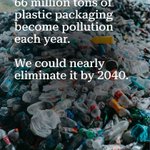
We can cut plastic packaging pollution by 97% by reducing plastic packaging production and investing in reuse and return systems.
Think bringing empty boxes to stores or refillable cups to cafes. pewtrsts.org/3QQBVP7
📸Elbert Lora/Unsplash #BreakingThePlasticWave
The entry into force of the deal to #StopFundingOverfishing is a huge step in the right direction, but there's more work to be done.
@WTO members must implement this deal swifty and transparently to deliver lasting ocean benefits.
Win-win: when your vacation helps protect a reef. 🪸
Island nations are baking conservation into travel costs: airline, hotel & entry fees to fund marine protection & infrastructure—a shift from short-term trade-offs to long-term sustainability. pewtrsts.org/4sEILVq
🚩 What’s a fishing red flag?
Ships are registered, or “flagged,” to a country that’s responsible for their actions.
Countries with fewer registration requirements may have less oversight and a higher risk of illegal fishing. 📸Fred Tanneau/Getty Images pewtrsts.org/4crlAYA
Regional fisheries managers are central to helping curb harmful subsidies. 🎣
Their monitoring and data will assist countries as they work to implement the latest @WTO rules to #StopFundingOverfishing. pewtrsts.org/49GBK0a
Microplastic fibres can be found in:
🫁The air we breathe
🏞Our rivers and oceans
🍎The food we eat
The EU has an opportunity to help reduce how textiles shed these synthetic fibres into our environment. pewtrsts.org/4pcsHbI
📸Dan Kitwood/Getty Images
Obscured vessel ownership makes illegal fishing harder to stop, depleting fisheries and harming coastal communities.
A new @Oceana report shows how the European Union can curb illegal fishing with more transparency. 📸 Fred Tanneau/Getty Images pewtrsts.org/4crlAYA
More than 35% of fish stocks are overfished, according to @FAO.
Unfortunately, the systems designed to keep squid fisheries sustainable are insufficient to meet the growing global demand. pewtrsts.org/4pugQG5
📸Andrey Nekrasov/Getty Images
Ocean biodiversity and the health of the seafood industry should go hand in hand.
The seafood supply chain can help lead the way to safeguarding marine life through increased transparency and sustainable sourcing. pewtrsts.org/4e9YyHW
📸 Michele du Plooy/Kogia
Problem: It’s hard—and potentially expensive—to monitor all the Pacific Ocean’s fisheries.
Solution: This month, North Pacific fisheries managers can adopt data standards as a first step toward better tracking fishing boats across the region. #NPFC pewtrsts.org/4c0wB40
What’s at stake if we mine the deep sea?
More than you might think. Our Grace Evans breaks down 3 reasons why we need a moratorium on seabed mining to protect ocean life—and our planet. @DeepSeaConserve
🎥
Fisheries and Oceans Canada
@SchmidtOcean
Ocean biodiversity is threatened by:
🐟 Overfishing
🐟 Habitat loss
🐟 Climate change
Everyone along the seafood supply chain can—and should—help safeguard our ocean and marine life. pewtrsts.org/4e9YyHW
📸 Michele du Plooy/Kogia
Fishing in the Pacific Ocean is largely managed by four different organizations.
This month, the North Pacific Fisheries Commission can join others in the region to ensure fishing across the Pacific is safe, transparent, and sustainable. #NPFC pewtrsts.org/4cdNs2b