When their friend Tom passed away, Jeremy and Bill became the caretakers of two extraordinary examples, XKD 522 and XKD 531. Both were in desperate need of restoration, but each carried a history worth preserving.
XKD 522 was one of only two factory red D-Types, famously pulled from its display at the 1955 Los Angeles Auto Show for Carroll Shelby to race after crashing his Ferrari. XKD 531 had taken a very different path, becoming an icon of the late 1950s Kustom Kulture movement, its bodywork bearing the unmistakable pinstriping of Von Dutch.
Restoring these cars was never about creating someone else's idea of perfection. For Jeremy and Bill, it meant returning each to its rightful place in history, preserving the details that made them unique, right down to the individual fasteners Jaguar used when they were built.
Directed by: Tiziano Niero
#JaguarDType #LeMans #DriveTastefully #Petrolicious
Your dose of Sunday Serenity, featuring the Lamborghini Diablo GT in its element, carving through corners with the unmistakable soundtrack of its naturally aspirated V12.
No music. No commentary. Just the sound of Italian engineering at full song.
Directed by: Paolo Lekai
Watch the full film, hit the link in bio.
#lamborghinidiablo #diablogt #petrolicious
Ninety-one years after Hans Stuck chased records on an Italian autostrada, the Auto Union Lucca Rennlimousine returned to speed at the 2026 Goodwood Festival of Speed.
Originally developed in 1935 during the fierce record-breaking rivalry between Auto Union and Mercedes-Benz, the streamlined V16 was shaped with the help of wind-tunnel testing and built with one objective: speed. Near Lucca, Italy, Stuck averaged 320.267 km/h (199 mph) over the flying mile and reached a measured top speed of 326.975 km/h (203 mph).
The original car did not survive, but Audi Tradition spent more than three years recreating the Rennlimousine from historic photographs and archival material with British specialists Crosthwaite & Gardiner. In July, it made its first dynamic appearance at Goodwood, returning one of Auto Union’s most extraordinary creations from the Silver Arrow era to motion.
Photography by: Charlie Milner
#AutoUnion #GoodwoodFOS
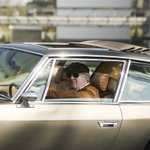
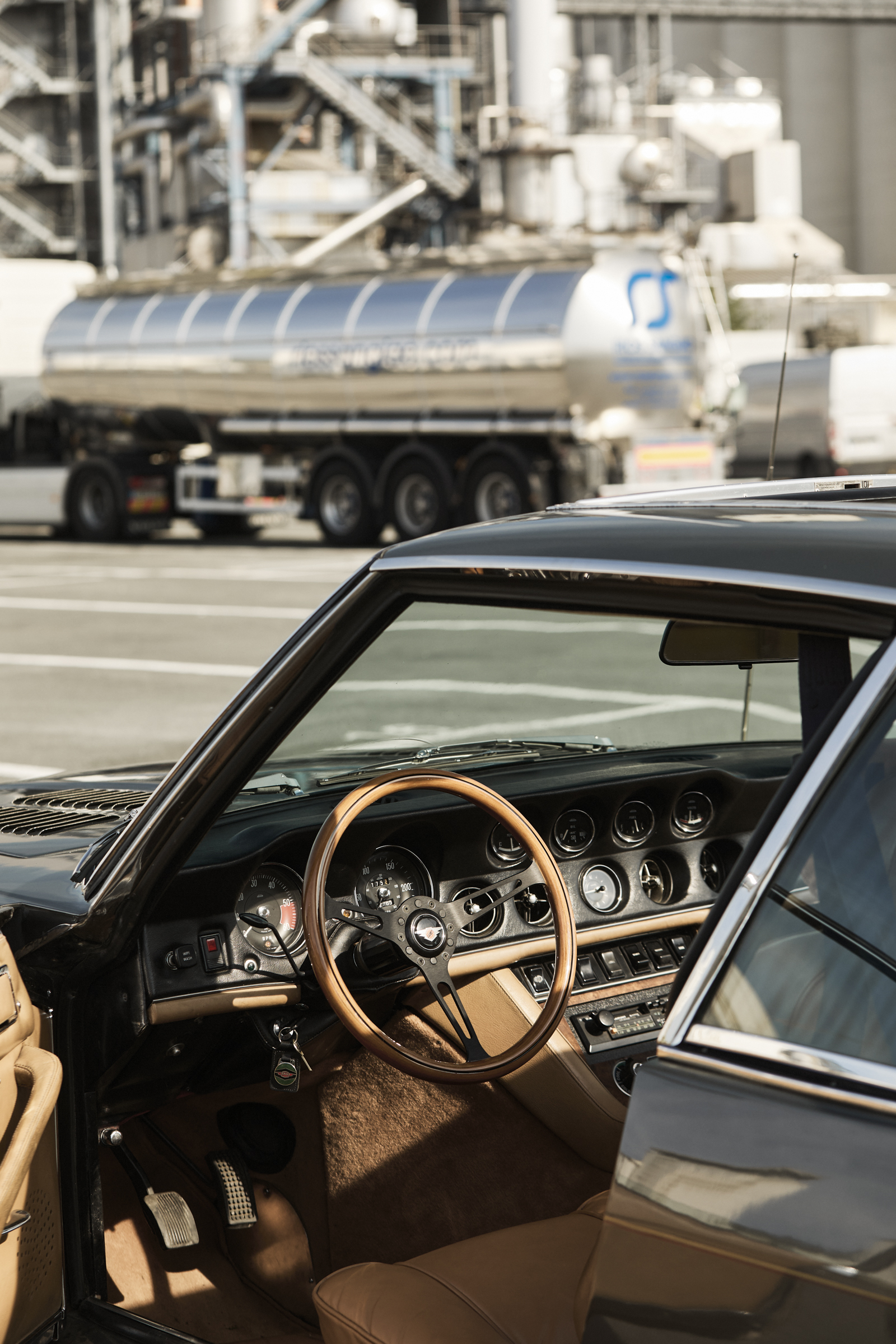
Today, the Interceptor is a sought-after GT, a grand tourer built for long distances and high-end travel. Rare, it won over Thierry Chave, an epicurean gentleman who has made cars his whole life. And as is often the case, it all starts with a childhood memory.
Thierry first owned the Interceptor as a Dinky Toys model, in lemon yellow. He always loved it, that little car. So when the chance came, he didn't hesitate.
Imagine the rumble of that huge 7,212 cc lump when, happy as a kid, he turns the key. The spring sun, already hot for the season, sets the flawless bodywork ablaze with a thousand glints.
And off we go!
Driven by the V8, the two tons glide over the asphalt, heading for the riverbanks, the industrial port of Bordeaux, and the winding roads made for the engine's rumble.
“The moment you press the throttle, the surge is instant, a giant hand pushing you toward the horizon, with force and vigor, but no brutality.”
The sound recalls, and for good reason, the golden age of Uncle Sam's finest muscle cars. Spellbinding.
The chassis is rigorous, the very comfortable suspension soaks up the road's flaws with a smoothness worthy of the best English limousines. The trunk, of generous size, is an invitation to travel.
Excerpt from the article "Jensen Interceptor Mk III" by David Marvier found in ISSUE 008 of The Petrolicious Post.
Read the full story now available on Petrolicious.com.
#Jensen #JensenInterceptor #DriveTastefully #Petrolicious
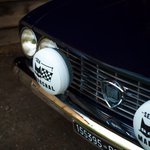
Todd and Monica Brown have spent 25 years finding small producers for 109 Cheese & Wine. On Mondays, their day off, they go looking for more in a 1970 Lancia Flavia that covered most of its 33,000 miles in Rome. This drive took them to Churchtown Dairy, where Mel of McGrath Cheese walked them through the creamery and the caves under the hill. A calf about half an hour old was waiting for them in the barn.
Directed by: Jacob Hopkins
Read the article: petrolicious.com/blogs/artic…
Watch film: petrolicious.com/blogs/films…
Drive Tastefully®
#drivetastefully #petrolicious
The test came in the darkest hour of the night. Somewhere in the black middle of Nebraska, a Mercedes SUV struck a deer.
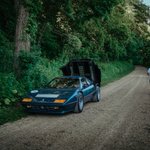
Sutton Morris and Michael Torres could not swerve to avoid it, not while towing such precious cargo: a 1977 Ferrari 512 BB, due at the start of the Overcrest Rally in the Driftless Area of the Midwest.
The SUV was heavily wounded and leaking coolant, but not down. They limped it to a nearby Walmart parking lot, where Sutton bought bungee cords and fabric from the store and jerry-rigged the turbocharger cooling system in place. Sleep be damned, the fix stuck, and they trudged on.
For the Morris Motors crew, the ordeal had begun with a dream: purchase a 512 BB and prep it for Overcrest, not just so the owner, Tony, could fulfill a lifelong dream of owning one, but so the shop could care for and enjoy the car along the way.
“If this was a show car, it would not have come,” said Michael Morris. “We wanted this particular example because it’s got patina; it has been used. And that is also why it was purchased by Tony, because it can continue to be used and enjoyed.”
The car completed the entire course of the two-day rally and even put down a respectable time at the drag strip at the finish. By then it was covered in dust and grime, the true mark of a flagbearer of the spirit of driving and adventure.
Read the full story on Petrolicious.
bit.ly/4z7ELQI
Words and Photography by: Vijay Sankar Anil
#Ferrari #Ferrari512BB #512BB #OvercrestRally #MorrisMotors #Petrolicious
Three months ago Magnus Walker let 18 cars go. He kept 16 and, without looking, bought two more.
He calls it thinning the herd. “I kept what I was really connected to,” he says. The rest had done their job.
What came in was a 356, a car he was not hunting.
“I've always said I'm not cool enough to own a 356.”
The car was 15 miles away, on jack stands since 2019. The day he picked it up, the widow of its longtime owner came along. She had not seen the car since her husband died.
“It was this emotional full circle of the car being passed to the next custodian,” Magnus says.
He had it running within a day or two of tinkering. The engine turned out to be original to the car. The family never knew.
The digging is most of the point for him. The story usually is.
On the first drive, somewhere over Mulholland, the plan to pull the bumpers and hot rod the thing quietly died.
“I'm just going to leave it as is. I'm not going to touch anything on it.”
“I'm not in the space now where I'm all about outright performance and getting from A to B as quickly as possible. What's motivating me is the opposite, returning to basics.”
Photography by: Nicholas Coleman
Read the full story on Petrolicious.com
#porsche356 #drivetastefully #petrolicious
“The first feeling you get when walking into the facility was how personal the company felt.”
In 1939, Alois Ruf Sr. started the business as a small workshop and repair shop in Pfaffenhausen. After the war, his wife started the gas station next door.
“She ran the gas station while my grandfather ran the workshop and my dad, as a young boy would fuel cars with his older brother,” Aloisa Ruf says.
Alois Ruf Jr. took over the business in 1974 following the death of his father. By then, the workshop was already servicing and working on Porsches. In 1975, the first Porsche to be tuned by Ruf came to life.
Ruf went on to be approved as a manufacturer in 1982. Then came the Yellowbird CTR, the car that would push the brand to global prominence after recording 211 mph at Volkswagen’s Ehra-Lessien test track in 1987.
Today, three generations of the Ruf family are involved in the company.
“In the time I was at the facility, Alois Ruf Jr. was walking about with customers and interacting with the staff on one side while Estonia was busy on the other side. Aloisa, while showing me across the workshop still chatted to the staff and inspected the work going on.”
Ruf joined the tuning world as one of the pioneers, went onto become a manufacturer and forged their own path but they have not given up on their modest beginnings and are still based in the outskirts of Pfaffenhausen, 87 years later.
Read the full story on Petrolicious.com.
Photography by: Jathu Thillai
#RUF #RUFAutomobile #Yellowbird #RUFCTR #Petrolicious
The motor is an XK, twin-cam straight six with shims under the buckets and no variable anything. Jaguar chased displacement with stroke instead of bore. Long-stroke torque motor. Doesn't rev to the moon and doesn't need to.
Dual-spark race versions were making 400 on race gas years ago. This one is around 300 in a car that weighs about what a '71 911 weighs. Momentum car until you get back on the throttle.
The chassis is why it can take that. Monocoque with a trellis subframe bolted onto the front, discs on all four corners in the late '50s, independent rear. Nic puts it next to what the British were doing in aviation then, the same run that became the E-type.
People his age don't care about Jaguar, he says. Slept on. You put somebody in one and they walk away impressed.
Watch the film and read the full story on Petrolicious.com.
Photography by: Paolo Lekai
#JaguarDType #DType #Petrolicious
On a brisk September afternoon, we walked a pavement lost to history. What once saw Dan Gurney piloting his Lola T70 to Can-Am victory in 1966, now only sees golf carts. But for at least one weekend they close down the driving range and the history of Bridgehampton Race Circuit is celebrated in full force. This is The Bridge X.
Directed by: Jacob Hopkins
#drivetastefully #petrolicious
Nic Cuarta knew the D-Type before he knew the man who owned it.
Years ago, while cutting his teeth at his family’s vintage Jaguar shop in Florida, the car came through the door. Nic never worked on it. He just remembers standing there thinking how cool it was. Years later, after starting Beeline in Santa Cruz, the same D-Type turned up again, this time only a couple of blocks away. Today, its owner Jay is a mentor and advisor to Nic, and the D-Type has become a familiar presence at the shop.
It’s a replica, built from period Jaguar components and later versions of what Jaguar engineered at the time. An XK straight-six makes around 300 horsepower in a car weighing roughly as much as a ’71 911. There’s a monocoque chassis, a trellis subframe up front, disc brakes at all four corners, Webers that still need sorting, and very little separating its occupants from any of it.
The headers sit directly in front of the passenger. The exhaust exits on the same side. Intake roar, backfires on the overrun, a sport-bike-sized windscreen and sidewalls working underneath you. Nic has put people in the passenger seat who wanted out after three miles.
But on Highway One, with fog coming off the Pacific before the road disappears into the redwoods, it starts to make sense.
“It’s way more fun to go slow and technical than it is fast and perhaps heroic,” Nic says. “You’re behind a sport bike windscreen. It’s motorcycle loud. You’re in the environment.”
Directed by: Paolo Lekai
Watch film: petrolicious.com/blogs/films…
Read article: petrolicious.com/blogs/artic…
Drive Tastefully®
#drivetastefully #petrolicious #jaguardtype
Before Quattro, before the R8, Audi’s motorsport lineage was being written by the Silver Arrows.
In the 1930s, Auto Union and Mercedes-Benz fought speed-record battles on Europe’s roads and Grand Prix battles on its circuits. Ferdinand Porsche conceived the sixteen-cylinder Type 52 in 1933. Two years later, Hans Stuck drove the streamlined Auto Union Lucca to 326.975 km/h, or 202.57 mph, on a stretch of Italian autostrada, beating Mercedes-Benz in the process.
And then there was Tazio Nuvolari.
In 1935, driving an outdated Alfa Romeo, Nuvolari defeated the full factory strength of Auto Union and Mercedes-Benz at the German Grand Prix in front of 300,000 spectators. Three years later, he joined Auto Union himself, replacing Bernd Rosemeyer and mastering the mid-engined Silver Arrows that most of his contemporaries could not tame.
Nearly ninety years later, Audi has been returning to that era. The Type 52 was finally built from Ferdinand Porsche’s original plans. The Lucca was resurrected by Audi Tradition. And now its newest supercar carries the Nuvolari name.
Audi could have simply built another fast car. Instead, it went digging through its own history.
Read the full story on Petrolicious.
bit.ly/4AbHwC3
There's a pond behind Paco's house in Westport, Connecticut, with a frog in it named Green Lips the Third. He trained it. He stands at the edge of the water calling ribbit, ribbit until something moves in the vegetation, and out it comes, every time. The original Green Lips lives across the yard. It's a Jaguar XK 120, British Racing Green over a biscuit interior, and head on, low and wide with those two big headlights, it really does look like a frog.
Paco is close to 80 now. He's been on the same three acres since 1969, in a house people keep mistaking for a Frank Lloyd Wright. He designed it himself. For 40 years he ran an art gallery and frame shop in town, which is why people around Westport still greet him with "Hey, Frames." The barn out back once held 18 cars. "Thoroughbreds," he calls them. Divorces thinned the herd. "Every time I got divorced, I lost a Ferrari, a Porsche," he says. He sets the terms early, before anybody can aim a question at him: "This is not about a car. It's about a man and his cars. A little weathered, a little scratched. But you got to keep on driving, right?"
The property runs on its own logic. The sculptures scattered around the yard he calls installations. Inside, a Manhattan manhole cover that found its way into the back of his VW Rabbit on 57th Street one night, an event he files under drunken escapades, sits where furniture should be. The rear of the Rabbit scraped the whole way back to Connecticut. His kids' childhood shoes are nailed along a beam in the studio, every pair. Upstairs there's a bed built out of a 1963 Corvette, and every divorce settlement he's signed carried one non-negotiable term: the Corvette bed stays. He's kept a journal every day since 1963, sixty-some volumes of weather and pushup counts. "Everything has a meaning," he says, and then he says it again for emphasis.
Photography by: Jacob Hopkins
Watch Film: petrolicious.com/blogs/films…
This is a Diablo GT, number 67 of 80 built in 1999, all of them for Europe. Wide carbon bodywork over a wider track, and a wing you could rest a mug on. It never got US certification. The regular Diablo made it to America. The GT stayed a rumor here, which makes one burbling down a shaded two-lane with a plate on it a strange thing to witness.
The engine does all the talking out here. It's 6.0 liters now, grown from the SV's 5.7, breathing through the the engine lid. 575 horsepower at 7,300 rpm through a 5-speed, with nothing driving the front wheels. As intended. Lamborghini had four-wheel drive sitting on the shelf, the VT had run it for years, and for the GT they left it off on purpose. Nothing vectors, nothing intervenes. Whatever the right foot decides, the rear tires answer for.
Underneath the carbon airbox it's still the 60-degree V12 Giotto Bizzarrini drew in 1963 for Lamborghini's first car. They stretched it and turned it up for damn near half a century and never started over, not until the design finally retired in 2010. What's working its way up this road is the old engine late in life, getting everything off its chest.
Watch Film: petrolicious.com/blogs/films…
By the end of 1929, the Cummins Engine Company was nearly finished. W.G. Irwin had the dissolution paperwork written up. Clessie Cummins responded by putting a Model U marine diesel into a Packard limousine and driving it to his boss’s house on Christmas Day. Irwin never filed the paperwork.
Then Clessie went racing.
In 1930, a diesel-powered Packard roadster went to Daytona Beach and set a speed record. A year later, Clessie returned with the No. 8 and pushed the diesel record to 100.755 mph, the first oil-burner of any kind through 100.
Three months later, the same car was at Indianapolis.
It was the slowest thing on the track, which turned out to be exactly the point. While the fast cars wore their tires to the nubs and ducked in for fuel, the white No. 8 kept lapping at its own unbothered pace.
Five hours and 48 minutes. 200 laps. 13th in a field of 40. 31 gallons of furnace oil that cost $1.40. Not a single pit stop.
The car didn’t retire so much as barnstorm.
It crossed the country as cargo behind a Cummins truck that broke the gasoline coast-to-coast record on $11.22 of fuel. On the brakeless drop down Cajon Pass, 20,000 pounds loose on the grade, Clessie got the idea for the engine brake that now rides down every mountain in America.
Originally published in Issue 007 of The Petrolicious Post. Read the full story on Petrolicious.
Subscribe to The Petrolicious Post: petrolicious.com/collections…
His father had already chosen his future. He was expected to take over the family business. There was an interview arranged to make it official.
He never showed up.
Dinner got quiet after that. His father stopped talking. She cried when he bought the car. He missed her entrance ceremony because he was off somewhere racing, and eventually she stopped staying awake to wait for him.
Everyone else became respectable.
The man never existed.
He’s a Japanese rally driver from the 1960s who came out of the head of Polish artist Pawel Kalinowski, and the only place his memory exists is in ultraviolet paint on the shell of a Porsche 356 that will never live again.
Pawel Kalinowski calls the installation Ghost Layer.
Under normal light, eleven jars sit inside the ruined 356. Sand, rust, soil, ash, a bolt, broken glass, a torn corner of a map, a family photograph with the faces blurred out, a child’s drawing.
Then the lights change.
Under ultraviolet, the jars disappear and eleven sentences emerge from the bodywork.
My father had already chosen my future.
She cried when I bought the car.
Everyone else became respectable.
Another night choosing this over home.
Silence after the engine stopped.
That last one is the sentence Pawel stops on.
The driver isn't a man who chose rallying over his family once. He's a man who chose it again on Tuesday, and again the Tuesday after that, understanding the whole time what it was costing him.
Whether the car ruined his life is a question Pawel answers twice.
“Probably.”
Then, a beat later:
“No.”
A car doesn't do that to anyone. The person does it, and the car is just what he reaches for.
The word Pawel eventually finds for all of this is transience. Things come, things go, and the things that mattered most to somebody eventually go with them.
“The objects themselves mean nothing,” he wrote, “until we decide they do.”
Read the full story on Petrolicious.com.
Photography:
@przemek_borowczynski
@eugene_tka4enko
At 14, Jim Glass talked his mother into signing a permission slip so he could go racing.
He grew up in a racing family in Kingston, New York. Decades later, he found this 1967 Camaro, a real period Trans-Am car that had spent years sitting under white Rustoleum. Beneath it was the car Jocko Maggiacomo raced in 1972.
Glass brought it back with an original DZ302, factory-book Corvette brakes, and a fresh set of period-correct graphics from Maggiacomo himself, 40 years after he had first lettered it.
At Lime Rock, there are no assists. “You have to drive the car,” Glass says.
Watch Film:
petrolicious.com/blogs/films…
Then join us and Lime Rock Park for Historic Festival 44, September 4–7.
Tickets and information:
limerock.com/events/historic…
Drive Tastefully®
#drivetastefully #petrolicious #LimeRockHistoricFestival #TransAm #Camaro
Only two Mercedes-Benz C292s were ever built. Neither got the chance to race.
At Ultrace Düsseldorf, writer and photographer Jathu Thillai found one sitting alongside the cars that came before it, the C9 and C11, and began tracing a complicated period in Mercedes-Benz motorsport history.
“Having been lucky enough to see the C9 and C11 in action at historic racing and at Goodwood Festival of Speed, my eyes and attention went directly to the C292.”
Mercedes had been absent from motorsport for more than 30 years following the 1955 Le Mans tragedy when the success of Peter Sauber’s C9 helped coax the company back. The C9 and C11 went on to dominate the World Sportscar Championship, but their successor, the C291, struggled.
The C292 was supposed to put things right for 1992. Rising costs and a championship falling apart meant Mercedes withdrew before the car even went testing.
“Standing in front of one of just two cars ever built was surreal to say the least.”
Elsewhere at Ultrace were more pieces of that history: the 1937 W125, a CLK GTR Straßenversion and the CLR, whose disastrous 1999 Le Mans would once again bring Mercedes’ sports car racing ambitions to an abrupt end.
By Friday evening, the writer found himself looking at decades of Mercedes racing history gathered under one roof and wondering where it might go next.
“For a company steeped in motoring and motorsports, it will always be difficult to stay out of motorsport, especially sports car racing.”
“I wondered about this as I clinked glasses with a few of the HWA staff as we chatted about the future of Mercedes in racing while admiring the past parked right next to us.”
Read the full story on Petrolicious.com.
It’s noon on Thursday, May 4, and I’ve just finished loading my 997.1 Carrera S for a long weekend of driving and camping with friends at the 2026 DWA Camping While Awesome Rally. First stop: Cayucos, California, by way of Big Sur and the Pacific Coast Highway.
Somewhere between a road trip and summer camp, DWA! events are built around long days on great roads, late nights around dinner tables, and the kinds of conversations that only happen after hours behind the wheel together.
Our first day took us through Santa Margarita, Pozo, and the Carrizo Plains before eventually crossing Highway 58 toward California’s Central Valley.
The morning pace was relaxed. At least at first.
A few hours in, I found myself tucked in behind Art’s newly finished K24-powered E30, followed by a pair of 993s and a tiny Peugeot dancing in the mirrors behind us. The roads emptied. The foothills approached. The relaxed rhythm of the morning disappeared instantly.
Left. Right. Crest. Compression.
The kind of road that pulls your entire focus through the windshield.
Adrenaline narrowed my vision. Every braking point, every camber change, every corner exit became crystal clear. The 997 came alive beneath me. Crisp downshifts. Steering feeding information through my fingertips. The nose settling into each turn before seemingly endless grip carried me out the other side.
I had entered driving nirvana.
The following days brought more of the same: incredible roads, late-night conversations, dirt driving, and new friendships formed. Even now, I can still picture the faded yellow lines of Highway 58 rushing toward the windshield. The smell of dry grass. The heat rising off the pavement. The sound of Art’s K24.
Thank you to Lane, Warren, and Art for creating something that continues to bring enthusiasts together in such a genuine way. And thank you to V6 Ranch in Parkfield, Ca for hosting us.
If you ever have the opportunity to join a DWA rally, take it.
Photography by: Paolo Lekai
Pawel Kalinowski took a Porsche 356 his friend had given up on and painted a life onto it. Eleven objects went into eleven sealed jars and into the car. Eleven sentences went onto the bodywork in ultraviolet paint, invisible until the light changes.
A device his friend built out of a box of parts runs the room on a loop, forty seconds of soft ambient light and twenty seconds of black light, and the two never show you the same car. Under one you get the jars. Under the other the jars vanish and a Japanese rally driver from the 1960s starts talking about the interview he never showed up for.
Directed By: Pawel Kalinowski
Watch Film: petrolicious.com/blogs/films…