

Penn Med student group focused on healthcare management, entrepreneurship, and technology. Check out our podcast: https://xitter.cf/t.co/kiK42KPMWh…
Philadelphia, PA
Joined March 2015
- Tweets162
- Following256
- Followers274
- Likes76




Penn HealthX retweeted

Excited for the annual @PennHealthX Conference - "Clinic of the Future" featuring a star lineup including our Keynote speaker @docrodwong !
Will be tweeting about some🔑learnings about some of the healthcare⚕️delivery innovations in the works.
🧵(1/n)

Penn HealthX retweeted

Great to have @PennMedicine @PennHealthX back in person this year!
Many thanks to Dr Rod Wong for kicking us off with an opening keynote and supporting @PennMedicine students!

Penn HealthX retweeted
This rings quite true. It's a delicate balance between data and real world experience. Programs like @PennHealthX help cut through inefficiencies as MDs get cross-trained w/ business knowhow while @PCASOLab crosstrains engineers and MDs

Do physicians make good health tech founders?
Having lived this journey and also observed health tech startups started by all kinds of folks, I’ve come to appreciate the answer is nuanced.
✅ADVANTAGES I’ve seen with physician entrepreneurs:
👩⚕️ Easier access to healthcare stakeholders to validate ideas or acquire early reference customers.
Not only do you already have a network, but also clinicians or administrators who don’t know you will trust you more than a healthcare outsider.
Even when I was just a 4th year med student starting SeamlessMD, I had physician mentors who made intros for me or had folks more willing to take my cold-call because I was “in the community”.
🏥 Deep understanding of day-to-day clinical workflows, medical lingo and healthcare dynamics.
Acquiring this knowledge can extend the time it takes an outsider to truly understand the problem and arrive at a viable solution that fits the clinical workflow.
When we were doing initial customer discovery for our company, I easily understood the feedback from physicians and administrators. But with all the clinical lingo thrown around, I can see why it would be more difficult for an outsider to navigate, especially in the early stages.
🤓 Unique subject matter expertise in a clinical area.
Physicians may have deep insights into a very specific area of medicine that took years to develop. Only you and a handful of other people like you could bring this specific innovation into the world.
❌ DISADVANTAGES I’ve seen with physician entrepreneurs:
🔬 Over-index on the value of research for driving adoption.
Time can be spent trying to publish a 50-patient feasibility research study when in the same timeframe you could have obtained a 500-patient sample with a quality improvement approach instead.
Physicians can be misguided into thinking that they are one perfect RCT away from widespread adoption. Solid clinical evidence may get a foot in the door, but social proof, marketing, sales, customer success and more is often far more impactful on adoption.
💡 Give up on ideas too quickly.
With all the barriers physicians have experienced trying to adopt new innovations, they can dismiss the potential of ideas too quickly: “that’s never going to work”. They may spend too long looking for the “perfect” idea. Instead, they need to learn to iterate an idea to its full potential.
💰 Difficulty making effective tradeoffs between the original vision and business viability.
Due to perverse incentives, solutions that would help the healthcare system the most tend to face more obstacles to adoption. Entrepreneurs may have to modify their vision to make the economics of the business work.
For example, you may be a family physician who built a solution originally for primary care, but discover that only specialists are willing to pay you enough for your business to be viable. Non-physicians may be more willing to steer away from the original vision to better unit economics.
What other advantages or disadvantages would you add?

Penn HealthX retweeted

A decade of medicine, business & technology at @PennHealthX ft. @JMSoegaard, @DanielMOConnor, Diane Dao, @docrodwong, @SuziRoseMD, @AmBeschloss & Tiffany Yeh @PennMedicine bit.ly/3nnaIp7

Penn HealthX retweeted

@PennHealthX, a club founded by three students at @PennMedicine, explores innovation around areas of health, business, and technology. Now in its 10th year, PennHealthX continues to shift the paradigm of the medical career track.
bit.ly/410xPU3
(1/3) Last year, the PennHealthX SDOH Accelerator was founded to pair startups focused on social determinants of health with pro-bono support from UPenn medical students. Their work with startups around the country was recently featured in the Penn Medicine magazine.
#DrJulianHarris @ConcertoCare talking about his career path and offering valuable insight into navigating careers in healthcare, health equity, and tech for medical trainees #2022HealthEquityForum

Keynote with Dr. Julian Harris is streaming NOW! Tune in for the last session of today's events #2022HealthEquityForum

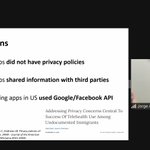
How can we build trustworthy and equitable digital health tools? @translatemed #2022HealthEquityForum

Our third workshop is streaming NOW. Join us to hear Dr. Jorge Rodriguez @translatedmed discuss digital health tools and health equity.

#2022HealthEquityForum
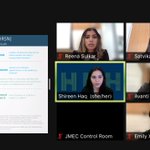
Thanks to #ShireenHaq for a really engaging talk - glimpse at attendees discussing the role of payors like @Humana in promoting and shaping health equity across contexts

Happening now! Hear about the intersection of health equity and value based care with #ShireenHaq of Humana

Our second workshop with Shireen Haq, Senior Population Health Strategiest @Humana is streaming NOW. Tune in.

Kendra McDow MD MPH and Elise Bowman MSW underscoring the importance of school-based engagement, listening groups, and trust in healthcare in deploying successful community health programs #2022HealthEquityForum


#2022HealthEquityForum first workshop is streaming right NOW. Baltimore vs COVID-19: A Health Equity Approach ft. Kendra McDow, former CMO for @cityofbaltimore and Elise Bowman, health director @cityofbaltimore

Excited to kickstart our first workshop of the day with @KMcDowMD, Former Chief Medical Officer of the @CityofBaltimore
