

A Computing, Inference, and Learning Lab at Penn School of Medicine Software created by PennCIL: PDA website: https://xitter.cf/t.co/MSf9hEdMyM Xmeta website: https://xitter.cf/t.co/0CEvjguG3D
Joined November 2019
- Tweets39
- Following41
- Followers82
- Likes8


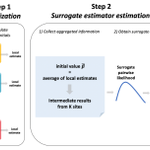

4/5 Explore the details and try it out:
📄 Manuscript: arxiv.org/abs/2411.12674
📦 R package: cran.r-project.org/web/packa…
🌐 Shiny web app: origamiplot.shinyapps.io/ori…
1
163
1/6 Our new JAMA Network Open, Body Mass Index and Postacute Sequelae of SARS-CoV-2 Infection in Children and Young Adults, is online on October 28, 2024!
Read more at: [jamanetwork.com/journals/jam…]

1
107
5/6 compared with peers with a healthy BMI, there was a 25.4% increased risk of PASC among those with obesity or severe obesity had a 25.4%, or and a 42.1% increased incidence risk of PASC among those with severe obesity.
1
66
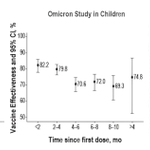
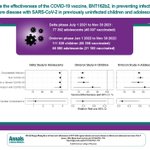
1/n Our new #AnnalsofInternalMedicine paper, Efficacy of BNT162b2 Bivalent Vaccine Against Delta and Omicron Variants in Pediatrics, is online yesterday!
Read more: [acpjournals.org/doi/full/10.…] #PediatricVaccineStudy #COVID19Research #PublicHealth #AnnalsofInternalMedicine

13/n In addition to adjusting for a rich set of confounding variables and under-reported vaccination status in our proposed method, we performed negative control experiments to further mitigate potential residual bias.
148
12/n Our study was the first to rigorously address the under-reporting issue in vaccination status by health systems in the USA.
143
11/n Thus, the “vaccinated” status in the data was likely to be true, whereas “unvaccinated” status in the data could be truly vaccinated. To address the potential bias from the under-reporting issue, we developed and employed a novel comparative effectiveness research method.
126
10/n A key issue in EHR data is the under-reported vaccination status that can lead to biased vaccine effectiveness estimates. Children or adolescents could get vaccinated from various places, whereas only some of these places share the vaccination data with the health system.
120
9/n The variables include vaccination status, COVID-19 outcomes (documented infection, severe illness, and ICU admission), cardiac complications, healthcare utilization (i.e., negative COVID-19 tests), pediatric comorbidity indicator, and preexisting chronic conditions.
123
8/n The study covered a diverse and representative pediatric population from primary care, specialty care, emergency department (ED), testing center, and inpatient settings. By using electronic health records data from PEDSnet, we defined a rich set of variables for the analysis.
123
7/n Our study involves large USA pediatric cohorts totaling 250,000 children and adolescents from PEDSnet, a national network of U.S. pediatric health systems.
112
