Professor, (data) scientist, author, educator. Living the life of the mind, data and Arete. That said, how you perceive me is largely up to you/r brain.
Center for Data Science, NYU
Joined October 2010
- Tweets4.3K
- Following3.6K
- Followers13.6K
- Likes19.3K


Pascal Wallisch retweeted

The year is 2026. San Francisco tells the Vatican it has the power of God to put a soul in a computer program.
The last Crusade begins.
🤖 Made with AI
Likely true

AI as the killer of open source. Open source software is great because it means you don't have to write everything yourself from scratch. Saves a lot of time. For humans, that is. AIs, however, can write an entire new framework from scratch in a few hours, so this doesn't matter so much. The cost of open source is that every attacker knows the code they want to attack, and they will eventually find exploits. Even in the language itself (e.g. php). The same logic applies to languages as to frameworks. We use Python because it is easy for humans. There is no need to use Python from an AI perspective. Just write a new language with the capabilities you need for a given service and use that. It will have no public code, so there is nothing to learn exploits for. In fact, maybe you should write your own operating system too. The general solution to these attacks is to avoid all open source code entirely. Ironic, because open source code gave birth to AI. It's the more general version of StackOverflow leading to AI leading to no StackOverflow.
I should teach a whole class on "the perils of averaging", across conditions, across time, etc. - we would never run out of material. Particularly in neuroscience, but also beyond.

1/ We discovered something totally unexpected about the neural structure of consciousness that overturns decades of thinking on its biological basis and brings us significantly closer to the recipe for generating conscious awareness.
New preprint: biorxiv.org/content/10.64898… (led by @HesseJanis, with @FrankLanfranchi, @_conor_mcgrory, @Yuelin_Shi, and @EngelTatiana)

This has been my experience as well


Been saying that for quite a while, and acted on it myself @NathanHess


Pascal Wallisch retweeted

This is the least surprising graph in the world if you understand how gradient descent works.

Things are about to get interesting

I've been prototyping an automated peer review project. With current models you get human level peer review for about $0.10 of tokens. For $5 you can rederive every result, check every statistical inference, and audit every paper cited in both directions.
There are about 100m papers in the scientific corpus. Most are not important. Many are sloppy. For structural reasons it's essentially impossible to change published work, even to correct a typo.
For $500m today you can thoroughly audit every paper ever written. Every p-hacked result, every plagiarist, every fabrication, every citation club, everything.
I don't have $500m so instead I build a tree, focusing on the 1% of papers that carry 99% of the signal, doing a cheap first pass looking for obvious problems. I can find 90% of the nonsense for a few hundred dollars of tokens.
Any guesses where the biggest surprises will be found?

Pascal Wallisch retweeted

Truly, truly fascinating that if you just look at women who have chosen to be mothers at all, there is effectively no fertility crisis; almost all mothers everywhere choose to have more than 2.1 kids on average.
The crisis is in the growing ranks of unmarried, childless women.


Pascal Wallisch retweeted

We are publishing an update to OpenAI problem #109 Integer multiplication) with another substantial further tightening:
κ = 2⁻⁵⁹ (from OpenAI’s original κ = 2⁻¹⁸²)
Approximately 500 thousand fold improvement over our previous result and a 2¹²³ fold improvement over the original OAI result.
The latest redesigned the finite network to share intermediate computations and scratch space, then tightened the recursion and Gaussian estimates.

We are publishing an update to OpenAI Problem #109 (integer multiplication) with a substantial further tightening:
T(n) = O(n (log n)^(1 − κ)),
With κ = 2⁻⁷⁸ (tightened from κ = 2⁻¹⁸²)
Approximately 570 million fold improvement over our previous result and a 2¹⁰⁴ fold improvement over original OAI result.
Our earlier ceiling applied to a cubic bottleneck in the network. The new witness scales quadratically; we haven't established a new ceiling.
The key was using nonadjacent axis swaps to route around the cubic bottleneck. The original manuscript already supported nonadjacent axis swaps. Using them directly reduces layout routing from O(d²) to O(d) swaps.
Pascal Wallisch retweeted
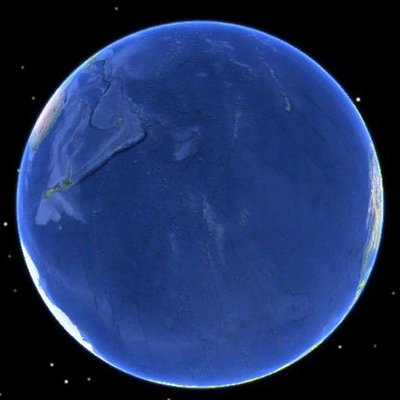
Believe it or not, America's 5 largest cities lie perfectly on a 4th-degree polynomial

A lot of human math is elegant, beautiful. A lot of people think this is a property of math itself. This makes it look like it is just a bias. A lot of the recently proven math is nasty, ugly. Not n(log n) type stuff. "Vile", jagged.
But proven.


Pascal Wallisch retweeted

i asked GPT 6 Pro and Fable 5.1 to rank all discoveries in the last three years
🔵 for Human discovered
🔴 for AI discovered (before October 6th)
🟢 for AI discovered from OpenAI/math repo
81% of them have been released today. wtf

Pascal Wallisch retweeted

mathematicians: frontier labs need to publish real proofs so we can check them, not blog posts
OpenAI: fine. here’s 722 papers
🤖 Made with AI


We’re releasing a broad range of new mathematical results produced by an internal frontier model.
We’ve been consulting with the independent Advisory Group on Mathematics and Artificial Intelligence at the Institute for Advanced Study, and we have drawn on their advice and public recommendations to inform how we release these results.
github.com/openai/math

It's all matmul at the end of the day, so any advance in shaving off time it takes to do matmul is highly consequential, be it by hardware, software, or algorithms.

OpenAI have proven that matrix multiplication can be done in O(n^2.25) operations, which is a massive improvement. It is especially concerning because these AIs themselves run on matrix algebra.
The previous record was O(n^2.37), which had barely moved from O(n^2.4) in 1990.
OpenAI blew it away.
But... it is a nonconstructive proof. No algorithm was found, only a proof that it must exist.

It's a new world now. 2026-2051 will be the age of agentic AI.

OpenAI is downplaying this for PR reasons. If you’re a mathematician, you must feel like a nuclear bomb hit, and you’re at ground zero.
Reasoning models are two years-old. In that time they went from incapable of basic arithmetic to solving problems humans couldn’t solve for decades.
Math is only the beginning. AI will revolutionize the entirety of the human scientific endeavor. Most of us don’t appreciate what that means.
What a time to be alive!