Parasite: An international open-access, peer-reviewed, online journal publishing parasitology. Tweets from Editor, Jean-Lou Justine. 2025 Impact Factor: 2.8

Paris, France
Joined December 2012
▶️ All our papers since 1⃣9⃣2⃣3⃣ (that's 9⃣7⃣years!) are #openaccess and free to download 😀 ▶️ That includes "Annales de Parasitologie Humaine et Comparée" (1923-1993) and "Parasite (1994-present) ▶️ List: parasite-journal.org/compone…
12
8
3
41
Parasite - The Journal retweeted
In memory of Dr Dominique Kerboeuf, who passed away on 16 October, we highlight some of her papers published in our journal: doi.org/10.1051/parasite/201… 1/3 [2020] Effects of cholesterol content on activity of P-glycoproteins and membrane physical state, and consequences for anthelmintic resistance...
1
1
4
175
Parasite - The Journal retweeted
In memory of Dr Dominique Kerboeuf, who passed away on 16 October, we highlight some of her papers published in our journal: doi.org/10.1051/parasite/199… 2/3 [1997] Actin in spermatids and spermatozoa of Teladorsagia circumcincta and Trichostrongylus colubriformis (Nematoda, Trichostrongylida)
1
1
5
186
Parasite - The Journal retweeted
In memory of Dr Dominique Kerboeuf, who passed away on 16 October, we highlight some of her papers published in our journal: 🧪 doi.org/10.1051/parasite/200… 3/3 [2001] The life cycle of Ohbayashinema erbaevae (Nematoda, Heligmosomoidea, Heligmosomidae) in Ochotona rufescens rufescens (Ochotonidae)
3
1
7
197
In memory of Dr Dominique Kerboeuf, who passed away on 16 October, we highlight some of her papers published in our journal: doi.org/10.1051/parasite/199… 2/3 [1997] Actin in spermatids and spermatozoa of Teladorsagia circumcincta and Trichostrongylus colubriformis (Nematoda, Trichostrongylida)
1
1
5
186
In memory of Dr Dominique Kerboeuf, who passed away on 16 October, we highlight some of her papers published in our journal: doi.org/10.1051/parasite/201… 1/3 [2020] Effects of cholesterol content on activity of P-glycoproteins and membrane physical state, and consequences for anthelmintic resistance...
1
1
4
175
Now in press: Proceedings of the French Society of Parasitology Congress and 5th Franco-Maghreb Conference on Parasitology and Mycology, Marseille, France, 28–30 April 2026 Soon... parasite-journal.org/
7
173
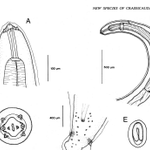
This 1990 paper... now cited in the famous blog "Parasite of the day" doi.org/10.1051/parasite/199… dailyparasite.blogspot.com/2… A new species of the genus Crassicauda from the penis of Globicephala melas...
2
10
260
Parasite - The Journal retweeted
New paper: Epidemiological and molecular insights into human lice (Anoplura: Pediculidae) in France: genetic diversity and DNA barcoding #openaccess doi.org/10.1051/parasite/202…
🤖 Made with AI
3
17
466
New paper: Epidemiological and molecular insights into human lice (Anoplura: Pediculidae) in France: genetic diversity and DNA barcoding #openaccess doi.org/10.1051/parasite/202…
🤖 Made with AI
3
17
466
Parasite - The Journal retweeted
New paper today: Epidemiological and molecular insights into human lice (Anoplura: Pediculidae) in France: genetic diversity and DNA barcoding parasite-journal.org/article…
4
16
402
Parasite - The Journal retweeted
This 2015 paper has now been viewed 𝟯𝟮,𝟬𝟬𝟬 times and cited >𝟵𝟬𝟬 times (GoogleScholar) An update on Acanthamoeba keratitis: diagnosis, pathogenesis and treatment 🔗 doi.org/10.1051/parasite/201…
🤖 Made with AI
4
8
259
Parasite - The Journal retweeted
Want to stay in touch on follow-up action on how we are adressing this issue? Take part in the SPARC final event on 4 December in Brussels! wormsparc.com/sparc-building…
This 2020 paper has now been downloaded 𝟭𝟴,𝟬𝟬𝟬 times and cited 𝟯𝟱𝟬 times (GoogleScholar): Increasing importance of anthelmintic resistance in European livestock: creation and meta-analysis of an open database doi.org/10.1051/parasite/202…
3
4
154
New paper today: Epidemiological and molecular insights into human lice (Anoplura: Pediculidae) in France: genetic diversity and DNA barcoding parasite-journal.org/article…
4
16
402
This 2015 paper has now been viewed 𝟯𝟮,𝟬𝟬𝟬 times and cited >𝟵𝟬𝟬 times (GoogleScholar) An update on Acanthamoeba keratitis: diagnosis, pathogenesis and treatment 🔗 doi.org/10.1051/parasite/201…
🤖 Made with AI
4
8
259
This 2020 paper has now been downloaded 𝟭𝟴,𝟬𝟬𝟬 times and cited 𝟯𝟱𝟬 times (GoogleScholar): Increasing importance of anthelmintic resistance in European livestock: creation and meta-analysis of an open database doi.org/10.1051/parasite/202…
🤖 Made with AI
1
1
5
294
New paper in press: Redescription, with molecular information, of Trinigyrus peregrinus (Monogenea: Dactylogyridae) from the invasive Pterygoplichthys pardalis in southern China Soon... parasite-journal.org/
4
8
256
Parasite - The Journal retweeted
Leishmaniasis in horses — an emerging infection in France? doi.org/10.1051/parasite/202… A new study reports the first documented cases of equine cutaneous leishmaniasis caused by Leishmania (Mundinia) martiniquensis in France. Three horses from different regions developed localized cutaneous lesions
🤖 Made with AI
1
8
22
476
Parasite - The Journal retweeted
New paper today: Molecular characterization of Echinococcus species causing human cystic echinococcosis in Algeria: predominance of Echinococcus granulosus sensu stricto 🇩🇿 parasite-journal.org/article… Abstract: Genotyping of cystic echinococcosis (CE) specimens enables the identification of predominant species and genotypes, yielding critical insights into disease epidemiology. Species identification is essential for the development of effective prevention and control strategies. In this context, we assessed the molecular diversity of E. granulosus sensu lato among surgically confirmed human CE cases recruited from Algerian referral hospitals. Hydatid cysts were collected from 31 patients undergoing surgery for pulmonary and/or hepatic CE in Algeria between 2022 and 2024. Hydatid fluid, cyst wall, and laminated-layer preparations were used for DNA extraction. End-point PCR coupled with Sanger sequencing, targeting the mitochondrial 12S-rrnS, nad5, and nad2 markers, was performed for species identification and genotyping, with real-time PCR (qPCR) performed in parallel. End-point PCR was successful in 29 cases (93.5%), while qPCR detected DNA of Echinococcus spp. in 30 cases (96.8%). The additional qPCR-positive sample showed late amplification but could not be assigned to a genotype because no sequence was obtained. Among the 29 molecularly characterized samples, E. granulosus sensu stricto genotype G1 was predominant and was identified in 27 samples (93.1%). One isolate was identified as E. granulosus sensu stricto genotype G3, and one as E. canadensis G6/G7. Genotype G1 and G3 cases were distributed in northern and central Algeria, while the G6/G7 isolate was detected in a patient from Tindouf, southern Algeria. These results demonstrate the predominance of E. granulosus sensu stricto genotype G1 among the molecularly characterized human cystic echinococcosis cases in this series.
5
11
439