

Independent Thinking | Crypto • AI • The Future Economy
德国
Joined April 2022
- Tweets1.1K
- Following2.1K
- Followers1.4K
- Likes1K







Pinned Tweet
What if Quant isn't missing the final piece of its tokenomics, but strategically waiting for global adoption, institutional bargaining power, and the right moment to complete it? An independent perspective on $QNT's long-term economic potential.

Solana’s Alpenglow consensus upgrade is now live on mainnet. Finality dropped from ~12.8 seconds to ~150 milliseconds, the largest consensus change since the network launched.
Faster finality is the easy part. Getting exchanges, market makers, and applications to actually treat 150ms as settlement — and reprice risk around it — is harder.
#Solana #SOL #Web3
Bitcoin reclaimed $84K and wiped out nearly $190M in shorts over 24 hours. SpaceX and Tesla have formed committees to explore a merger that would combine their holdings of more than 30,000 BTC (~$2.5B) on one balance sheet.
The distinction matters. A merger that simply stacks two existing Bitcoin positions is different from either company treating BTC as an active treasury strategy going forward.
#Bitcoin #BTC #Crypto
🧠 #Bittensor just changed its incentive model.
With eTAO, subnet owners can now adjust how rewards are distributed between miners, validators and owners.
More flexibility. Better incentive design?
Maybe.
But here's the real question:
Does this reward actual AI contributions, or simply give subnet owners more economic control?
$TAO
🤖 AI agents are becoming economic participants.
Mastercard just opened early access to machine payments.
One AI agent. Two merchants. Nine payments. One approved budget.
Here's the bigger picture:
AI doesn't just need intelligence. It needs permission to spend, a way to pay, and someone accountable when things go wrong.
What if the next great financial infrastructure opportunity isn't another blockchain, but the layer connecting them all?
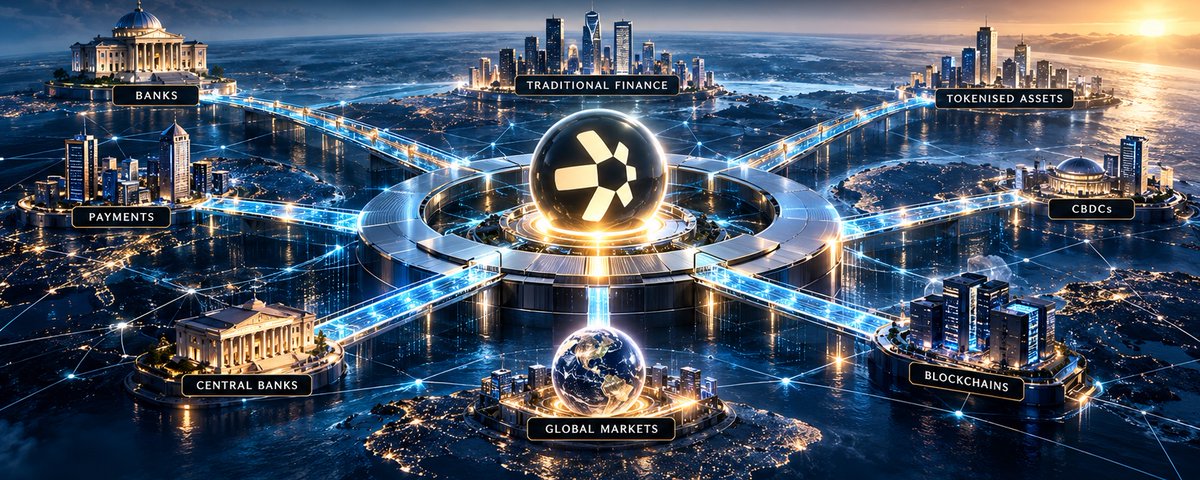
Hyperliquid isn't just building trading infrastructure.
Its policy center has submitted five proposed changes to the SEC's crypto framework.
Airdrops. Secondary trading. Token buybacks. Developer protections.
The next phase of DeFi won't be shaped by code alone.
Regulatory architecture matters too.
$HYPE
ZEC is the clearest leader of this bounce (+8–11%).
Privacy coins were heavily sold down, so this has a short-covering flavor, but the NU7 timing and ongoing privacy narrative give it more legs than a pure dead-cat.
High-beta name — works hard if BTC holds $82–83k, but will reverse faster than majors if the bounce fails.
#ZEC #Zcash #Crypto
16 public companies have now objected to tokenized versions of their shares trading on OKXICE.
Here's the uncomfortable truth about RWA:
Putting assets on a blockchain is the easy part.
Getting issuers, regulators and markets aligned is much harder.
Tokenization needs more than technology.
#rwa #web3 #Crypto
🇨🇭 Switzerland just approved its first spot #Bitcoin ETF for retail investors.
Not another #crypto ETP. A regulated investment fund.
The distinction matters.
Bitcoin is moving deeper into traditional financial infrastructure.
Institutional adoption isn't just about buying $BTC .
It's about changing the rules of access.
Ensuring bitcoin future in a quantum world requires joint efforts, happy to see this happening


Crypto lending vaults now hold over $10 billion.
Impressive growth.But here's the uncomfortable question:Are we building a better financial system, or recreating traditional finance's hidden risks with smart contracts?Decentralization doesn't automatically eliminate risk. Sometimes it just changes who carries it.
What if Quant's biggest weakness today becomes its greatest strength tomorrow? Critics see fiat payments as $QNT's Achilles' heel. But what if Quant is building institutional adoption and bargaining power before fully defining its network economics? Sometimes the smartest move isn't to maximize value capture immediately. It's to build the network that makes future value capture possible. And that sounds exactly like Quant's style: less noise, less hype, just quietly building. No endless promises. No extravagant parties. What if they've been preparing something much bigger all along?
Germany's Sparkassen started rolling out crypto trading on October 19.
$BTC, $ETH and $SOL are entering traditional banking apps.
The interesting part isn't the price.
It's distribution.
Crypto adoption doesn't always arrive through revolutionary technology.
Sometimes it arrives through your local bank.
A Solana treasury company just sold ALL its $SOL.
SkyAI went from holding over 2 million SOL to zero.
Now it's sitting on $223.8M in cash.
Here's the lesson:
A company's crypto conviction can disappear much faster than its marketing narrative.
Always distinguish blockchain adoption from corporate treasury speculation.
JPMorgan just brought JPM Coin to Ethereum mainnet.
Think about that.
One of the world's largest banks is moving tokenized deposits onto a PUBLIC blockchain.
Not just experimenting anymore.
The real question isn't whether traditional finance will adopt blockchain.
It's how much of finance will eventually move on-chain.
$ETH