

Scottsbluff, NE
Joined May 2015
- Tweets93
- Following389
- Followers167
- Likes221


Mitch Stephenson retweeted

I collaborated with @WardLabs to look at the mineral content of forages submitted. Most pasture and hay samples will not even provide half of the copper and zinc needs of a cow. Corn silage is low in manganese as well as Cu and Zn. hayandforage.com/article-314… @UNLBeef

Dry over most of Nebraska. How are your pastures looking for fall and winter grazing and how do your drought plans look for 2021? @UNLBeef
This Post is from an account that no longer exists. Learn more
Mitch Stephenson retweeted
Been getting questions about nitrate risk of grazing drought stressed annuals. Grazing can be lower risk than feeding high nitrate hays but management is key! check out these tips to reduce risk @UNLBeef
cropwatch.unl.edu/2018/reduc…
Mitch Stephenson retweeted

Aaron Berger and Dr. Mitch Stephenson discuss the value of native rangelands in Nebraska (in particular, the Sandhills) in providing plants that support pollinator species in this UNL BeefWatch Podcast (~12min): beef.unl.edu/beefwatch/2020/…
#UNLBeefExt
#UNLExtBeef

Mitch Stephenson retweeted

Excited to share the first #GrassCast maps of the 2020 grazing season for the #GreatPlains! How much #range vegetation might grow in YOUR area this summer if rain in May-Aug is above, near, or below normal? Check the maps at grasscast.unl.edu @USDAClimateHubs @DroughtCenter


Mitch Stephenson retweeted
Are your cows ready for calving? If she looks like this (BCS 4) then more energy is in order. Late gestation is the last chance to improve condition before calving and thus increase newborn health and cow breeding success. extensionpublications.unl.ed… @UNLBeef


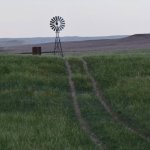
In many areas, windmills are being replaced with more reliable solar panels to power pumps for livestock water, but I still like a good windmill.


Mitch Stephenson retweeted

This means at any given point in the year, 82-85% of the US beef cattle herd is not in a feedlot. Feedlots are important to the US beef industry, but I think the complex dynamics of beef production confuse people, & many assume cattle spend their whole lives in feedlots.

Mitch Stephenson retweeted
Swath grazing is a great way to use tall warm season annuals like sorghum-sudan or pearl millet. Will increase harvest efficiency compared to grazing standing. Allocation is key. Also better than trying to bale this late beef.unl.edu/beefwatch/windr… @UNLBeef


Mitch Stephenson retweeted

There's a lot of anecdotal evidence that #covercrops help improve water infiltration rates. Now we have a study from @unlagrohort that shows it. #SoilSolutions #RunoffReducer #DroughtDefender #FightFlooding news.unl.edu/newsrooms/today…

"...transportation, power and industry, emit approximately 80 percent of total U.S. GHG emissions. The plastic-straw-light-bulb-burger discussion that is frequently touted as a meaningful climate change solution seems to be a smokescreen to sidetrack from the major polluters."

New @GHGGuru/@CompetitiveAg Blog: "No, Four Pounds of Beef Doesn’t Equal the Emissions of a Transatlantic Flight". This article clears up a recent @NewYorker article assertion around fake meat and livestock carbon emission. @tadfriend @ucdavisCAES @ucanr ghgguru.faculty.ucdavis.edu/…
Mitch Stephenson retweeted

In 1884, Botanist Charles Bessey joined the faculty. His vision of the importance of translating science to practice (forming the basis of @UNLExtension) and popularity as a teacher changed the direction of the university. He served three times as interim chancellor. #N150 #UNL


Mitch Stephenson retweeted
Short on forage for this winter? Sending cows to graze corn residue may be worth considering. Check out the listings on the crop residue exchange, there may be an option for you. @UNLBeef
cropresidueexchange.unl.edu/

Mitch Stephenson retweeted
A breakdown of the GHG emissions stats for livestock & beef production. All this can get confusing, because all the following true:
Global livestock production = 14.5% of global GHGs
Global beef production = 6% of global GHGs
US beef cattle production = 3.3% of US GHGs


"Both the international pressure and the government’s over-reaction is increasing resentment among the very people in Brazil environmentalists need to win over in order to save the Amazon: forests and ranchers." forbes.com/sites/michaelshel…