

Synthetic mycologist and cell-free synthetic biologist, adventurous home cook, lover of bad puns
Montpellier, France
Joined March 2014
- Tweets1.4K
- Following1.1K
- Followers415
- Likes4.7K







Pinned Tweet
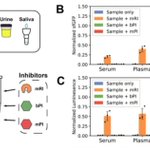
Haven't tweeted in a long time, but just thought I'd share that our paper on engineering cell-free biosensors came out in @NatureComms last Friday: nature.com/articles/s41467-0…
Also, I wrote a companion blog piece for the Nature Bioengineering site: go.nature.com/2UebIXR
Possible my favorite graphical abstract ever, and from a @CellCellPress article no less 😅🐜👨🍼🍄

In the latest issue! Neuropeptides specify and reprogram division of labor in the leafcutter ant Atta cephalotes dlvr.it/TM8GVY

89
Peter Voyvodic 🧬🍄 retweeted

How can we make medicines more accessible? Cell-free manufacturing offers a way.
New work from @PardeeLab shows multi-site implementation of cell-free systems across continents, countries, and labs...
medrxiv.org/content/10.1101/…

Peter Voyvodic 🧬🍄 retweeted

You designed binders for your favourite protein and wish there was a way to experimentally screen them within 24h w/ only a set of pipettes and a plate reader?
Check out our Cell-Free 2-Hybrid approach (CF2H)
Full post: tinyurl.com/48cz5nb6
Preprint: biorxiv.org/cgi/content/shor…

Peter Voyvodic 🧬🍄 retweeted

🚨🚨🚨This is exactly how I feel. 🚨🚨🚨
CHARLES PIERCE WRITES:
“In my life, I have watched John Kennedy talk on television about missiles in Cuba. I saw Lyndon Johnson look Richard Russell squarely in the eye and say, "And we shall overcome."
I saw Richard Nixon resign and Gerald Ford tell the Congress that our long national nightmare was over.
I saw Jimmy Carter talk about malaise and Ronald Reagan talk about a shining city on a hill. I saw George H.W. Bush deliver the eulogy for the Soviet bloc, and Bill Clinton comfort the survivors of Timothy McVeigh's madness in Oklahoma City.
I saw George W. Bush struggle to make sense of it all on September 11, 2001, and I saw Barack Obama sing 'Amazing Grace' in the wounded sanctuary of Mother Emanuel Church in Charleston, South Carolina.
"These were the presidents of my lifetime. These were not perfect men. They were not perfect presidents, god knows. Not one of them was that. But they approached the job, and they took to the podium, with all the gravitas they could muster as appropriate to the job.
They tried, at least, to reach for something in the presidency that was beyond their grasp as ordinary human beings. They were not all ennobled by the attempt, but they tried nonetheless.
"And comes now this hopeless, vicious buffoon, and the audience of equally hopeless and vicious buffoons who laughed and cheered when he made sport of a woman whose lasting memory of the trauma she suffered is the laughter of the perpetrators.
Now he comes, a man swathed in scandal, with no interest beyond what he can put in his pocket and what he can put over on a universe of suckers, and he does something like this while occupying an office that we gave him, and while endowed with a public trust that he dishonors every day he wakes up in the White House.
"The scion of a multigenerational criminal enterprise, the parameters of which we are only now beginning to comprehend. A vessel for all the worst elements of the American condition. And a cheap, soulless bully besides.
We never have had such a cheap counterfeit of a president* as currently occupies the office. We never have had a president* so completely deserving of scorn and yet so small in the office that it almost seems a waste of time and energy to summon up the requisite contempt.
"Watch how a republic dies in the empty eyes of an empty man who feels nothing but his own imaginary greatness, and who cannot find in himself the decency simply to shut up even when it is in his best interest to do so. Presidents don't have to be heroes to be good presidents.

Fungi showing they are the ultimate rulebreakers yet again 🍄🍄🍄

The only rule in biology is that there are exceptions to every rule. This is what makes biology infinitely exciting; even when you think you’ve got the complete view, the floor can drop out from underneath you at any given moment.
Case-in-point: The nucleus is the thing that makes eukaryotes...well, eukaryotes. It's the part of the cell that stores the genome, separating DNA from the cytoplasm and other organelles. (Bacteria do not have nuclei.) For decades, scientists thought that each nucleus contains one or more haploid sets of chromosomes.
But there are exceptions. Red blood cells, for example, don’t have nuclei at all. (They expel their nuclei during maturation to maximize hemoglobin concentrations.) Cells in the eye lens, too, lose their nuclei and organelles during differentiation, thus becoming transparent. And so on.
But now there is yet ANOTHER exception to this rule, and it’s one I hadn’t seen before. For a study in Science, researchers discovered that two types of pathogenic fungi that infect plants, called Sclerotinia sclerotiorum and Botrytis cinerea, have two different nuclei. And instead of storing a full set of chromosomes in each nuclei, they instead “distribute their chromosomes such that each of their nuclei contains only a subset of the haploid chromosomes.” The authors confirmed this by throwing a kitchen sink of methods at these cells; chromosome counting, DNA measurements using flow cytometry, single-nucleus PCR, and more.
Nobody knows why the fungi do this, but the scientists claim (in their discussion) that it could enable them "to respond and adapt more effectively to local environmental stresses within their extensive mycelial networks. Nuclear shuffling may facilitate the rapid generation of new genotypes, enhancing adaptability to changing environments.” There is also evidence that the chromosomes within each nucleus may briefly collide during cell division, before going back into their separate nuclei.
This is a great paper. It is simple, to the point, and challenges the status quo. It has serious potential to become a “classic” of the genre.
Link: science.org/doi/10.1126/scie…

53
Peter Voyvodic 🧬🍄 retweeted

RFK Jr. “These kids [with autism] will never play baseball.”
*My boy in the batter’s box hitting .372 stimming like an absolute demon*


Peter Voyvodic 🧬🍄 retweeted

World's first floating 3D printed protein
I chose GFP because of it's amazing beta barrel structure and how we can make it glow with the LED like it does in nature
Really happy with how this turned out, I'm going to keep this spinning 24/7 on my desk
kit from @BambulabGlobal
Peter Voyvodic 🧬🍄 retweeted

Thank you for being honest @grok xitter.cf/i/grok/share/vJLtNOTOC…
Peter Voyvodic 🧬🍄 retweeted

This brilliant cartoon clearly explains Trump’s current position on Ukraine. It is in Ukrainian with English subtitles. Share it with anyone who keeps repeating russian propaganda.
Peter Voyvodic 🧬🍄 retweeted

I am hiring 2 postdocs to work on parasitic and endosymbiotic fungi associated with Hemiptera insects!
Ideal candidates will have experience working with symbionts, dissecting insects, meta/phylogenomics and confocal/FISH techniques (or some of these). Info below.
Please RT.

Peter Voyvodic 🧬🍄 retweeted

We just published a big report at @AsimovPress about the dangers from mirrored life.
It accompanies an article that just came out in @ScienceMagazine. I hope you'll check it out!


Hey #sciencetwitter, whenever I try doing sequence alignment in @benchling, certain information gets blocked and I can't find out how to resize things vertically. Forum searching hasn't helped. Any thoughts?

1
80
Peter Voyvodic 🧬🍄 retweeted

If you really love your protein of interest commit to a tattoo @ardemp
Peter Voyvodic 🧬🍄 retweeted

Just begging for a film adaptation
Argo, but with hamster smuggling

Chinese Hamster Ovary, or CHO cells, make roughly 70 percent of all F.D.A. approved biologics sold on the market. This includes bestsellers like Humira®, used to treat Crohn’s and rheumatoid arthritis, and Keytruda®, a cancer therapy. Despite their ubiquity in the pharmaceutical industry, though, the origins of CHO cells are extremely peculiar — it involves the Chinese Civil War and a smuggler.
The story goes like this.
In autumn 1948, as China's civil war entered its climax, a truck navigated the perilous roads from Peking to Nanking. Inside, a nondescript crate held twenty Chinese hamsters — ten males and ten females — each nestled in its own wood-shaving-lined compartment.
The hamsters were a gift from Dr. H.C. Hu, of the Peking Union Medical College, to Dr. Robert Briggs Watson, an American physician working for the Rockefeller Foundation's International Health Division. Watson was retrieving the hamsters for his friend Victor Schwentker, a renowned rodent breeder in upstate New York.
Chinese scientists had been studying these hamsters, native to northern China and Mongolia, since at least the 1910s. The hamsters have short gestation periods and natural resistance to human viruses — traits that made them ideal for scientific research. Schwentker wanted to get his hands on some. But with Mao Tse-Tung's communist forces advancing, he knew that acquiring these animals would soon become impossible.
On December 6, the hamsters arrived at Watson's doorstep in Nanking, a city on the verge of evacuation. The Yangtze River was all that separated the capital from Mao's forces. Despite suffering from dysentery, Watson was preparing to flee. Against the counsel of both his Chinese colleagues and the American Embassy, he loaded the hamsters and his laboratory equipment into a station wagon on December 10 and drove eleven hours east, through the mud and rain, to Shanghai.
The hamsters left China in December 1948, aboard one of the last Pan-Am flights out of that city. Watson was later accused of "war crimes" by Mao’s Chinese Germ Warfare Commission and tried in absentia for allegedly conspiring with Chinese nationalists to carry out a biological attack. Dr. Hu faced similar charges and was sent to a detention camp for six months.
Upon arrival in San Francisco, the hamsters were shipped to Schwentker's farm in New York. After months of effort, Schwentker was able to domesticate and breed the hamsters, establishing the first colony outside of China by 1950. He then began selling and distributing the hamsters to American researchers.
In 1957, a geneticist at the University of Colorado School of Medicine named Theodore Puck began seeking robust mammalian cell lines for genetic research. He obtained a single adult female Chinese hamster, extracted an ovary cell, and cultivated it in vitro, thus creating the first CHO cell line.
Puck’s cells were both resilient and easy to work with. They grew quickly and could be maintained indefinitely, which was a big improvement for researchers struggling with short-lived mammalian cell cultures. Puck shared his CHO cells freely with the scientific community.
This is an abbreviated version, basically, of how CHO cells became such a dominant cell line for the pharmaceutical industry. We learned about this tale via an excellent 2015 article in LSF Magazine, called “A Brief History of CHO Cells.” Highly recommended. biomanufacturing.org/uploads…

Peter Voyvodic 🧬🍄 retweeted
Our mini review on Microbial Biosensors is out ! 🦠
We talk about recent achievements, discuss challenges and how the use of AI will be key in discovering and engineering new sensing modules.
enviromicro-journals.onlinel…


Peter Voyvodic 🧬🍄 retweeted

Thanks to Cassandra Maranas and Jennifer Nemhauser for working with me on this work! @UWBiology @EarlhamInst

NEWS: A new study in @NatureComms from @sarah_guiziou chronicles the timeline of genetic activity that sets in motion the development of two important features in plants - lateral roots and stomata.
okt.to/vuoJn0
@UWBiology #synbio #plantsciences

ALT Latest news: Molecular tape recorder chronicles timeline of plant gene expression