


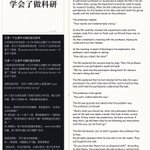

Two former members of Sabine Kastner’s lab independently tried to reproduce the 2012 Science paper, and say they found a serious analysis problem in the MATLAB code. Correcting the code eliminates the effect.
The spike analysis used Chronux 2.10 functions psth and sta. These functions assume the longer dimension of a matrix is spike/time and the shorter dimension is trial. If rows > columns, the matrix is automatically transposed to trial × spike.
But when rows <= columns, the matrix is not transposed, meaning the data can enter the analysis in the wrong orientation.
According to the former lab members, roughly 1/3 of the data in this paper were analyzed in this wrong orientation.
After correcting it, Figure 2 spiking results are no longer significant. They were also unable to reproduce the results in Figures 3 and 4.
They reported the issue directly to Sabine Kastner, and expected the paper to be withdrawn or corrected.
They said that Kastner acknowledged the coding issue but responded:
“I know the results might not be there, but we will not do anything to the paper, because I believe this is what pulvinar neurons should do.”
Accordingly to the former lab members, the first author, Yuri Saalmann, was also at this meeting.
They also described another former PhD student who allegedly urged Kastner to send a correction to Science. According to them, SK opposed the student’s graduation even though the other two committee members supported it, later stopped the student’s stipend, and the student ultimately graduated only after intervention by the DGS, after almost eight years into the PhD.
Why does this matter?
Correcting the analysis could directly affect the paper’s conclusions. At that time, Kastner was trying to establish her NHP lab at Princeton. She couldn’t afford the paper being retracted.
This paper has been highly influential in the field. Kastner got her major awards and fundings partially because of it.
Researchers in electrophysiology should ask for the raw data and analysis code and independently reproduce the findings.
#ResearchIntegrity #ScientificMisconduct #Reproducibility #OpenScience #Neuroscience #Whistleblower #AcademicIntegrity #Princeton


Nova retweeted
Got confirmation from the editor: they’re running the story.
One of the reporters became particularly interested in the case. He’d been through a toxic PhD adviser himself and had already heard a lot of concerns about Sabine Kastner before we spoke.
Princeton’s internal investigation concluded that I was removed from the program because I “did not find an advisor.”
But I have a recording of the meeting where department leadership, Yael Niv and Casey Lew-Williams, told me why I was removed.
I never gave that recording to Princeton’s investigations unit. They didn’t even know it existed. Because I never had confidence that the university was handling the case fairly.
If they knew the meeting was recorded, I don’t think they would have given investigators an account that the recording contradicts. Because what was actually said in that room tells a very different story about why I was removed from the program.
So I gave the recording to journalists instead.
Princeton says I was removed because I “did not find an advisor.” Now the department can explain how that conclusion fits with what its own leadership actually said in the room.
#ResearchIntegrity #AcademicFreedom #Whistleblower #Retaliation #HigherEducation #PhD #GraduateSchool #AcademicIntegrity #ResearchEthics #Princeton #InvestigativeJournalism #Accountability
On Sept. 25, 2025, I anonymously posted about an experience, where a professor instructed a research assistant to remove data that didn’t align with the professor’s predictions.
A practice called “cherry-picking”. A common way to falsify data.
Just 11 days later, on Oct. 6, I was called into a meeting with the Director of Graduate Studies, Yael Niv, and Department Chair, Casey Lee-Williams, and was informed I had been removed from the lab.
In that post,
I never named the professor.
I never identified myself as the RA.
I even used “he” instead of “she” to conceal the professor’s gender.
Yet, the professor, Sabine Kastner, immediately recognized the post was about her.
When I asked:
“How did she know the post was referring to her?”
The DGS’s response was:
“That’s very obvious, right?”
I replied: “so she admitted it? I described a very specific behavior. Only the person who did it could recognize.”
They didn’t respond directly, and just shifted the topic to how I questioned SK’s integrity.
Which I have every right to.
Note the timeline:
September 25, 2025 - I published the anonymous post.
October 6, 2025 - I was removed from the lab.
I ask Sabine Kastner and @Princeton to respond publicly with factual answers:
1. Why did Sabine Kastner believe the anonymous post referred to her?
2. What was Sabine Kastner afraid the post would reveal?
3. What steps were taken to protect me from retaliation?
#ResearchIntegrity #AcademicIntegrity #ResearchEthics #ScientificIntegrity #Whistleblower #AcademicFreedom #AcademicRetaliation #PhD #GraduateStudents #PrincetonUniversity
🤖 Made with AI

Nova retweeted

🚨美国版“耿同学”出现了?
普林斯顿中国留学生实名举报导师学术造假!
近日,普林斯顿大学心理学、神经科学系教授 Sabine Kastner被前组员在小红书上密集曝光:多篇顶刊(包括 Science、Nature Neuroscience)核心结果无法复现,要求学生、博后 cherry-pick 数据、删除不符合预期的结果,对不听话和举报的人直接开除。
实验室国际学生(尤其中国学生)占比极高,所以选择先在中文平台公开。
举报人(账号None of this matters)称:
去年10月因拒绝删除不符预期数据,被研究生主任 YN 和系主任 CLW 约谈。
系主任原话(英文原句+翻译):
“You questioned her (SK’s) integrity. We are a community. You attack one of us, you attack all of us.”
(举报就是质疑导师的人格,我们这些教授是一家人,你攻击一个人,就是攻击我们所有人。)
“There is free speech, and then there are consequences of free speech.”
(你有言论自由,但你要付出相应的代价。)
CLW 还说:“She (SK) demands loyalty. And I understand that.”
(SK 要求组员对她忠诚。我理解她。)
举报人随后向学校正式上报报复吹哨人,学校启动调查并保护了举报人,才得以留到现在。后续会陆续公开与 YN、CLW 以及普林斯顿调查组的邮件,以及更多无法复现的论文(已点名 Konen & Kastner 2008 Nature Neuroscience,多名前博后独立复现失败,最早可追溯到近20年前)。
目前已上报学校与NIH Office of Research Integrity。更多 raw data、code 和前组员证言正在整理中。
学术共同体如果把质疑数据直接等同于攻击人格,把忠诚置于可复现性之上,那这个系统本身就出了问题,即使是普林斯顿。
关注后续,证据说话。


A psychology PhD student is being forced out of the program after raising concerns of research integrity: the myth of “free speech” and “whistleblower protection” at Princeton University
I’m a second-year Ph.D. student. After I raised concerns about academic integrity of my former advisor, Sabine Kastner, she removed me from the lab. I was informed of the decision on October 6, 2025, when I was called into a meeting with the Director of Graduate Studies, Yael Niv, and the Department Chair, Casey Lew-Williams.
During that meeting, I was threatened by Niv and Williams. They told me:
“You’re making everyone uncomfortable.”
“You questioned her (SK’s) integrity. PNI is a community. You attack one of us, you attack all of us.”
“There is free speech, and then there are consequences of free speech.”
“She (SK) demands loyalty.”
After informing me that I would have to leave the United States within one month, they said:
“You’re lucky! It’s application season!”
They actually told me that I was not the first person raising concerns regarding the behavior of Sabine Kastner. But obviously they did nothing about it. This was confirmed when later I talked to former Kastner lab members, including former postdocs and grad students. They described an environment of people fearing to speak up when they faced PI’s questionable behavior.
People who spoke up were either fired or prevented from graduating. Most were international trainees - losing status means losing visa and international relocation, which left them no time to report. All these people, including myself, are erased from the lab website. Approximately 80% of all trainees in Kastner lab are erased.
Believing I had experienced retaliation for raising research integrity concerns, I, together with several former lab members, reported the matter to Princeton University. The university opened an investigation, which allowed me to remain enrolled while the matter was under review.
Over the coming weeks, I will continue publishing emails, documents, and a detailed timeline, of what happened to me.
Research integrity, academic freedom, and meaningful protection for those who raise concerns should be more than promises. They should be upheld in practice.
@Princeton @OfficeofORI @RetractionWatch @ivanoransky @adammarcus @KatherineJWu @ScienceMagazine
#ResearchIntegrity #AcademicIntegrity #Whistleblower #AcademicFreedom
Nova retweeted
Alleged research misconduct by Sabine Kastner, and silencing whistleblowers by the psychology department at Princeton Univeristy.
Multiple former members of the Kastner Lab at Princeton University, including former postdocs and graduate students, have formally reported research misconduct by Professor Sabine Kastner, including alleged data falsification spanning over 20 years.
They describe a culture where people feared speaking up. Some remained anonymous because they feared retaliation.
My own experience: after I raised concerns, I was removed from Kastner lab. I was explicitly told by the psychology department leadership that this happened because I raised concerns anonymously: they told me “you questioned her integrity. PNI is a community. You attack one of us, you attack all of us.”
Afterward, I could not secure a new adviser and my PhD enrollment was terminated through the “no active adviser” rule.
Many affected trainees were international students. Losing an adviser means losing visa status, and international relocation, creating enormous pressure not to report concerns. This is exactly why Kastner lab recruits a disproportionately high number of international trainees. And why the lab website has most former members erased.
The research involved is supported by active NIH grants of over $20m. Involved publications include papers in Science, Nature Neuroscience, and Neuron.
The departmental leadership has been complicit, by helping remove students who raised concerns instead of protecting them.
Over the coming weeks, I will post documents, timelines, and evidence so people can examine the facts themselves.
#ResearchIntegrity #Whistleblower #Science #NIH #HigherEducation #GraduateSchool #PhD #Retaliation #OpenScience #ResearchEthics #AcademicFreedom @ivanoransky @NIH @HHSGov