

Psychoradiology is an open access journal which aims to bridge the gap between neuroscientists and clinicians.
Joined August 2020
- Tweets695
- Following323
- Followers125
- Likes401



xitter.cf/PSYRAD2/status/2110335…
Take-home message:
👨👩👧👦Outcomes depend less on sibling number than on broader socioeconomic and caregiving environments wherein children grow up.
💡Findings from one-child-policy era should be translated cautiously into today's family and demographic policy.


📢Research Highlight in @Psychoradiology 🧠
🌟This highlight revisits research on only-child development, arguing that sibling status in China must be interpreted alongside socioeconomic background and the one-child policy.
🔗: doi.org/10.1093/psyrad/kkaf0…
#ChildDevelopment

xitter.cf/PSYRAD2/status/2110335…
🔬📊 How can future studies better isolate sibling effects from SES?
This Research Highlight suggests:
🔹Urban–rural and birth-cohort stratification
🔹Natural experiments using policy variation
🔹Sensitivity analyses with joint SES adjustment
#Development

📢Research Highlight in @Psychoradiology 🧠
🌟This highlight revisits research on only-child development, arguing that sibling status in China must be interpreted alongside socioeconomic background and the one-child policy.
🔗: doi.org/10.1093/psyrad/kkaf0…
#ChildDevelopment
xitter.cf/PSYRAD2/status/2110335…
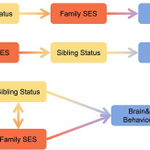
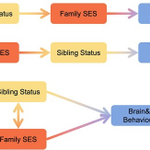
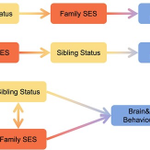
🏙️👨👩👧Why might socioeconomic status complicate "only-child effect"?
🔹Under China's one-child policy, sibling status was linked to urbanicity, occupation, and socioeconomic conditions.
🔹These same factors were associated with brain and behavioral outcomes.

📢Research Highlight in @Psychoradiology 🧠
🌟This highlight revisits research on only-child development, arguing that sibling status in China must be interpreted alongside socioeconomic background and the one-child policy.
🔗: doi.org/10.1093/psyrad/kkaf0…
#ChildDevelopment
📢Research Highlight in @Psychoradiology 🧠
🌟This highlight revisits research on only-child development, arguing that sibling status in China must be interpreted alongside socioeconomic background and the one-child policy.
🔗: doi.org/10.1093/psyrad/kkaf0…
#ChildDevelopment
xitter.cf/PSYRAD2/status/2108077…
💡🧠Take-home message:
✅Many "X-anxieties" may reflect context-specific expressions of shared threat regulation, not entirely distinct mechanisms.
✅But shared features do not prove mechanistic identity, and meaningful domain-specific differences persist.

🚨New paper alert in @Psychoradiology! 🧠
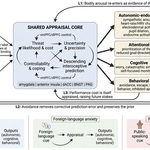
This review by Peng Wang et al. asks whether many “X-anxieties” are context-specific labels for shared threat-regulation processes.
💡Insights: A mechanism-first framework for classifying anxiety.
🔗:doi.org/10.1093/psyrad/kkag0…
#MentalHealth

What changes if we classify anxiety by process rather than label?🎯🧠
This new review discusses implications for:
🔹Theory and measurement
🔹Self-report and experimental design
🔹Intervention and policy
🔹Transdiagnostic approaches
🔗: doi.org/10.1093/psyrad/kkag0…
#Anxiety

xitter.cf/PSYRAD2/status/2108077…
🔍🧩 Does shared experience mean shared mechanisms?
This review highlights:
🔹Cross-context neural, physiological & cognitive tests
🔹Generalization, equivalence & latent-structure analyses
🔹Ways to distinguish shared from domain-specific mechanisms
🚨New paper alert in @Psychoradiology! 🧠
This review by Peng Wang et al. asks whether many “X-anxieties” are context-specific labels for shared threat-regulation processes.
💡Insights: A mechanism-first framework for classifying anxiety.
🔗:doi.org/10.1093/psyrad/kkag0…
#MentalHealth
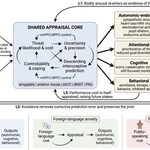
🧠⚙️How might different “X-anxieties”arise from shared processes?
This review examines:
🔹Threat appraisal, uncertainty, interoception & attentional control
🔹Their implementation in neural circuits and autonomic responses
🔗: doi.org/10.1093/psyrad/kkag0…
#Anxiety #Transdiagnostic

xitter.cf/PSYRAD2/status/2108077…
🌐 Why so many “X-anxieties”?
- Math, test, public-speaking, driving, and health anxiety share worry, arousal, catastrophic simulation, and avoidance.
- But do they reflect distinct mechanisms—or shared threat processes?
#Anxiety #Transdiagnostic

🚨New paper alert in @Psychoradiology! 🧠
This review by Peng Wang et al. asks whether many “X-anxieties” are context-specific labels for shared threat-regulation processes.
💡Insights: A mechanism-first framework for classifying anxiety.
🔗:doi.org/10.1093/psyrad/kkag0…
#MentalHealth
🚨New paper alert in @Psychoradiology! 🧠
This review by Peng Wang et al. asks whether many “X-anxieties” are context-specific labels for shared threat-regulation processes.
💡Insights: A mechanism-first framework for classifying anxiety.
🔗:doi.org/10.1093/psyrad/kkag0…
#MentalHealth
xitter.cf/PSYRAD2/status/2104979…
💡 Key Take-aways:
✅ High suggestibility was associated with differences in attentional control.
✅ Structural and functional brain alterations distinguished high- and low-suggestibility groups.
#MRI #Attention #WorkingMemory #NeuralNetwork
🚨New paper alert in @Psychoradiology! 🧠✨
This study reveals distinct behavioral, structural, and functional brain patterns associated with suggestibility.
💡Insights: New neural-network perspective on individual differences in suggestibility.
🔗:doi.org/10.1093/psyrad/kkag0…
#MRI

📊🧩 New research on the neural correlates of suggestibility found:
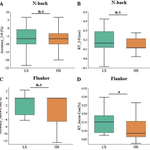
1)⚡High suggestibility was linked to reduced Flanker interference.
2)🧠Greater gray matter volume appeared in the right superior frontal and left postcentral gyri.
🔗: doi.org/10.1093/psyrad/kkag0…
#MRI #Attention


3)🔥 Higher task activation was observed across frontal, parietal, and temporal regions.
4)🔗 Resting-state connectivity increased between the salience and default mode networks.
🔗: doi.org/10.1093/psyrad/kkag0…
#MRI #Attention #WorkingMemory #NeuralNetwork

📡🧠New research mapped neural correlates of suggestibility:
Sample: 42 healthy women, divided into high- and low-suggestibility groups.
Tasks: N-back and Flanker tasks.
Imaging: Task fMRI, structural MRI, and rsfMRI.
Analysis: VBM, task activation, and ROI-to-ROI connectivity.


xitter.cf/PSYRAD2/status/2104979…
🧠🔍This study in @Psychoradiology explores the neural basis of suggestibility:
🔹Suggestibility shapes how external information influences thoughts, choices, and behavior.
🔹Yet its neuropsychological mechanisms remain poorly understood.
#WorkingMemory


🚨New paper alert in @Psychoradiology! 🧠✨
This study reveals distinct behavioral, structural, and functional brain patterns associated with suggestibility.
💡Insights: New neural-network perspective on individual differences in suggestibility.
🔗:doi.org/10.1093/psyrad/kkag0…
#MRI
🚨New paper alert in @Psychoradiology! 🧠✨
This study reveals distinct behavioral, structural, and functional brain patterns associated with suggestibility.
💡Insights: New neural-network perspective on individual differences in suggestibility.
🔗:doi.org/10.1093/psyrad/kkag0…
#MRI
xitter.cf/PSYRAD2/status/2102708…
💡 Key Take-aways:
✅ Global and local network disruptions were linked to distinct clinical symptoms.
✅ Topological impairments showed sex-related differences.
✅ Similar patterns were observed in an independent replication cohort.
#MDD #TMS #SNT #fMRI

🚨New paper alert!🧠
🔁This study by Haoyang Xing et al. reveals altered white matter functional connectome topology in adolescent MDD and its links to clinical symptoms.
🌟New perspective on adolescent MDD and its clinical heterogeneity.
🔗doi.org/10.1093/psyrad/kkag0…
#MDD #TMS #fMRI

New research on white matter functional topology in adolescent MDD found:
1) MDD showed reduced clustering coefficient, path length, and local efficiency.
2) Reduced global integration was linked to suicidal ideation and depressed mood.
🔗: doi.org/10.1093/psyrad/kkag0…
#MDD #TMS #fMRI


3) Impaired local segregation was associated with weight loss and insomnia.
4) Male patients showed more severe topological impairments than females.
🔗: doi.org/10.1093/psyrad/kkag0…
#MDD #TMS #SNT #fMRI

