

Georgia’s libertarian party, fighting for civil liberties, individual freedom, and economic prosperity. 🌲 🇬🇪
Georgia
Joined January 2016
- Tweets4K
- Following291
- Followers4K
- Likes1K








Party of The Free retweeted
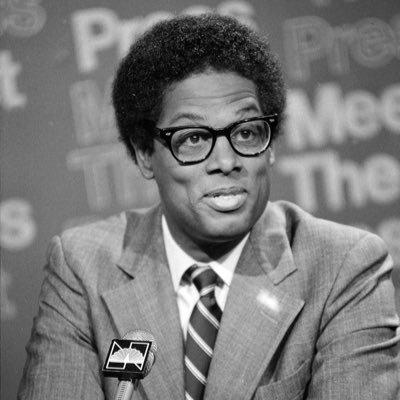
"If you believe in equal rights, then what do ‘women's rights,’ ‘gay rights,’ etc. mean? Either they are redundant or they are violations of the principle of equal rights for all."
— Thomas Sowell
Party of The Free retweeted
Listen carefully what Ronald Reagan had to say about government, taxes and inflation.


Party of The Free retweeted

თუ გვინდა, ნაკლები ადამიანი კვდებოდეს ჩვენი ნარკოპოლიტიკის შედეგად, ამისთვის მიდგომა უნდა შევცვალოთ.
Party of The Free retweeted

Georgia has a new Minister of Defense, Irakli Chikovani. I asked him during his confirmation hearing what he would do differently from his predecessor, who pushed for the massive draft expansion.
He couldn’t point out one thing he’d do differently. So why change ministers?
Party of The Free retweeted
Less than a year left in President @Zourabichvili_S’s term. If she wants to be remembered as the President who defeated polarization and increased freedom in Georgia, she should be pardoning the thousands of prisoners serving for victimless crimes.
There’s still time left.
Party of The Free retweeted

"ჩვენ გვინდა კონკრეტული იდეების განხორციელება, რომელიც ამ ქვეყანას ფუნდამენტურად შეცვლის და ამ მიზნის მისაღწევად ყველასთან ვითანამშრომლებთ."


Party of The Free retweeted
არ აგვირჩევთ? არ გვექნება ძლიერი მხარდაჭერა? - არანაირი ამნისტია არ იქნება.
ჩვენ გვინდა, რომ საზოგადოების კონსოლიდაცია ვცადოთ ამ თემასთან დაკავშირებით. დაველოდოთ საზოგადოებრივ მხარდაჭერას, რამდენად აგვყვება ეს ხალხი, ფიზიკურად რაზე მოდიან.


Party of The Free retweeted
Breaking: dog walks itself, fire extinguishes itself, state uses state to investigate itself.
civil.ge/archives/578407

Party of The Free retweeted
I believe in the Separation of Church and State because the biggest enemy of the Church is the State.
Party of The Free retweeted
The war on drugs has ruined more lives and killed more people than drugs.
Party of The Free retweeted
In Georgia, we’re always hearing the word “oligarch” thrown around to describe our nation’s main problem
The problem isn’t oligarchy. The problem is one-man rule. It’s been true for the last hundred years. It’s true today
We won’t fix anything if we don’t dive into the problem
Party of The Free retweeted
So much writing for nothing. The greatest enemy of the Georgian Church is the Georgian Government. Years of blackmailing, bribes, corruption has made the clergy work more for the State than the Church itself.
How sad that Girchi has to explain that to you out of all people

Georgia’s radical opposition has recently undertaken yet another attack against the incumbent Georgian Dream, through vilifying the Georgian Orthodox Church, accusing us of mythical ‘pro-Russian’ stand. While this futile ‘Russian’ argument is getting so exhausted that even our lackluster opposition is getting tired of it, it is still worth shedding the light on state-church relations in Georgia.
Attacks on the Church are not only pointless but politically counter-productive and damaging for our country. The purpose of this article is to show that these hostile attacks do not come from sincerely deluded personalities but they are part of a coordinated malicious campaign aimed at demeaning the symbols and values around which Georgians have rallied historically. This hostile rhetoric also implies that national and religious values cannot co-exist with Western, European values. However, the truth is that the two are mutually fulfilling and even reinforcing.
The recent attack against the Church by the radical opposition, their privately-managed political media outlets, and satellite ‘civil society organizations’, especially their timing, was particularly nasty and bizarre. On the eve of Christmas, a former high-ranking official of Saakashvili’s government and now self-styled civil-society activist spread footage from inside Georgia’s main Orthodox cathedral. He alleged that he found an ‘icon of Stalin’. As it turned out later, the footage showed not the ‘icon of Stalin’ but a small insert into the icon of St Matrona, depicting the latter’s supposed conversation with Stalin during WWII. The Church decided to change this particular detail on the icon, not because the depiction of a tyrant was uncanonical but because the fact of the above mentioned conversation, was, most likely, untrue. Meanwhile, the footage spread virally and stirred public controversy. In the following days, another political activist splashed paint on the icon, causing a public outcry.
However, depiction of tyrants is not unusual for Christian iconography. For instance, on a fresco in Georgia’s Ubisi church, even Emperor Diocletian, the proverbial persecutor of Christians, is depicted with royal magnificence, conversing with St George. Such depictions are not alien to the Western church either, as exemplified by numerous frescoes in Western Europe. This detail is important because the ensued opposition-linked media frenzy misrepresented the insert, accepted in Orthodox iconography, as ‘icon of Stalin’, and thus, distorted facts for enhancing the effects of disinformation.
A parallel line of attack on the Church aimed at compromising the date of celebrating Christmas on the 7th of January (i.e. 25th of December by the Julian calendar, which the Georgian Orthodox Church follows). The opposition weaponizedthis purely canonical issue of the difference of calendars and called the celebrations ‘the Russian Christmas’. However, the reality is that celebrating Christmas by the Julian calendar is an inherently Georgian tradition, having nothing to do with either Russia or Russian Church. This tradition had been in place long before Russia converted to Christianity. Interestingly, the Easter dates also differ between Western and Eastern Christianity but, for some reason, none of the radical opposition and affiliated activists protests this.
The two controversies were taken up by the radicals to also viciously attack Ilia II, the Catholicos-Patriarch of the Georgian Orthodox Church, who is the most venerated and authoritative public figure in Georgia by general acclaim and according to any public opinion polls. In their hostile campaign, the opposition and their affiliated talking heads linked the Patriarch, the Church, and the Government with Russia.
Now, for an outsider, this co-ordinated campaign may have created a perception that Georgian Church and its leader, together with the Government, are indeed conduits of Russian propaganda, venerating Stalin and extending Russia’s cultural influence. Let us see if these superficial and artificially concocted accusations stand up to scrutiny.
First, understanding the place of Georgian Orthodox Church in Georgian society requires historical retrospective. Georgian Church is one of the oldest Christian churches in the world, and Georgia has been an officially Christian nation since the first half of the fourth century. For most of its existence, Georgia was the sole outpost of Christianity in the East,especially after the destruction of the independent Armenian kingdom and, then, the demise of the Byzantine Empire. By the way, when Russia, as an Orthodox Christian nation, appeared on the world stage, Georgia had already been fighting for its Christian faith for centuries.
This existential danger led the Georgian state and Georgian Church to a symbiotic relationship, which is distinct from Western Christendom’s very different, historically divisive interaction between the secular and religious authorities. Both Georgian monarchy and Church understood that the weakening of either of the two would inevitably result in the other’s demise. This did not exclude controversies between them along the way, but the general pattern of interaction was much more amicable than in Western Christendom.
Unsurprisingly, this historic relationship has taken strong root that persists until today. Therefore, the Church’s loyalty to the state should not be confused with its loyalty towards a particular political force, be it Georgian Dream or any other.Moreover, the Georgian Church has traditionally been the bulwark of the culture of tolerance. The Church heroically resisted the overwhelming and violent onslaught by the Bolshevik and then Communist totalitarianism, manifested in inhumane, degrading trampling of human rights for many decades. Even today, the Georgian Orthodox Church remains the only national institution that refuses to get involved in political polarization. The Church always listens to people.
Those politicians and ‘civil society actors’ who attack the Church, if they, as Christians, are genuinely concerned about iconography or celebration dates, can take these issues to the Church for discussion, as parishioners. Moreover, they may happily join any other denomination that celebrates Christmas on any day they like. However, exactly the fact that they mount this hostile rhetoric against the church from the outside indicates that their very aim is to damage the Church, thus blurring the lines between the religious and the secular, while, in Georgia, the state and the church are strictly separated.
The church-state relations are legally regulated by the so-called Concordat, signed as early as 2002, recognizing the Georgian Orthodox Church’s special role. The Concordat was signed, partially, to remedy the damage that the Soviet Union had inflicted on the Church during the decades of Russian occupation. The separation between the state and church is real in Georgia, even more so than in many Western nations, where, in some instances, unelected representatives of the church sit in the highest legislative bodies, or the state resources are expended for aiding the Church in its tax-collection matters. Since independence, Georgian Church, as an institution, never meddled in politics or elections. Among other reasons, this is why the Church remains an authoritative and popular institution, despite political divisions in our society.
Most importantly, nothing can be more absurd that accusing Georgian Orthodox Church of ‘pro-Russian’ political sentiments. To start with, it was Russia that, after many centuries of Georgian Church’s continuous existence, disrupted and terminated the latter’s organizational independence over two centuries ago. Twice, after the demise of the Russian Empire and then the Soviet Union, the Georgian Church had to reclaim its independence, known as autocephaly. No Georgian cleric would ever contemplate subjugating their own church to Russian control, especially that the Russian Church is centuries younger than ours. As for the religious rite, there is a Eucharistic union between the two Orthodox Churches, as they both follow the same canon, along with Constantinople, Greek, Romanian, and other Orthodox Churches.
The Georgian Orthodox Church was the primary venue of the national awakening and the rebirth of pro-independence movement in the 1970s and the 1980s. It was Patriarch Ilia II himself, who accepted many young dissidents among the ranks of his parish and nurtured their patriotic dreams for Georgia’s independence. Georgian Orthodox Church and Patriarch Ilia II personally can take credit for Georgian people being mentally ready for independence even before the Soviet Union collapsed. Hearing the accusations of being pro-Russian must be particularly painful to these early stalwart champions of Georgia’s independene.
Therefore, the radical opposition’s attempts to portray Georgian Orthodox Church as Russia’s extension in Georgia is not only inaccurate but also deplorable, leading to unnecessary controversy in the society and creating yet another dubious ‘perception’ among our Western partners. Ultimately, the Georgian Church and its leader, Patriarch Ilia II, enjoy overwhelming support and approval from the Georgian public. The radicals’ attack against the Church from the supposed ‘European’, ‘liberal’, or ‘Western’ pedestal not so much damages the Church but tarnishes the very idea of liberalism and the West among the public, because, following their hostile rhetoric, some people really start believing that the Western values are incompatible with Georgian traditions and faith.
Such rhetoric against the Church is not perceived by the Georgians as a case of progressive criticism of the outdated traditions. Quite the opposite. These attacks, for majority of Georgians, are reminiscent of the Bolshevik onslaught on the Church in the first decades of the Soviet rule, which destroyed much of Georgia’s spiritual and material heritage. It is not surprising that the radicals, especially from the United National Movement and its offspring parties, such as Droa, Girchi, Lelo, European Georgia and others, are often called neo-Bolsheviks among the public. It is paramount that the public does not equate these radicals with Western liberalism as they refer to themselves. Such perception may potentially damage Georgians’ overwhelming and, thus far, unwavering preference for integration with the European Union.
Georgian Dream does embrace the values of Georgian Church. Yet, the Government is strictly separated from the Church . Christian values that led us to independence from the Soviet Union over three decades ago, guide us now towards the next big stage in Georgia’s history, which is membership of the European Union. The real purpose of the radicals’ slanderous campaign is not to sincerely care about the church but to damage the Church, the Government, and, with them, undermine our joint historic endeavour.

Party of The Free retweeted
Stalin murdered 20 million to force his socialist and communist ideas.
Mao killed 80 million to force his communist ideas.
Communism is an evil system that requires genocide to exist. It is sickening. It’s not about economics, it’s about rivers of blood.

“As long as this opinion and glorification of mass murderer - Stalin, prevails amongst ruling class, there is no chance for Georgia to become a part of the Western organisations. Time to understand,” leading MEP @petras_petras said while commenting on earlier statement by Shalva Ramishvili, a Georgian Dream propagandist that Stalin “needs to be appreciated.”

Party of The Free retweeted
This kind of incident will happen more and more often as long as companies pay more attention to artificial goals like DEI than quality and safety.
Affirmative action, DEI, and all these other social experiments don’t work. And now, they’re straight-up dangerous.

Dear United Airlines,
Can you please confirm if yesterday, Jan 10th, 2024 your pilots had yet another hard landing causing a tail strike in Houston?
If true, It seems to be happening to you a lot. @United #Diversity


Party of The Free retweeted
The Georgian Orthodox Church asked Stalin to be removed from the icon of St. Matrona. Love this.

Party of The Free retweeted
Love this guy!
If we win the 2024 elections, we’ll follow path with @JMilei in Georgia.
✅ Abolish the National Bank
✅ Demonopolize currency
✅ Decentralize money printing
✅ Separation of Banks and State
bloomberg.com/news/articles/…

Party of The Free retweeted
The entire Georgian society has been hostage to this pointless discussion on Matrona and Stalin for days.
There are actual deep problems in our country. This isn’t healthy. It’s obvious someone benefits from the attention being focused on this.
“Since the meeting of I.Stalin and St. Matrona, due to insufficient evidence, is not included in the canonical text of her life, is not recognized by the Russian Church, which canonized her and conducted a special study on this issue, it is necessary to change the mentioned episode and take into account other details related to the canonicality of iconography.
Donors are asked to make appropriate changes to the icon themselves, or we will do it ourselves,” Patriarchate of Georgia stated.
The icon titled St Matrona of Moscow blesses Stalin was donated to the Holy Trinity Cathedral in Tbilisi by leaders of the Russia-linked Patriots’ Alliance party.
The Patriarchate, however, did not express any view on the personality of Joseph Stalin claiming the absence of evidence of meeting between him and Matrona was the only basis for “amending” the icon.
