

Computational Physics & AI | now at @twosigma. Previously @FlatironInst, @Livermore_Lab, @Princeton, @Harvard (PhD). Views are my own.
New York, USA
Joined July 2015
- Tweets354
- Following1.1K
- Followers2.5K
- Likes1.8K





Pinned Tweet
Interested in scientific computing and astro/physics simulations? Follow me on Medium to explore college intro-level #Python tutorials medium.com/@philip-mocz
Philip Mocz retweeted

Navier-Stokes Millennium saga continues. Here are my slides and a summary from a recent talk. Disclaimer: this is a physicists view of the problem & solution! 🧵

A first-pass at visualizing the Navier-Stokes blow-up solution with Claude. github.com/pmocz/euler-blowu…

Philip Mocz retweeted

We’re sharing a solution to the Navier-Stokes Millennium Prize Problem, one of the deepest problems at the frontier of mathematics.
The proof was produced by a group of agents, using an OpenAI next-generation model significantly more capable than GPT-6 Astra.
The problem concerns whether the description of smooth three-dimensional fluid motion modeled by the Navier-Stokes equations can break down. It has remained unresolved for roughly 90 years.

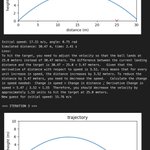
Sharing a fun physics #autoresearch demo where an AI agent discovers the physics of a black-box simulator. Now imagine what a properly scaled "research institute" of agents, with proper layers of physics verifiers and ai-native orchestration platform can do 👀🚀github.com/pmocz/golf_autore…

Even with a small set of harnesses+tools/ single-agent, it's interesting to see the things modern agents are capable of (and their limitations): github.com/pmocz/golf_autore…

Formal verification should become a normal part of scientific computing.
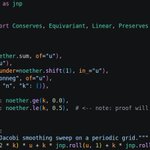
As a step in that direction, I started prototyping the idea to automatically prove mathematical statements about your Python/JAX code in Lean.
github.com/pmocz/noether

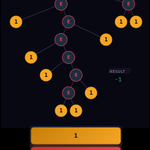
I was looking at equivalence of Hadamard matrices and Claude gave me a new family of invariants I haven't seen in the literature, that I've computationally checked -- I'm excited how AI can assist with theory building and giving new ideas to explore. My summary attached


Orbitle #141
⬜🟪🟪🟩
🟪🟪🟩🟩
🟩🟧🟧🟧
🟧⬜⬜⬜
orbitle.app
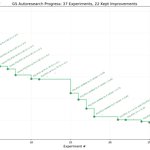
We live in an exciting new time where AI agents will be able to discover and optimize new engineering devices. I'm sharing a simple demo for tokamak design based on @karpathy 's autoresearch to illustrate the idea. Code here 👉 github.com/pmocz/gs_autorese…


Try out the new Two-Button Calculator proposed in Odrzywołek (2026), interactive demo here: 👉🔴🟡github.com/pmocz/two_button_…

Solving block tridiagonal matrices is a common bottleneck for physics solvers. Started prototyping a way to do this fast in #JAX w/ a parallel GPU/batched-LU algorithm: github.com/pmocz/blocktrix Already seeing huge gains over block Thomas (gpu) algo. @claudeai code is helping out

LLMs can be an "Expert-In-The-Loop" for physics problems that require simulation. Here's a minimal example using #TextGrad (Automatic “Differentiation” via Text) solving a simple physics problem iteratively: github.com/pmocz/tesseract_d…
@SimAI4Science #TesseractHackathon

Here's a minimal example of how differentiable solvers can find blow-up solutions: github.com/pmocz/blowup
#JAX #OptimizationOfDIscreteLoss

Philip Mocz retweeted

We are off to a great start with our first set of 9 #EurIPS workshops! the lecture rooms are buzzing and conversations are flowing at our three different workshop locations!


Sharing a small codlet for how to create an end-to-end differentiable finite volume ALE fluid solver in #JAX : github.com/pmocz/euler-ale
