
Mayo Rochester Cardiovascular Surgery. MCS, heart and lung transplant. MGH and Duke Trained.
Joined December 2021
- Tweets985
- Following623
- Followers1.1K
- Likes7.6K


PJ Spencer retweeted

Another terrific #mechsummit2026 @AATSHQ with engaging discussions, lots of learning and catching up @EmoryThoracic @EmoryCTSurgery @EmorySurgery

Fascinating talk by @MuathBishawi at #MechSummit2026 on HALT for highly sensitized patients 🫀
🔹 The liver acts as an immunologic "sponge," absorbing circulating antibodies
🔹 Persistent suppression of DSA - except in cases of transient liver dysfunction
@AATSHQ

PJ Spencer retweeted

Thank you @AATSHQ for a successful #MechSummit2026! Grateful for the engaging discussion and collaboration across the field. I leave these meetings energized, inspired, and excited about what’s ahead in transplantation 🫁

.@SSaddoughi @MayoClinicCV is highlighting work done in lipid nannoparticals with mRNA delivery during the #MechSummit2026 session on lung EVLP and biomarkers.

PJ Spencer retweeted

“If you can't explain it simply, you don't understand it well enough.”
― Albert Einstein

PJ Spencer retweeted

How much time do you make to check in with your team?
As A-10 pilots, we learned the relationship with our maintainers mattered. They worked around the clock to keep our jets ready. A cold Gatorade, a quick check-in, or a thank-you made a difference.
Take the time. It matters.

share.google/ku1UHf6UArPFUds…
Congratulations to the authors for their investigation. It is imperative that as we innovate we assess our outcomes.

PJ Spencer retweeted

Dr. Tolis on CT Surgery. Must listen.

George Tolis: TAVR, Broken Training, and What's Really Wrong With Cardiac Surgery.
Dr. George Tolis, section chief of coronary and general cardiac surgery at Brigham and Women's Hospital, joins Drs. Koka and DiGiorgio for a wide-ranging conversation on the state of cardiac surgery. He makes the case that TAVR — while genuinely transformative for the right patient — is being systematically applied too broadly, driven by industry incentive and the erosion of meaningful surgical consent. He discusses his collaboration with John Ioannidis that found no statistically significant mortality benefit for any new cardiac surgery technique introduced over the past 35 years, the paper's rejection by every major surgical journal, and what he paid out of pocket to make it open access. The conversation moves to the collapse of surgical training — fragmented pathways, work hour restrictions that leave residents unprepared for attending life, an academic promotion system that ignores teaching, and a culture that routes incompetent trainees around rather than out — and closes with a brief on Vasily Kolesov, the Soviet surgeon from Leningrad who performed the world's first documented coronary bypass years before Favaloro, and whose work was buried by the Cold War.
Chapter Markers
00:00 Introduction
01:02 Air-cooled VWs, concert piano, and how Dr. Tolis got here
02:40 TAVR: genuine breakthrough or being abused?
08:02 Finding the TAVR threshold — and why informed consent is the real problem
11:46 Collaborating with John Ioannidis: no mortality benefit for 35 years of new techniques
20:02 Why the major surgical journals wouldn't touch the paper
21:52 Minimally invasive surgery: minimal access vs. minimally invasive
26:24 When do CABG survival curves diverge — and what does it mean?
30:05 Surgeons signing off on TAVRs in young patients
33:51 Health system economics and the heart team dynamic
37:50 How to actually pick a good surgeon (ask the scrub nurses)
40:36 Cardiac surgery training: the three pathways problem
44:04 Work hour restrictions and the residency simulation gap
51:16 General surgery is like MTV — they don't operate anymore
53:21 A resident who finished training without ever applying a cross-clamp
56:34 How to evaluate if a program actually trains
59:27 Academic promotion has nothing to do with teaching
01:01:33 Dr. Tolis's resident outcomes database and three papers nobody cared about
01:05:32 The training timeline: finishing at 49, no runway left
01:07:08 One-size-fits-all RRC rules for cardiac surgery and psychiatry
01:09:16 Cardiac surgery as a disposition, not a therapy
01:12:24 When ECMO becomes the final common path
01:13:38 How you become nationally recognized without being a good surgeon
01:17:16 Vasily Kolesov: the Soviet surgeon who did the first bypass
Co-Host Handles
@anish_koka and @drdigiorgio
Show Handle
@drsloungepod
Subscribe Links
Spotify: open.spotify.com/show/44vw8e…
Apple Podcasts: podcasts.apple.com/us/podcas…
YouTube: youtube.com/@TheDoctorsLoung…
PJ Spencer retweeted

This is what I had proposed to the ABTS a few years ago to help eliminate programs that do not have the cases (or attitude) to train CT residents. I felt it would significantly reduce the massive misrepresentation of case numbers. Holding music still on… link.springer.com/article/10…

PJ Spencer retweeted

A 77-year-old marathon walker developed a headache. Over the next four months, she was seen by a nurse practitioner, a PA twice, a medical assistant, and an emergency room. She was given two Medrol dose packs, NSAIDs, and a prescription for fluoxetine after a PA decided she had anxiety. She had never actually seen her primary care physician. She had giant cell arteritis. A sed rate of 41 confirmed it, the moment her neurologist finally examined her, took her history, palpated her temporal arteries, and asked about jaw claudication.
The patient told her neurologist: "if you think I need fluoxetine I'll be on it, but I don't think I'm anxious and this headache is just crazy."
The structural argument matters more than the cinematic detail. Team-based care is sold as a solution to the physician shortage. The math runs the other way. If a physician is the diagnostic instrument that holds the differential together on a multi-system presentation in a 77-year-old, the marginal cost of putting that physician in the room at visit 1 is zero. The marginal cost of NOT putting that physician in the room across this case was four office visits, an ER visit, two courses of steroids that partially masked the inflammatory signal, a misdiagnosis of anxiety, an SSRI prescription, and a delay in identifying a vision-threatening time-sensitive diagnosis. The team did not save physician time. It spent physician time everywhere except with the patient.
Reeta Achari, MD, a neurologist in solo private practice in Houston for 25 years, makes the operational case in plain terms. There is a physician shortage. The response has been to use physician time for documentation, prior authorizations, peer-to-peer calls, board recertification weeks, and electronic-record data entry. The response should have been the opposite. If there is a shortage of the diagnostic instrument, the workflow has to put the instrument in front of the patient, not behind four other people.
Her own response was structural. She opted out of Medicare. She built a quarterly subscription practice with prices middle-class patients can afford and scholarships for long-relationship patients. New patients get a one to one-and-a-half hour intake. Follow-ups get 30 minutes. The model is not concierge. It is continuity, priced to clear.
The diagnostic line from her conversation: "No physician touched her."
Listen to the full conversation on The Podcast by KevinMD. Link in the replies.
What does the cascade in your practice or your own care look like? Where in the workflow did the physician finally enter the room?
#ThePodcastbyKevinMD

PJ Spencer retweeted

You're a 19 year old kid.
You are critically wounded and dying in the jungle somewhere in the Central Highlands of Viet Nam .
Its November 14, 1965 . LZ (landing zone) X-ray.
Your unit is outnumbered 8-1 and the enemy fire is so intense from 100 yards away, that your CO (commanding officer) has ordered the MedEvac helicopters to stop coming in.
You're lying there, listening to the enemy machine guns and you know you're not getting out.
Your family is half way around the world, 12,000 miles away, and you'll never see them again.
As the world starts to fade in and out, you know this is the day.
Then - over the machine gun noise - you faintly hear that sound of a helicopter.
You look up to see a Huey coming in. But.. It doesn't seem real because no MedEvac markings are on it.
Captain Ed Freeman is coming in for you. He's not MedEvac so it's not his job, but he heard the radio call and decided he's flying his Huey down into the machine gun fire anyway.
Even after the MedEvacs were ordered not to come. He's coming anyway. And he drops it in and sits there in the machine gun fire, as they load 3 of you at a time on board.
Then he flies you up and out through the gunfire to the doctors and nurses and safety. And, he kept coming back!! 13 more times!!
Until all the wounded were out. No one knew until the mission was over that the Captain had been hit 4 times in the legs and left arm.
He took 29 of you and your buddies out that day. Some would not have made it without the Captain and his Huey.
Medal of Honor Recipient, Captain Ed Freeman, United States Army, died at the age of 81, in Boise, Idaho.
God bless our vets!

PJ Spencer retweeted
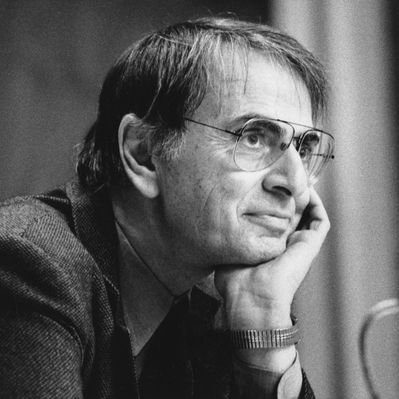
We must be careful not to believe things simply because we want them to be true. No one can fool you as easily as you can fool yourself.
- Richard Feynman

The American war hero offers a vision of what the United States has been and can still be.
share.google/CUUXqFuBmnAnOaE…

PJ Spencer retweeted
The main question surrounding debate about the Ross Procedure should be whether it is in the patients’ best interest to introduce chronic decades-long indolent pathology of the right ventricle (such as TOF repair) in young patients in exchange of lack of chronic anticoagulation.
PJ Spencer retweeted
“Go for the pain of discipline, it weighs ounces. The pain of regret weighs tons.”
— Jim Rohn
PJ Spencer retweeted

The primary end-point of this trial was the scope of daratumumab in lowering HLA antibodies in #hearttransplant. @werDrD @myelomaMD @Taxkourel @AttaBehfar @ShannonMDunlay @nl_pereira @YeeWengWong @PJSpen1982 @MVillavicencioT @BarryBoilsonMD
bit.ly/3FkzNdj

PJ Spencer retweeted

In honor of Perfusion Appreciation Week, CVS would like to recognize the outstanding work & dedication of our Perfusion team. Your expertise, commitment, & steady presence are vital to patient care & make a meaningful impact. We truly appreciate everything you do!

PJ Spencer retweeted
Come listen to @MVillavicencioT present "Veno-Arterial ECMO vs Off-Pump Bilateral Lung Transplantation. First Interim Analysis of a Prospective, Multicenter, Randomized Clinical Trial", Sat., May 3 @ 5PM PDT! #AATS2025

PJ Spencer retweeted
If you are near Rochester, MN, this week, join us for our Day of Remembrance celebration! Today at 4pm, we honor and remember organ, tissue and eye donors. #DonateLife #MayoClinicMN

