

Based at Aalborg University, Denmark. We focus on microbes and their roles in wastewater treatment and anaerobic digestion.
Aalborg, Denmark
Joined November 2018
- Tweets335
- Following134
- Followers548
- Likes418





PHNielsen Lab retweeted

Join us in Aalborg in May and learn how to use MiDAS5 and other #MiDAS resources to analyze microbes in wastewater treatment systems! 🦠🧬💻
phd.moodle.aau.dk/course/ind…

PHNielsen Lab retweeted
Yesterday, Vibeke Nielsen received her Master’s degree for her project “Microbial Communities and Settling Behaviour in Activated Sludge Plants” 🥳 We would like to thank our #MiDAS collaborators, who contributed to the project. – at Aalborg, Danmark

PHNielsen Lab retweeted

For the sediments it proved more complex due to high diversity, and especially for the marine sample there was high-strain complexity of cable bacteria, but Mantas was still able to obtain 2 HQ genomes (1 in 1 contig) by subsampling, re-assembly, and re-binning. Not easy.. 6/10

PHNielsen Lab retweeted
Genome recovery is highly dependent on species abundance and strain complexity. For the enrichment sample, we recovered 50+ (!!!) cicular metagenome-assembled genomes (cMAGs), including the Ca. Electronema aureum as expected. Easy peasy.. 5/10

PHNielsen Lab retweeted
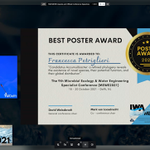
Genomes in hand, Francesca did metabolic reconstruction. First, she looked if the prev incomplete genomes had missed genes, that explained the long-distance electron transfer. We didn't find the smoking gun, but with complete genomes, we are now certain that it hides within! 8/10

PHNielsen Lab retweeted
In a great collaboration with @CEMAarhus, we have used high-throughput @nanopore metagenomics to recover the first closed genomes of the enigmatic "Cable bacteria"! A thread, 1/10 biorxiv.org/content/10.1101/…

PHNielsen Lab retweeted
You still have the chance to join the Inaugural Lecture of Distinguished Professor Mark van Loosdrecht and the launch of the REThiNk-project - Recovery of extracellular polymers from wastewater treatment residuals as a new circular biopolymer! Monday 31/10
shorturl.at/bEMZ1
PHNielsen Lab retweeted
Super proud of @lamurias who have realized our vague idea of metagenome binning should be a "graph" problem. Looking forward to integrating new features and scalability to very (!) large long-read metagenome datasets. @VILLUMscience

my first paper as part of the @dkw_aau group has been published!! doi.org/10.1093/bioinformati… also my first paper in metagenomics. It has been quite a journey in this new (to me) field. big thanks to my co-authors @HoseKatja @MadsAlbertsen85 @tdyhren and Mantas!

PHNielsen Lab retweeted
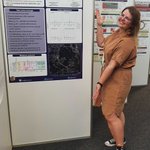
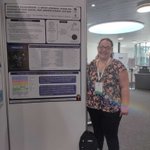
How do you generate and analyze 10.000 metagenomes across a country? Come and discuss automatization, library-downscaling, and bioinformatics with Thomas #ISME18 poster 088. + how do we integrate vast metadata from a subset of samples to connect macro and micro-diversity?

PHNielsen Lab retweeted
Populating the tree-of-life with a genome pr. species is a moonshot mission that I think is realistic within a decade! Come and tell me why it is bullshit and then let's discuss how to join forces to get it done! #ISME18 poster 170! pst.... we are recruiting at all levels!

PHNielsen Lab retweeted

Interested in Microbial Ecology of wastewater treatment processes? @PerHNielsen and we are looking for a #Postdoc who is interested to further develop this field, bridging research between our laboratories in @TUDelft and @aalborguni
Send a DM or contact @PerHNielsen at #isme18
PHNielsen Lab retweeted

"The saga of PAOs" by @WeissbrodtLab #isme18 with a hint to @midasguide by @PHNLab. Trying to collect all the information on organisms in wastewater treatment. Contributions are welcome.


PHNielsen Lab retweeted
Why do we use 2 primers in amplicon studies (rRNA/functional genes)? Now you can use 1... and using @nanopore + UMIs you get perfect long amplicons (5 kbp+). #ISME18 come and chat to @EmilAarre95 Poster 127 today! 1/2


PHNielsen Lab retweeted
Ever wondered how few sequencing reads are needed for microbiome-based diagnostics and how it depends on the choice of classification tool? Or just fancy a trip down the Machine Learning rabbit hole? Come discuss ML, classification, and CRC with Sebastian #ISME18 at poster 435!


PHNielsen Lab retweeted

Great work from @MadsAlbertsen85 and colleagues assessing metagenomic assembly quality across DNA sequencing technologies (nature.com/articles/s41592-0…) it looks like @nanopore R10.4 no longer needs polishing with illumina (at least for bacteria) on both mock and real samples.
PHNielsen Lab retweeted

A study that demonstrates the feasibility of generating near-finished microbial genomes using only Oxford Nanopore R10.4 data from pure cultures or metagenomes. @MadsAlbertsen85 @kirk3gaard #nanopore
nature.com/articles/s41592-0…

PHNielsen Lab retweeted

Great opportunity to tackle the issue of how to deal with one of societies biggest bio-wastes. Can't wait to get started
novonordiskfonden.dk/en/news…