We aim to help older adults stay active at home and in the community.

Joined October 2020
Small updates like improving lighting, removing tripping hazards, and installing grab bars can help protect your independence and prevent falls. 💙 As Eleanor Lundy-Wade shared, "People do have some control." 💙
1
5
214
In our study of people aging w/ disability, falls, multi-year falls, and related injury were common & associated w/ aging-with-disability symptoms, especially fatigue. This underscores the importance of fall prevention for this population. Read the paper: buff.ly/hRIeItf
19
Yoyo Ding, a trainee in the WashU ICTS TL1 Predoctoral Program, did a great job presenting at the Conference on Cognition, Aging and Speech Communication! Yoyo’s study found associations between multisensory decline and cognitive decline in preclinical Alzheimer's disease.
31
Congratulations to coauthors on the publication on our Delphi study of a dyadic social support intervention for people with TBI! We built consensus on intervention components among a panel through three iterative surveys. Read more: buff.ly/s4OLHyU
13
Another publication hot off the presses! We found that TIMM, a tailored medication management intervention for older adults, is feasible, acceptable and may reduce barriers and improve performance of medication management. buff.ly/12blCAQ
9
Our article on fall research funding is now available in the American Journal of Health Promotion. We found that research funding on falls is disproportionately low. Addressing this gap in funding is especially urgent as the aging population grows. buff.ly/ovhJA4S
9
WashU School of Public Health has a new name: WashU Bursky School of Public Health! The Bursky Family Foundation’s $200M commitment will be transformational for our school and for public health. publichealth.washu.edu/
2
38
Reminder: Susy will be speaking at the Aging with Developmental Disabilities Conference at the St. Charles Convention Center tomorrow afternoon! Join us to learn more about how to minimize the risk of falls for adults aging with developmental disabilities.
85
Susy was recently featured in The New York Times Ask Well! Check out the story, highlighting recommendations for how to prevent falls at home! buff.ly/HB4OlLj
92
We are excited to announce that our undergraduate research assistant Izzy Erdmann was selected for WashU's Summer Undergraduate Research Guided Experience (SURGE) program! Congratulations, Izzy! More on the SURGE program: buff.ly/B6HPkXy
53
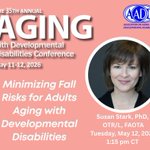
Are you attending the Aging with Developmental Disabilities (AADD) Conference in May? Come to Susy’s session, “Minimizing Fall Risks for Adults Aging with Developmental Disabilities,” on May 12 at 1:15 p.m.! More info: buff.ly/zCfFao8 #aaddconference #agingwithdd
17
We loved seeing this feature on our good friend Bill Siedhoff in WashU Magazine! Bill is a Brown School alumnus who spent decades working for state and city agencies to support and advocate for people with disabilities and older adults. buff.ly/SnhMu4S
41
We recently found that falls were associated with faster progression to mild dementia, suggesting that falls may serve as an early clinical marker of AD progression. Read the paper, led by our former PhD student Audrey Keleman, in Alzheimer’s and Dementia: bit.ly/4aHytwy
29
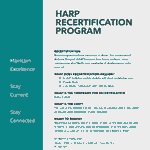
Attention all occupational therapists trained to deliver HARP: Recertification begins March 1, 2026!
1
25
Wesley House experienced severe damage to their building during the May 2025 tornado. We were so happy to see that, on Jan. 31, they held an open house to celebrate reopening following renovations. Welcome back to our friends at Wesley House Association! bit.ly/4qvP2Sd
16
Seasons greetings from all of us at the PEPLab! The lab will be closed this afternoon through Dec. 25 and on Dec. 31 & Jan. 1. We hope everyone has a safe and happy holiday!
21
We were so excited to see Callista Poiter, former PEPLab graduate research assistant and current instructor of the "When I'm 64" class and WashU Medicine AHBR graduate student assistant, featured in the WashU Medicine AHBR newsletter! Congratulations, Callista!
33
Social participation didn't change much over our 3-year study of people aging with disability, but it was influenced by physical and mental health factors. Addressing symptoms like pain, depression, and fatigue may help sustain social participation. tinyurl.com/3p6j5bwu
17